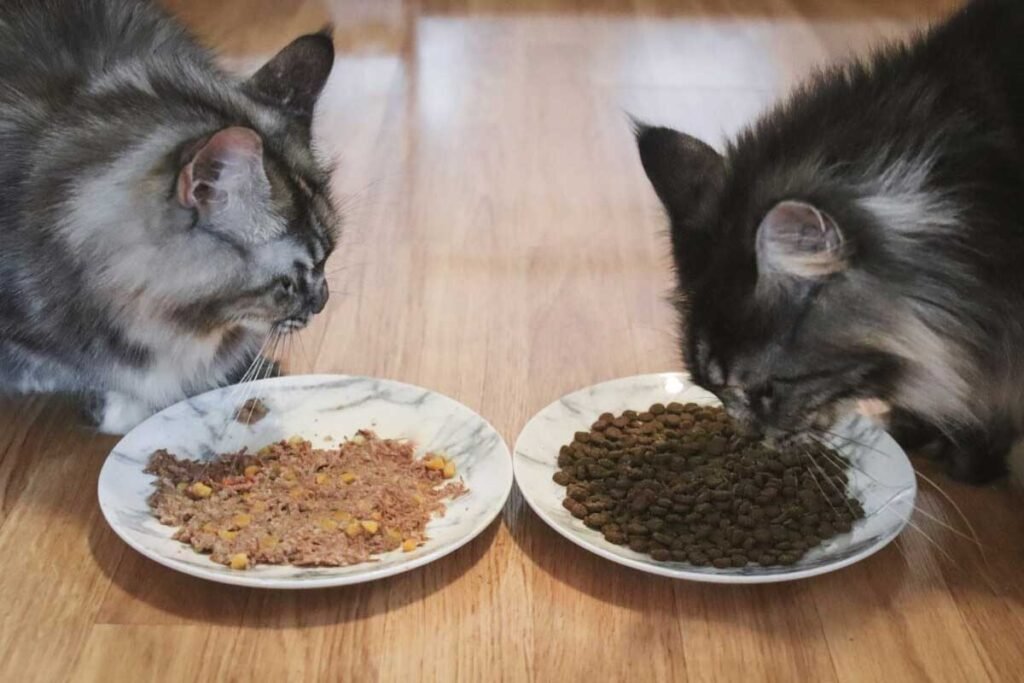
The debate around dry cat food vs wet cat food has been going on for years, and honestly, there’s no universal answer that works for every cat.
Some cats thrive on kibble, while others do better with wet food or a combination of both. The right choice depends on your cat’s hydration habits, activity levels, health conditions, and even personality.
Both food types have advantages and drawbacks, so understanding the differences can help you make a smarter decision for your feline companion.
Dry Cat Food vs Wet Cat Food – Key Differences
The biggest difference between dry and wet cat food comes down to moisture content.
Dry cat food typically contains around 6–10% moisture, while wet food can contain up to 75% water. That single factor affects hydration, storage, shelf life, feeding routines, and even price.
Here’s a quick breakdown:
| Feature | Dry Cat Food | Wet Cat Food |
| Moisture Content | Low | High |
| Shelf Life | Long | Short Once Opened |
| Storage | Easy | Requires Refrigeration |
| Cost | More Affordable | More Expensive |
| Texture | Crunchy | Soft |
| Hydration Support | Low | Excellent |
| Dental Benefits | Moderate | Minimal |
Benefits of Dry Cat Food
Dry food, also known as kibble, remains one of the most popular feeding choices among cat owners, and for good reason.
It’s convenient, affordable, and easy to store. Large bags can last for weeks, and kibble doesn’t spoil quickly once opened when stored properly.
Advantages of Dry Cat Food
- Budget-friendly for multi-cat households
- Long shelf life
- Easy to portion and store
- Less messy during feeding
- Convenient for free-feeding schedules
One major advantage often associated with dry food is dental support. The crunchy texture may help reduce plaque and tartar buildup on teeth, although it shouldn’t replace regular dental care.
Dry food can also help some cats feel fuller for longer due to its dense calorie content.
However, the low moisture content is something owners must pay attention to. Cats naturally have a low thirst drive, so hydration becomes essential when feeding primarily dry food.
Without enough water intake, some cats may become more susceptible to urinary tract issues or kidney problems over time.
If your cat mainly eats kibble, always ensure fresh water is available throughout the day. You can learn more about the benefits of dry cat food and why many owners prefer it as a daily feeding option.
Benefits of Wet Cat Food
Wet cat food is highly appealing to many cats because of its rich aroma, soft texture, and high moisture content.
For cats that don’t drink much water independently, wet food can significantly improve hydration levels.
Advantages of Wet Cat Food
- Supports hydration
- Easier to chew for senior cats
- Typically higher in protein
- Often more flavorful and appealing
- May support urinary tract health
The extra moisture found in wet food can be especially helpful for cats prone to urinary crystals or dehydration-related issues.
Wet food also tends to contain fewer carbohydrates compared to many dry food formulas, making it appealing for owners seeking higher-protein diets.
That said, wet food comes with disadvantages too.
Drawbacks of Wet Cat Food
- More expensive than kibble
- Spoils quickly once opened
- Requires refrigeration
- Can create mess during feeding
Some wet food formulas are also calorie-dense, meaning overfeeding can contribute to weight gain in less active indoor cats.
Choosing high-quality wet food and monitoring portions carefully is important if you include it regularly in your cat’s diet.
Which Type of Food Is Healthier?
This is where many articles completely fall apart because they try to force a black-and-white answer.
The reality is that both dry and wet cat food can be healthy when formulated properly.
A high-quality dry food can provide complete nutrition, while a high-quality wet food can support hydration and protein intake.
What matters most is:
- Ingredient quality
- Balanced nutrition
- Proper portion control
- Your cat’s individual health needs
Cats with kidney issues or urinary concerns may benefit from more wet food due to increased hydration. On the other hand, healthy cats that drink plenty of water often do perfectly fine on dry food diets.
There’s no magic formula. The goal is finding a feeding routine your cat responds well to physically and behaviorally.
Can You Mix Dry and Wet Cat Food?
Yes, many owners combine both food types successfully.
A mixed-feeding approach can offer:
- The convenience of dry food
- The hydration benefits of wet food
- More variety for picky eaters
Some cat owners feed kibble during the day and offer wet food occasionally as a treat or supplemental meal.
The key is avoiding overfeeding. Combining food types without adjusting portions can easily increase calorie intake beyond what your cat actually needs.
If you decide to mix foods, introduce changes gradually and monitor your cat’s digestion, energy levels, and weight.
Final Verdict on Dry Cat Food vs Wet Cat Food
When comparing dry cat food vs wet cat food, there isn’t a universal winner.
Dry food stands out for convenience, affordability, storage, and dental support. Wet food excels in hydration, flavor, and moisture content.
For many healthy indoor cats, high-quality dry food combined with consistent hydration works extremely well. Meanwhile, wet food can be beneficial as an occasional addition or for cats with specific hydration needs.
At the end of the day, the best food is the one that keeps your cat healthy, active, hydrated, and maintaining a healthy body condition long term.
And no matter which route you choose, always pay attention to your cat’s behavior, digestion, coat condition, and weight, because those signs will tell you far more than flashy packaging ever will.