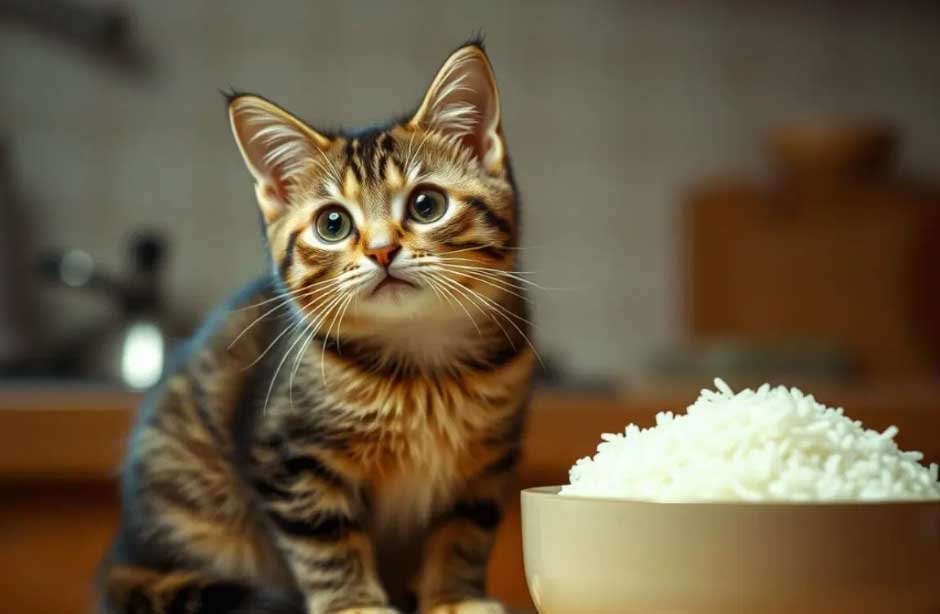
Cats can eat small amounts of plain, cooked rice without harm. It is not toxic and won’t cause an emergency, but it offers nothing a cat actually needs nutritionally. For Maine Coon owners, there are a few extra reasons to keep it rare.
The rice cooker beeped at 6:45pm. Your Maine Coon was already on the counter, one paw stretched toward the bowl, doing the math. It’s hard to say no to that face. But before you scoop a spoonful their way, it’s worth knowing exactly what rice does — and doesn’t do — for a cat that size.
Is Rice Safe for Cats?
Plain, cooked rice is not on the ASPCA’s list of toxic foods for pets. A bite or two won’t send a healthy cat to the emergency vet. The problem isn’t toxicity — it’s biology.
Cats are obligate carnivores. Their digestive systems evolved almost entirely around animal protein and fat. Unlike humans or dogs, cats lack salivary amylase, the enzyme that starts breaking down starch in the mouth. Whatever starch digestion does happen occurs lower in the gut, slower and less efficiently. A cat eating rice isn’t absorbing much — their body processes it without urgency because it recognizes this isn’t fuel their system knows what to do with.
One or two teaspoons won’t cause harm. But it also won’t do anything useful for a healthy cat, which is a reasonable reason to skip it when your Maine Coon is well. Most searches for can cats eat rice come from people mid-meal with a curious cat nearby, not from cats with a genuine need for grains.
When Rice Can Help a Sick Cat
There’s a specific situation where plain white rice earns a place in a cat’s bowl: digestive recovery. When a cat has mild diarrhea or an upset stomach, a temporary bland diet can help firm up stools and reduce gut irritation. It’s a scenario most cat owners hit at 2am — the litter box situation is bad, the vet isn’t open, and you’re searching for what to feed a sick cat right now.
The combination that veterinarians most often suggest is plain boiled white rice mixed with plain boiled chicken breast. The logic: both are low-fiber, low-fat, and easy for an inflamed digestive tract to process without extra strain.
A practical protocol:
- Cook white rice until completely soft, no salt, no butter, no oil, no seasoning of any kind
- Mix with plain boiled chicken in a roughly 1:3 ratio (one part rice to three parts chicken)
- Offer in small portions, about two tablespoons at a time, two to three times a day
- Continue for one to two meals, then transition back to your cat’s regular food
- If symptoms persist beyond 48 hours or worsen, contact a veterinarian
Cats are the only common household pet that genuinely cannot taste sweetness. They evolved without that receptor because sugar was never part of their diet. Rice, which converts to glucose, is simply not food their bodies were designed to recognize as fuel. Gary Richter, DVM, medical director of Montclair Veterinary Hospital in Oakland, California, puts it directly: “As a rule, cats are obligate carnivores and have no metabolic/nutritional need for carbohydrates. Small amounts of grains can be OK in a balanced diet, but they should be kept to a minimum.” That standard applies especially when rice is being used as a short-term remedy, once the stomach settles, rice goes back off the menu.
Raw rice is a different matter entirely. Uncooked rice is hard, difficult to chew, and nearly impossible for a cat to digest. It can cause intestinal irritation and should never be offered.
Why Regular Rice Is a Problem, Especially for Maine Coons
A cat’s liver can synthesize glucose directly from protein through gluconeogenesis. They were never built to depend on dietary carbohydrates for energy. When a cat regularly eats grains, the excess carbohydrates get stored as fat. The mechanism is straightforward and the result is predictable.
For Maine Coons, the stakes are slightly higher than average. Maine Coons are already one of the breeds most susceptible to obesity, their large frames and slow metabolisms make gradual weight gain easy to miss. You don’t notice it week to week. You notice it when lifting them feels different than it did last year.
The weight connection matters for another reason specific to this breed. Maine Coons carry a higher genetic predisposition to hypertrophic cardiomyopathy (HCM), a thickening of the heart muscle that is the most common form of heart disease in cats. An overweight Maine Coon puts additional strain on a cardiovascular system that already faces increased risk. This is why most veterinarians who specialize in large breeds are more insistent about weight management for Maine Coons than for mixed-breed cats of similar size. Weight management isn’t cosmetic for this breed, it’s part of cardiac care.
The displacement problem is the quietest one. Every portion of rice is a portion that isn’t protein. Cats need specific amino acids, taurine, arginine, methionine, that are concentrated in animal tissue. A diet regularly diluted with grains gradually delivers less of those building blocks. That deficit doesn’t show up immediately, but it accumulates.
White Rice vs. Brown Rice for Cats
Both white and brown rice are non-toxic to cats, but when owners ask whether cats can eat rice safely, the type of rice matters for digestive tolerance. White rice is easier on the gut; brown rice carries more fiber and can cause gas or bloating in sensitive stomachs.
| Feature | White Rice | Brown Rice |
|---|---|---|
| Digestibility | Easier, hull and bran removed | Harder, intact bran layer |
| Fiber content | Low | Higher |
| Nutrient density | Lower (enriched in US) | Slightly higher (B vitamins, minerals) |
| Risk of bloating/gas | Lower | Higher for sensitive stomachs |
| Best use for cats | Digestive recovery | Occasional treat only |
| Recommended? | Yes, briefly and plainly | Only if well-tolerated |
For the purpose of helping a cat with an upset stomach, white rice is the better choice. Its lower fiber content is exactly what an irritated gut needs, less bulk, less fermentation, less gas. Brown rice’s nutritional edge over white rice is largely irrelevant for a cat that isn’t getting significant nutritional value from grains anyway.
How Much Rice Is Safe for Cats?
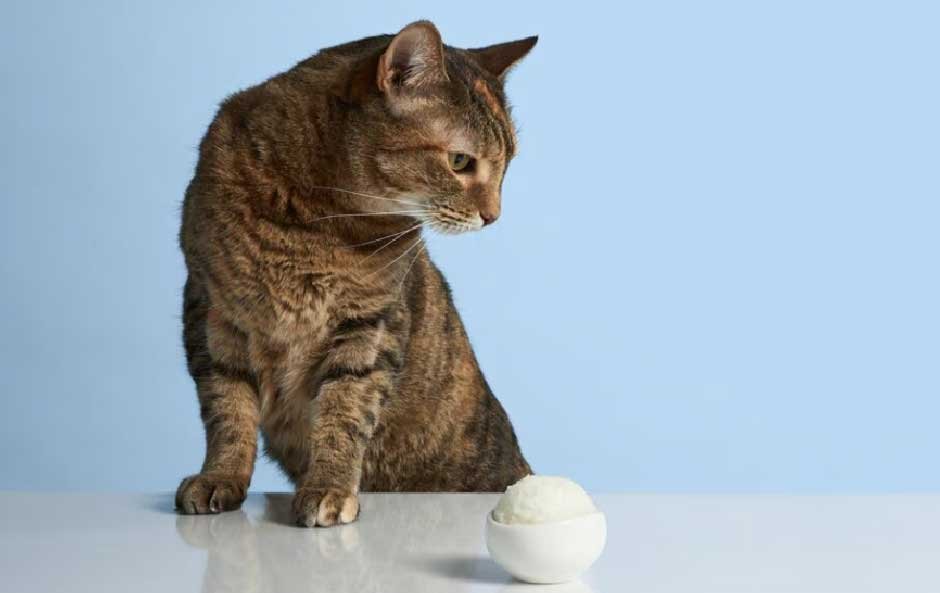
One to two teaspoons of cooked rice is the appropriate serving when you’re treating a temporary digestive issue. That figure doesn’t scale up for larger cats. The real problem with rice portions isn’t the single teaspoon, it’s the habit that forms when a cat decides they like something, and owners find it easier to keep offering it. Maine Coons weigh more than the average domestic cat, but the relative proportion of their diet should stay consistent: mostly animal protein, with grains limited to brief, purposeful exceptions.
Rice should never exceed ten percent of the meal in any sitting, and it shouldn’t appear in consecutive meals unless your cat is actively in digestive recovery. Think of it the way you’d think of a short-term medication, correct dosage, correct duration, then done.
One detail worth checking: the ingredient label on your cat’s commercial food. Rice and rice flour are common fillers in lower-quality kibble, sometimes appearing in the top five ingredients. If your cat is already eating a grain-heavy commercial food, adding rice from your plate compounds what may already be a high-carbohydrate baseline. Checking the label takes thirty seconds and changes how you think about what “a little rice” actually means in context.
Better Options Than Rice
When your Maine Coon is hovering near your dinner and you want to share something, there are options that give their body something it can actually use.
- Plain boiled chicken or turkey, no seasoning, no skin, no bones. The closest thing to a universal cat-safe treat
- Plain cooked salmon or tuna, in small amounts; the omega-3 content is genuinely useful for coat health, though mercury accumulation makes this a sometimes-food, not a daily one
- Plain cooked pumpkin, fiber source for cats with either constipation or diarrhea; a tablespoon mixed into food works well
- Plain cooked egg, complete protein, easily digestible, well-tolerated by most cats
- Plain cooked carrots or zucchini, not a cat nutritional priority, but non-toxic and low-calorie if they show interest
The common thread is “plain” and “cooked.” Seasonings, sauces, butter, and oils are where human food becomes dangerous for cats, not the base ingredient itself.
FAQ
Can cats eat rice every day?
No. Daily rice is not appropriate for cats. Cats are obligate carnivores with no nutritional need for carbohydrates, and regular rice in their diet contributes to weight gain while displacing the animal protein and amino acids their bodies actually depend on. Maine Coons in particular should avoid regular carbohydrate supplementation given their breed-specific weight and cardiac risk profile.
Is rice good for cats with diarrhea?
Plain white rice mixed with plain boiled chicken can help during a mild episode. The combination is bland and low-fiber, which reduces gut irritation and helps firm stools. Use it for one to two meals, then transition back to your cat’s regular diet. If diarrhea persists beyond 48 hours or your cat shows signs of lethargy, blood in the stool, or loss of appetite, contact a veterinarian rather than continuing a home remedy.
Can kittens eat rice?
Kittens should not eat rice. Their nutritional requirements are extremely specific, high-density protein and fat to support rapid growth and organ development. Rice provides neither. A kitten filling up on rice instead of its formulated food misses the window for optimal early development. Stick to kitten food designed for their life stage.
Can cats eat rice and chicken together?
Yes, this combination is actually the standard recommendation for digestive recovery. Plain boiled rice mixed with plain boiled chicken is easy to digest and appropriate for short-term use when a cat has an upset stomach or mild diarrhea. Both ingredients must be completely plain: no salt, no garlic, no onion, no oil.
Is fried rice or seasoned rice safe for cats?
No. Fried rice typically contains onion and garlic (both toxic to cats), soy sauce (high sodium), oil, and various seasonings that disrupt feline digestion. The same applies to flavored rice mixes, butter rice, and any seasoned preparation. Only plain, unseasoned, fully cooked rice is safe, everything else should stay off the plate.
Rice doesn’t damage cats. What damages them is turning a short-term stomach remedy into a permanent fixture in the bowl. Once it becomes a habit, it no longer feels like an exception, and by then, the portion creep and carbohydrate load are already doing their work quietly.