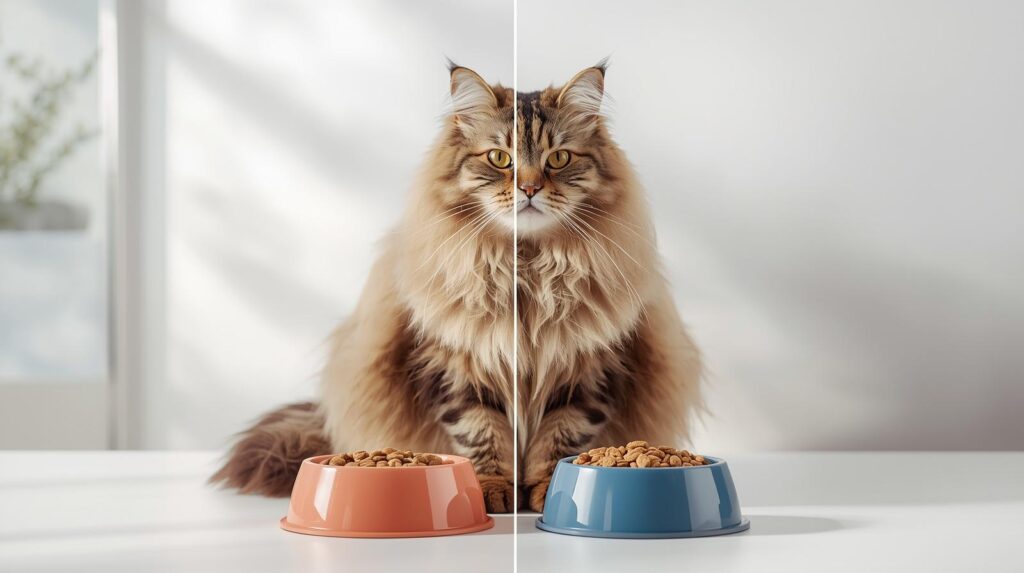
A Maine Coon that looks healthy but eats the wrong diet is a problem most owners don’t notice until it’s too late. Slow weight gain, dull coat, digestive issues, even joint stress these don’t happen overnight. They build quietly through everyday feeding choices.
Here’s the reality: Maine Coons are not typical cats. Their size, growth rate, and metabolism demand a more deliberate feeding strategy. The wrong balance between wet and dry food can either support long-term health or slowly work against it.
This guide answers the core question directly: what is the best Maine Coon cat diet, and should you choose wet or dry food?
When choosing the right diet, many owners overlook one important factor: the quality of the Pet feed they rely on daily. Not all animal feed is formulated with the same nutritional standards, especially for large breeds like Maine Coons. The difference between average and high-quality animal feed often comes down to protein sources, ingredient transparency, and how well it supports long-term feline health.
What Makes the Maine Coon Cat Diet Different?
Maine Coons are one of the largest domestic cat breeds, often weighing between 10–25 pounds. That size changes everything about how they should be fed.
According to the American Association of Feed Control Officials, cats require high levels of protein and essential amino acids like taurine. For Maine Coons, the requirement is even more critical due to their muscle mass and slower maturation (they can grow for up to 3–5 years).
Key Maine Coon Nutrition Needs:
- High protein diet for cats (at least 30–40% protein)
- Moderate fat for sustained energy
- Controlled carbohydrates (avoid filler-heavy foods)
- Joint-support nutrients like glucosamine
- Adequate hydration (often overlooked)
Dr. Lisa A. Pierson explains that “cats are obligate carnivores, meaning their bodies are designed to thrive on animal-based protein, not carbohydrates.”
For Maine Coons, this principle isn’t optional it’s foundational.
Wet vs Dry Cat Food: Which Is Better for Maine Coons?
This is where most confusion starts. The debate around wet vs dry cat food isn’t about choosing one it’s about understanding how each affects your cat.
Wet Food: The Hydration Advantage
Wet food contains about 70–80% water. That matters more than most people think.
Wet Food Benefits for Cats:
- Supports kidney health (critical for large breeds)
- Reduces risk of urinary tract issues
- Easier to digest
- Often higher in animal protein
A study from the Cornell University College of Veterinary Medicine highlights that cats on moisture-rich diets show better hydration levels and fewer urinary complications.
For Maine Coons, who may be prone to joint and kidney strain as they age, hydration becomes a long-term investment.
Dry Food: Convenience with Conditions
Dry food is popular for a reason. It’s affordable, easy to store, and helps with dental abrasion.
Advantages of Dry Food:
- Cost-effective for large cats
- Easy portion control
- Longer shelf life
- May reduce plaque buildup
But there’s a trade-off.
Dry food typically contains:
- Higher carbohydrate content
- Lower moisture levels (around 10%)
Dr. Debra Zoran notes that “high carbohydrate intake in cats can contribute to obesity and metabolic issues over time.”
So, What’s the Best Diet Plan?
Here’s the practical answer most experts agree on:
A mixed feeding approach works best for Maine Coons.
Ideal Feeding Strategy:
- Morning: Wet food (hydration + protein boost)
- Evening: Dry food (satiety + convenience)
- Optional: High-protein treats in moderation
This combination balances hydration, nutrition, and practicality.
How Much to Feed a Maine Coon?
Feeding a Maine Coon isn’t about guessing. It’s about adjusting based on age, weight, and activity level.
General Feeding Guide:
Kittens (up to 12 months):
- 3–4 meals per day
- High-calorie, high-protein diet
Adults:
- 2 meals per day
- 20–30 calories per pound of body weight
Seniors:
- Lower calorie intake
- Focus on joint and kidney support
Example:
A 15-pound Maine Coon may need around 300–450 calories daily, depending on activity.
Always adjust based on:
- Body condition (not just weight)
- Energy levels
- Coat health
Best Food for Maine Coon Cats: What to Look For
Choosing the best food for Maine Coon cats comes down to label reading, not brand hype.
Ingredients That Should Be Present:
- Real meat (chicken, turkey, fish) as the first ingredient
- Taurine
- Omega-3 fatty acids
- Minimal fillers (corn, soy, wheat)
Ingredients to Limit:
- Artificial preservatives
- Excess carbohydrates
- Meat by-products (low quality)
This is where quality Pet feed matters. Not all feeds are formulated with large-breed cats in mind.
Common Feeding Mistakes (That Cost You Later)
Most Maine Coon diet problems come from habits, not lack of care.
Avoid These:
- Free-feeding dry food all day
- Ignoring water intake
- Feeding dog food (nutritionally incomplete for cats)
- Sudden diet changes (can cause digestive issues)
Dr. Tony Buffington emphasizes that consistency in feeding routines significantly impacts feline health outcomes.
FAQs: Maine Coon Feeding Guide
Is wet food better than dry food for Maine Coons?
Wet food is better for hydration and kidney health, but a mix of both is ideal.
Can Maine Coons eat only dry food?
They can, but it increases the risk of dehydration and urinary issues over time.
How often should I feed my Maine Coon?
Twice daily for adults, more frequently for kittens.
Do Maine Coons need special food?
Not necessarily breed-specific, but they need high protein, nutrient-dense food designed for large, active cats.
Conclusion
If you strip away all the marketing and opinions, the answer becomes simple:
A Maine Coon thrives on a high-protein, moisture-rich, balanced diet. Wet food supports internal health. Dry food adds convenience. The smartest approach uses both, intentionally.
And this is where most owners get it wrong they focus on type instead of balance.
Why Midsouth Feeds:
At Midsouth Feeds, the focus isn’t just on selling feed. It’s about understanding what animals actually need to perform, grow, and stay healthy.
Whether you’re choosing Pet feed for companion animals or sourcing the Best Animal Feed for livestock, the principle stays the same: nutrition should be purposeful, not convenient.
Because in the long run, what you feed today shows up in your animal tomorrow.