
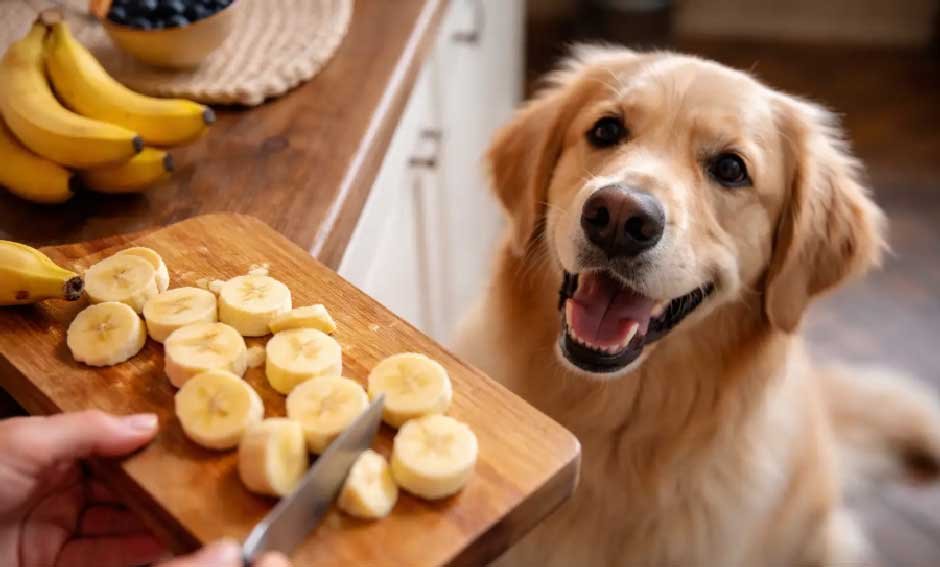
Yes, dogs can eat bananas in small amounts. Serve ripe banana flesh only, skip the peel, and treat it as a sweet snack rather than a daily food.
Bananas are not toxic to dogs, which is why they show up in so many frozen dog treats and lick mats. The catch is portion size: the soft, sticky bite that looks harmless can become too much sugar and fiber fast, especially for small dogs.
Are Bananas Safe for Dogs?
Bananas are safe for most healthy adult dogs when they are peeled, ripe, and served plain. The best use is a small training reward, food topper, or frozen treat, not a replacement for balanced dog food.
The American Kennel Club says bananas can be a low-calorie treat for dogs and notes that they contain potassium, vitamins, biotin, fiber, and copper. The same AKC guidance also warns that bananas are high in sugar and should be used as treats, not as a main part of the diet.
That is the practical answer behind can dogs eat bananas: yes, but the word “treat” is doing real work. A dog can enjoy a few slices without needing a whole fruit.
Plain matters. Do not add chocolate, sweetened yogurt, syrups, raisins, macadamia nuts, or peanut butter that contains xylitol, sometimes listed as birch sugar. Those add-ons are where a simple banana snack can turn into a vet call.
What Bananas Actually Offer a Dog
Bananas offer dogs a soft texture, quick energy, fiber, and small amounts of micronutrients. They do not offer anything a healthy dog must get from fruit, so the value is enjoyment and treat utility more than nutrition.
That distinction keeps expectations honest. A banana slice can help hide a tiny pill, add interest to a lick mat, or make a frozen treat more appealing, but it is not a supplement plan.
| Banana feature | Why it can help | Why it has a limit |
|---|---|---|
| Soft flesh | Easy for many dogs to chew and swallow | Fast eaters may gulp large pieces |
| Natural sweetness | Useful as a high-interest reward | Can encourage begging or picky eating |
| Fiber | May be tolerated well in small servings | Too much can cause gas or loose stool |
| Potassium and vitamins | Part of the fruit’s natural nutrient profile | Not a reason to replace balanced dog food |
In practice, the best banana serving is the one that disappears into the day without changing anything else. Normal dinner, normal stool, normal energy. That’s it.
How Much Banana Can a Dog Eat?
Most dogs should get banana by slice, not by whole fruit. Tiny dogs may only need one or two thin slices, while large dogs can usually handle a few more pieces if their normal diet is steady.
A useful rule is to keep treats to about 10 percent or less of a dog’s daily calories, with the rest coming from complete and balanced food. VCA Animal Hospitals uses that same 90/10 idea for treats and regular diet planning.
| Dog size | Reasonable banana serving | How often | Watch for |
|---|---|---|---|
| Toy dogs under 10 lb | 1 to 2 thin slices | Occasional treat | Loose stool, gas, picky eating after sweet snacks |
| Small dogs 10 to 25 lb | 2 to 3 slices | A few times a week at most | Extra calories crowding out dinner |
| Medium dogs 26 to 50 lb | 3 to 5 slices | Occasional treat | Soft stool if banana is overripe or given often |
| Large dogs over 50 lb | Up to half a small banana | Occasional treat | Begging habits and calorie creep |
These are conservative servings, not medical prescriptions. A couch-loving senior dog, a puppy with a touchy stomach, and a working Labrador can have very different tolerance for the same food.
Banana texture is part of the trick. It is soft, fragrant, and easy to smear into a mat, so people tend to give more than they planned. The last little piece on the cutting board counts too.
If you are using banana for training, cut the serving before the session starts. Tiny pieces work better than big slices because the dog gets more reward moments without eating much fruit.
For dogs already eating commercial treats, subtract rather than stack. A dog that gets dental chews, biscuit rewards, table scraps, and banana is not getting one treat category. It is getting four.
Can Dogs Eat Bananas Everyday?
Dogs should not eat bananas every day unless a veterinarian has folded that amount into the dog’s broader diet. A daily slice is not automatically dangerous, but it can quietly add sugar and calories.
For many dogs, the better rhythm is occasional: a few slices after a walk, a frozen smear on a hot afternoon, or a small piece tucked into a puzzle toy. That keeps the fruit special without making a sweet snack part of the dog’s daily expectation.
Can dogs eat bananas every day if the serving is tiny? Sometimes, yes. But “tiny” needs to stay tiny, and the dog still needs normal stool, stable weight, and interest in regular food.
This is where people usually misjudge it. One slice becomes three, then the dog gets peanut butter on top, then dinner portions do not change. By week three, the banana itself is not the whole problem; the routine is.
A better schedule is boring but reliable: use banana when it solves a small problem. A hot day. A pill that needs hiding. A dog that needs five quiet minutes with a frozen mat while dinner is cooking.
Can Dogs Eat Banana Peels?
Dogs should not eat banana peels. Banana peels are not generally considered poisonous, but they are tough, fibrous, difficult to digest, and more likely to cause vomiting, diarrhea, or a blockage scare.
If your dog swallowed a small piece of peel and seems normal, monitor closely. Call your veterinarian right away if you see repeated vomiting, a swollen or painful belly, loss of appetite, straining, lethargy, or no stool after a concerning amount of peel.
The peel problem is mostly mechanical. It does not mash down like ripe banana flesh, and a big strip can move through the gut badly, especially in a small dog or a dog that gulps food whole.
“She eats banana regularly but never 5 at a time. Didn’t eat the peels, no idea how she unpeeled them. Anything I should worry about?”
– r/DogAdvice, July 2025
That kind of question is common because banana incidents look ridiculous until you start counting how much the dog ate. If the dog ate several bananas, peels, or both, the right next step is not panic. It is observation plus a vet call when symptoms or size make the risk unclear.
One small peel bite may pass without drama in a large dog. A whole peel in a small dog is different, and a whole bunch with peels is different again.
Do not wait for every symptom to appear before asking for advice. A quick phone call gives the clinic the chance to tell you what to watch for based on weight, amount, and timing.
When Bananas Are a Bad Idea
Bananas are a poor choice for dogs that need strict sugar control, dogs on weight-loss plans, dogs with pancreatitis history, and dogs whose stomachs already react badly to new foods. Ask your veterinarian before using banana with any medical diet.
A banana is fruit, but it is still a sweet food. Dogs with diabetes, obesity, chronic digestive trouble, or prescription diets do not need random extras layered on top of carefully measured meals.
Puppies deserve extra caution too. Their stomachs can be dramatic about new foods, and a tiny body leaves less room for portion mistakes. If you offer banana to a puppy, start with a pea-sized taste and wait to see what happens.
Older dogs can be the opposite problem. They may love soft banana because it is easy to chew, then gain weight because the household keeps offering it as a harmless comfort snack. Harmless snacks can still add up.
| Dog situation | Banana call | Why |
|---|---|---|
| Healthy adult with normal weight | Small plain servings are usually fine | Lowest risk group when portions stay controlled |
| Dog with diabetes | Ask the veterinarian first | Banana adds natural sugar |
| Dog on a weight-loss plan | Use rarely or skip | Treat calories can slow progress |
| Dog with pancreatitis history | Get veterinary guidance | Medical diets should stay tightly managed |
| Dog with frequent diarrhea | Skip until the cause is known | New foods can blur the picture |
Serving Banana Without the Sticky Mess
The safest way to feed banana is to peel it, cut it into small pieces, and serve it plain. Freeze small slices for a firmer treat, mash a little into a lick mat, or mix a spoon-tip into regular food.
- Choose a ripe banana without mold or fermented smell.
- Remove the peel completely and throw it away where the dog cannot reach it.
- Cut the flesh into small slices, especially for small dogs and fast eaters.
- Start with less than the dog could probably handle.
- Wait a day before offering more if banana is new to that dog.
Frozen banana is often cleaner than mashed banana. It also slows some dogs down because they have to lick and nibble instead of swallowing a soft clump.
If you use banana on a lick mat, spread it thinly. A thick smear looks cute for about three seconds, then it becomes a sticky yellow paste on the mat, the floor, and sometimes the dog’s ears.
For a cleaner option, freeze coin-sized slices on a plate, then store them in a small container. They separate more easily than a frozen clump, and you are less likely to chip off a piece that is too big.
For dogs that swallow treats whole, flatten the slice with your fingers or cut it into quarters. Banana is slippery when it warms, and a round chunk can vanish before a dog really chews it.
Banana With Peanut Butter, Yogurt, or Bread
Banana is safest when it stays plain. Peanut butter, yogurt, banana chips, and banana bread all change the risk because they can add fat, sugar, salt, artificial sweeteners, raisins, chocolate, or other ingredients dogs should avoid.
| Banana food | Can dogs have it? | Safer choice |
|---|---|---|
| Banana and peanut butter | Only if the peanut butter has no xylitol or birch sugar and is given sparingly | Use a pea-sized smear with a few banana slices |
| Banana and plain yogurt | Sometimes, if the dog tolerates dairy and the yogurt is unsweetened | Use plain banana first, then test yogurt separately |
| Banana chips | Usually not ideal because many are fried or sweetened | Use fresh or frozen banana slices |
| Banana bread | Generally skip it because recipes can include sugar, butter, nuts, raisins, chocolate, or sweeteners | Bake dog-safe banana oat treats only from a vetted recipe |
The xylitol point is serious. The U.S. Food and Drug Administration warns that xylitol can be dangerous to dogs, and it can appear in sugar-free products.
Read the label every time. Brands change formulas, and a jar that was dog-safe last year may not be the same jar now.
Homemade banana dog treats can be fine when the recipe is simple: banana, plain oats, and maybe a little dog-safe peanut butter. Skip recipes built around sugar, frosting, chocolate chips, butter, or novelty ingredients meant for people.
Commercial banana-flavored treats are a separate decision. The word banana on a package does not tell you the fat level, calorie count, or sweetener list. Flip the bag over.
What to Do If Your Dog Ate Too Much Banana
If a dog ate too much banana but no peel or dangerous add-ons, mild stomach upset is the most likely issue. Monitor for vomiting, diarrhea, belly pain, lethargy, or repeated attempts to poop without success.
Call a veterinarian if the dog ate multiple bananas, ate peels, is very small, is a puppy, has a medical condition, or shows symptoms. The same goes if the banana came inside bread, candy, chocolate, trail mix, or peanut butter with unknown ingredients.
Do not induce vomiting unless a veterinarian or poison-control professional tells you to do it. The safer move is to note the dog’s weight, the amount eaten, the time it happened, and whether peel or other ingredients were involved.
Not always an emergency. But the details matter, and guessing feels much less funny at 11 p.m. when the dog starts pacing by the back door.
Symptoms that deserve attention
A dog that ate too much banana may have no symptoms or may have a short round of digestive upset. Repeated vomiting, bloody diarrhea, abdominal pain, weakness, collapse, or signs of choking are not wait-and-see symptoms.
- Vomiting more than once
- Diarrhea that is severe, bloody, or lasts longer than a day
- Hard, swollen, or painful belly
- Repeated straining without stool
- Drooling, gagging, coughing, or trouble breathing
- Lethargy, trembling, weakness, or unusual hiding
Small dogs can reach the “too much” point faster than people expect. A banana that feels snack-sized to a person can be a huge serving for a six-pound dog.
Quick Safety Check Before You Share
Banana is a reasonable dog treat when it passes a simple safety check: ripe flesh, no peel, no sweeteners, no risky mix-ins, and a serving that fits the dog’s size. If any part of that fails, choose a safer snack.
- Use ripe banana flesh only.
- Keep servings small enough to look almost silly.
- Skip the peel completely.
- Avoid banana bread, sweetened banana chips, chocolate, raisins, and xylitol-containing products.
- Go slower with puppies, seniors, overweight dogs, diabetic dogs, and dogs on medical diets.
- Stop if banana causes vomiting, diarrhea, itching, or a sudden change in appetite.
For most healthy dogs, can dogs eat bananas has a pleasant answer: yes, a little. The better habit is stopping while the dog still wants more.
Better Treats for Some Dogs
Banana is not the best treat for every dog. If sugar, calories, or digestive sensitivity are the concern, plain vegetables or part of the dog’s normal kibble may be a better fit.
Carrot pieces, cucumber slices, green beans, or a few pieces of the dog’s own food can work well for many dogs. Each one still needs the same common-sense screen: safe size, plain preparation, and no seasoning.
For training, boring can be useful. Kibble from the daily ration keeps the calorie math clean, while banana can stay reserved for times when you need a higher-value reward.
That is the quiet advantage of banana: it does not need to be the everyday treat to be useful. It can be the special one.
FAQ
Can dogs eat bananas with peanut butter?
Dogs can eat bananas with peanut butter only when the peanut butter is xylitol-free and served in a very small amount. Choose unsalted, unsweetened peanut butter when possible.
Can dogs eat bananas when they have diarrhea?
Dogs with diarrhea should not be given banana as a home fix without veterinary advice. A tiny amount may not hurt some dogs, but diarrhea has too many possible causes.
Can puppies eat bananas?
Puppies can eat a tiny taste of plain banana, but they should not get large servings. Their regular puppy food matters more than fruit treats.
Can dogs eat frozen bananas?
Dogs can eat frozen banana slices if the pieces are small enough to prevent choking. Frozen banana works best as an occasional slow treat.
Can dogs eat banana bread?
Dogs should usually skip banana bread because recipes often contain sugar, butter, nuts, chocolate, raisins, or sweeteners. Plain banana is the safer option.