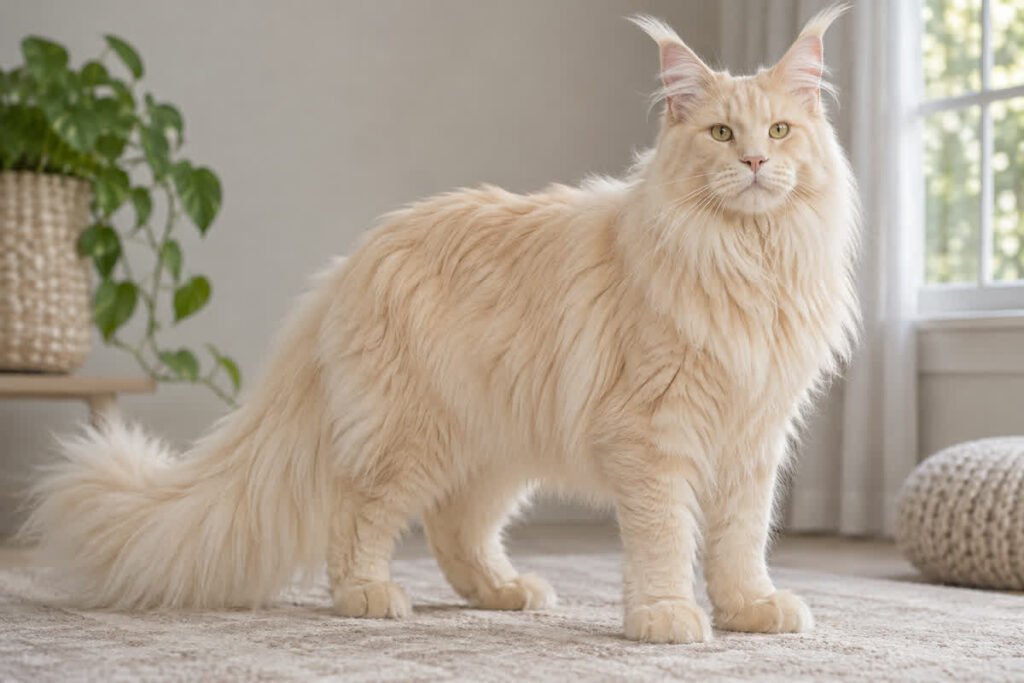
A cream Maine Coon is a cat whose coat is the diluted form of red. The Cat Fanciers’ Association (CFA) Maine Coon standard describes solid cream as “one level shade of buff cream, without markings,” sound to the roots, with pink nose leather and paw pads.
That solid is only one entry. The same standard lists cream in tabby, silver tabby, shell, shaded, smoke and white-spotted versions, and cream turns up again as the paler patches in blue-cream and dilute calico cats. If you are looking at a pale kitten and wondering which of these it is, the answer usually sits at the base of the hairs.
What CFA Means by a Cream Maine Coon
In the CFA show standard (revised 2025), cream belongs to the Solid Color Class next to white, black, blue and red. The wording is short: buff cream, one level shade, no markings, the colour carried all the way down each hair, pink leather on the nose and pads.
The red solid that sits one line above it reads very differently. Red is “deep, rich, clear, brilliant red” with brick-red nose leather and paw pads. Put the two descriptions side by side and you have the quickest field test there is: a pink nose and pink pads fit cream, a brick-red nose fits red.
The standard also states a preference you can check on your own cat. Solid cream is supposed to show no markings at all. Some pale cats show faint stripes on the legs, tail or face, and once stripes are clearly there the cat is judged against the cream tabby description instead.
Why Cream Is Diluted Red
Two separate genes have to line up for a cream Maine Coon. One makes the pigment orange; the other thins it out.
The thinning gene is dilute. In a 2006 paper in Genomics, Ishida and colleagues at the National Cancer Institute traced the dilute coat to a single-base deletion in the MLPH gene and wrote that, with dilute, “black pigmentation combined with dilute appears gray and orange pigments appear cream.” They found the same homozygous change in 97 unrelated dilute cats from 26 breeds plus random-bred cats, and described dilute as an autosomal recessive trait. Recessive means a kitten needs a dilute copy from each parent. Two parents that both carry one hidden copy can produce a cream kitten without looking dilute themselves.
The orange gene works by different rules because it sits on the X chromosome. Kyushu University’s 2025 release on the orange gene (ARHGAP36, published in Current Biology) explains the consequence: a male, with one X, is orange if he inherits the orange variant, while a female needs two copies to be fully orange. Combine that with dilute and you get the cream recipe:
- Male cream: one orange X from his mother, plus two copies of dilute.
- Female cream: orange on both X chromosomes, plus two copies of dilute.
- Female with one orange and one non-orange X, plus dilute: a blue-cream (cream patches mixed with blue), not a cream.
No breed registry publishes a count of Maine Coons by colour, so there is no reliable figure for how rare cream is. The genetics only say what each parent has to carry. If you want a cream kitten, ask whether both parents carry dilute; a breeder who has DNA-tested for it can tell you directly.
Every Cream Variety in the 2025 Standard
Here is every class in the CFA Maine Coon standard that is cream or carries cream, with the standard’s own description shortened to its working parts.
| Variety | What the CFA standard describes | Nose leather and paw pads |
|---|---|---|
| Solid cream | One level shade of buff cream, no markings, sound to the roots | Pink |
| Cream tabby (classic, mackerel, ticked) | Very pale cream ground with buff or cream markings darker than the ground but still in the dilute range | Pink desirable |
| Cream silver tabby | Off-white ground, cream markings, white undercoat | Pink desirable |
| Shell cream (cream chinchilla) | White undercoat, coat lightly tipped with cream; white chin, chest and stomach | Rose |
| Shaded cream | White undercoat with a mantle of cream shading down the sides, face and tail | Rose |
| Cream smoke | White undercoat deeply tipped with cream; looks cream at rest, white shows when the cat moves | Pink desirable |
| Cream and white | Cream with white; must have white on bib, belly and all four paws | Not specified |
| Cream or cream silver tabby and white | Tabby colour as above with the same required white areas | Not specified |
| Blue-cream | Blue with patches or soft intermingled areas of cream | Not specified |
| Dilute calico | White with unbrindled patches of blue and cream; white on the underparts | Not specified |
Shell, shaded and smoke creams also have “and white” versions with the same bib, belly and four-paw rule, and cream shows up as the patch colour in blue patched tabbies and some silver patched tabbies. Counted that way, cream runs through more than a dozen classes in a single breed standard.
For show entry, the CFA groups these into color class numbers: solid cream with the other solids (1700/1701), cream tabby and cream silver tabby under All Other Tabby Colors (9792/9793), cream and white with the bi-colors (1790/1791), and shell, shaded and smoke cream under Shaded and Smoke (1730/1731). The full CFA standard notes that these numbers are for reference, not part of the official standard.
Every one of these sits inside the wider palette covered on our Maine Coon colors page, and the undiluted version has its own write-up on the orange Maine Coon.
Telling Cream Smoke, Shaded Cream and Cream Tabby Apart
The CFA descriptions split the cream family into two groups by one feature: whether there is a white undercoat. Solid cream and cream tabby are cream “sound to the roots.” Shell, shaded, smoke and cream silver tabby all sit on white.
Owners run into this with young kittens all the time. One post in r/mainecoons asked exactly this about a 12-week-old male:
“I’ve noticed the roots of his hair are all white and I was wondering if that would mean he’s a cream smoke. I’ve seen the google pictures of cream smoke before and none really look like my guy, who also seems to have very faint (tabby?) stripes all over his body so I’m just wondering if I’m going crazy”
– r/mainecoons, May 2026 (145 upvotes)
The shortest reply in the thread did the sorting:
“There are stripes. Smokes are solid.”
– r/mainecoons, May 2026 (14 upvotes)
That matches the standard. A smoke “in repose appears cream” and shows its white undercoat only in motion or when the fur is parted; it has no tabby pattern. Stripes over a white undercoat point to the silver tabby side instead, and another commenter in the same thread read the kitten as a red silver tabby with white.
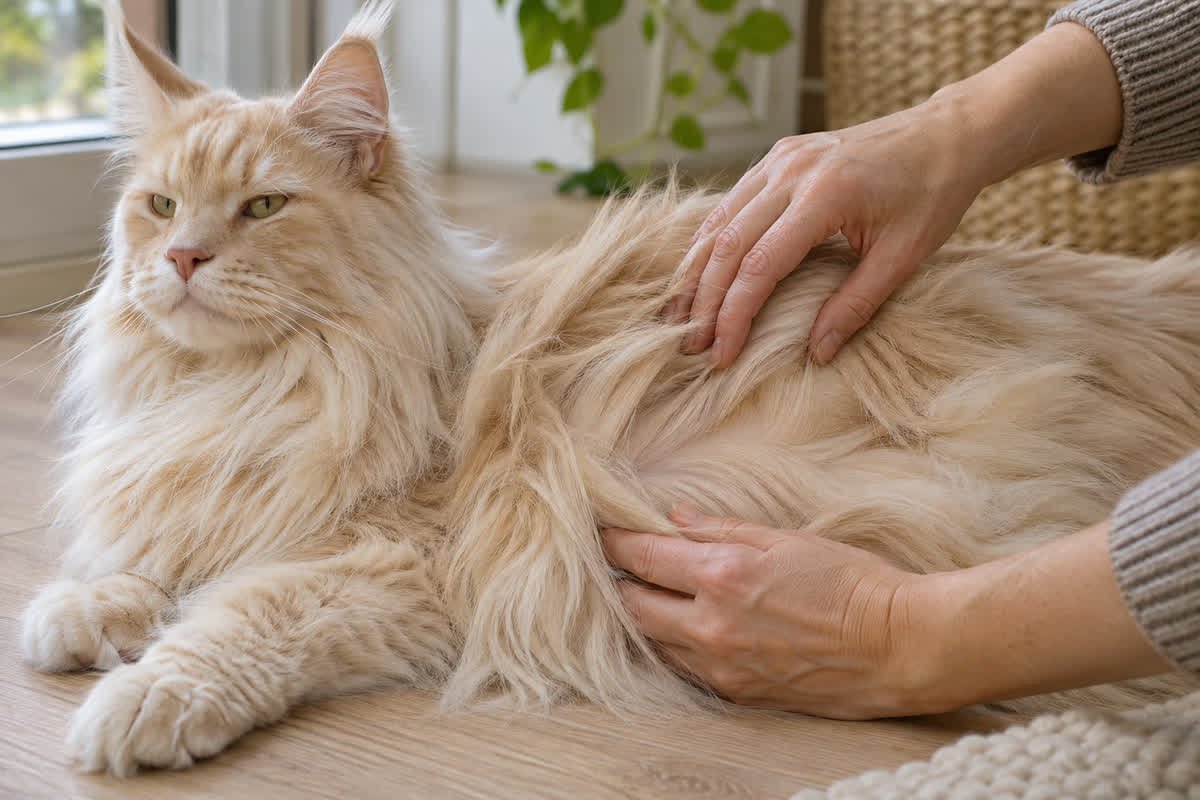
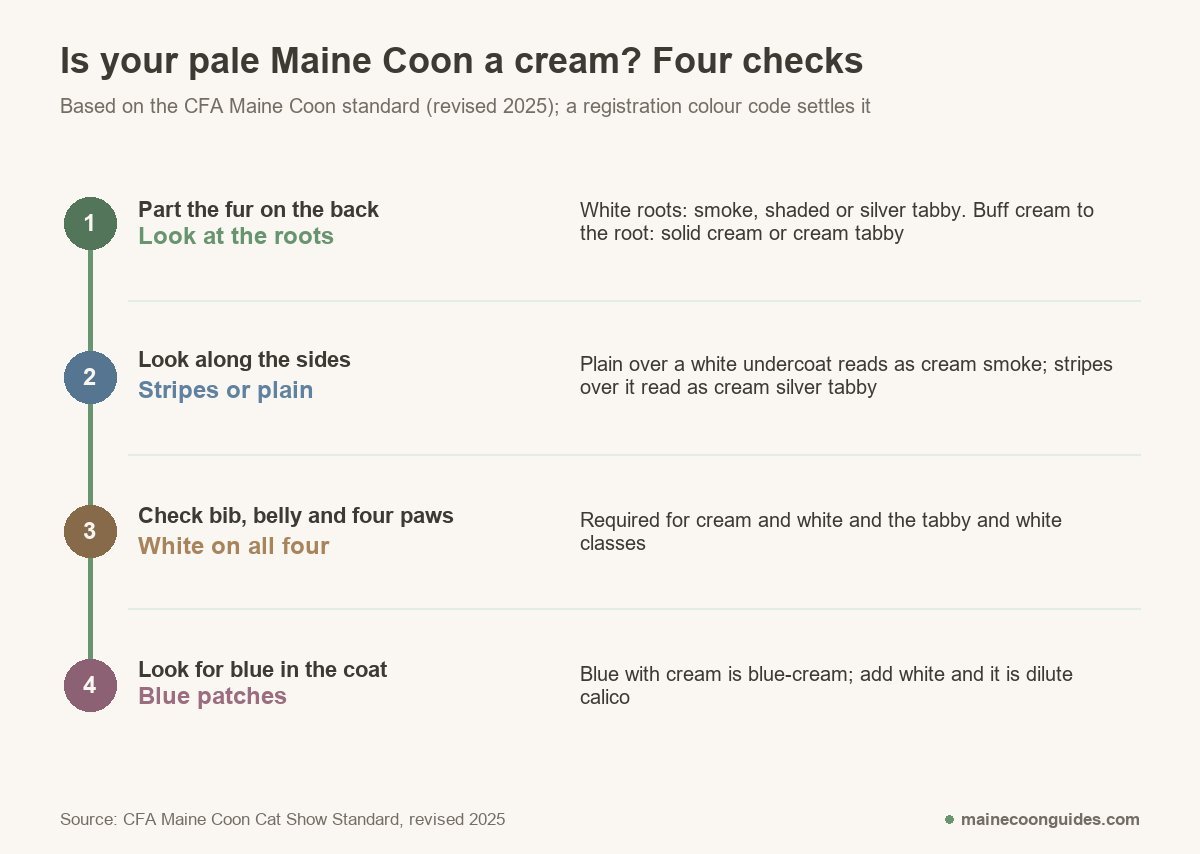
Four checks in a fixed order sort most pale Maine Coons. First, look at the roots by parting the fur on the back, where the coat is longest. Second, decide stripes or plain along the sides and legs. Third, see whether there is white on all four paws as well as the bib and belly, because that moves the cat into an “and white” class. Fourth, look for blue patches; blue mixed with cream makes a blue-cream, and blue, cream and white together make a dilute calico.
Kittens make this harder. Owners in r/mainecoons report shade changes well past kittenhood; one post described a 2-year-old male’s coat turning “orange ish” on the back and chest. Treat a reading taken at 12 weeks as provisional. Our Maine Coon growth chart lays out how slowly this breed matures, and the coat follows the same long timeline. The registration paperwork is the firmer answer: the colour the breeder registered, and the colours of both parents, tell you which classes are even possible.
Cream, Red, Beige or Something Else
A cream Maine Coon is easy to confuse with three other things.
Red. A pale red tabby can look washed out in photos. The pads and nose settle it: brick red for red, pink for cream in the CFA wording.
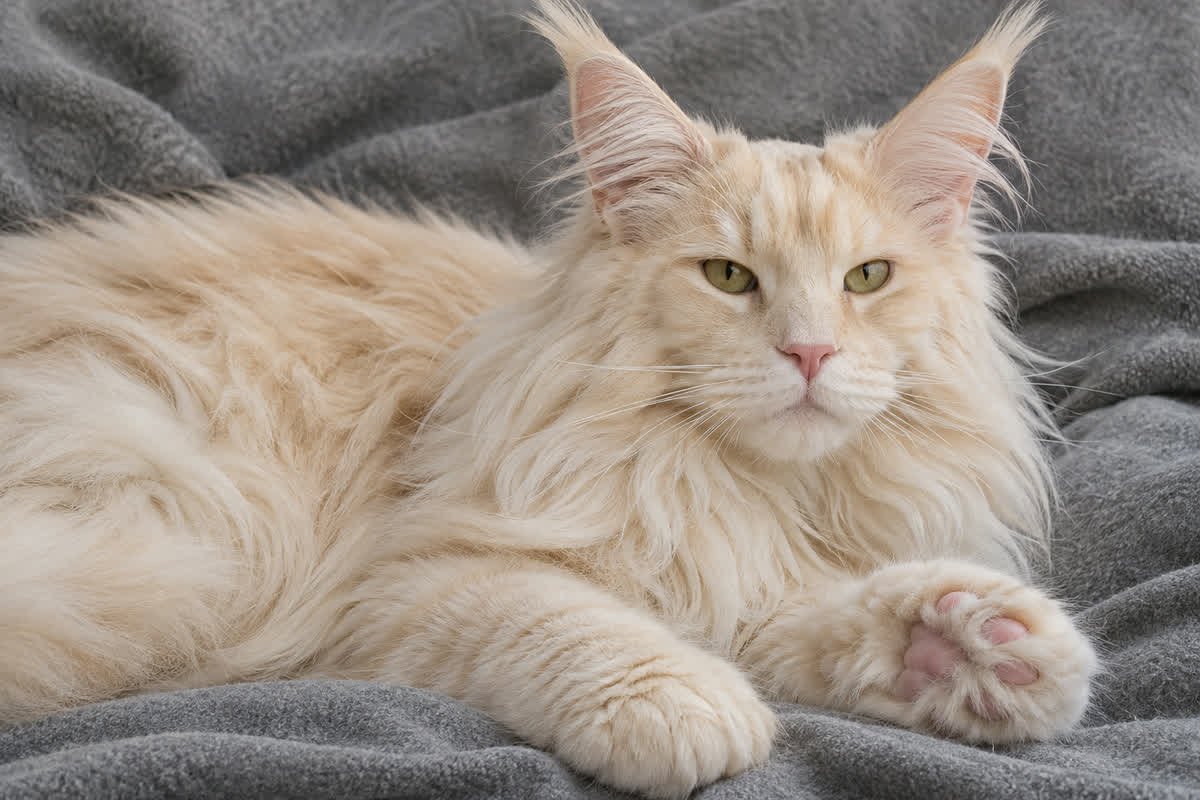
Silver. A cream silver tabby has an off-white ground with cream markings, and a cameo (red silver) has red markings on off-white. Both have white at the base. Our silver Maine Coon page covers that side of the family.
Beige, fawn or “champagne.” These names come up for very pale cats, and here the standard draws a hard line. The CFA disqualifies Maine Coons “showing evidence of hybridization resulting in the colors chocolate, lavender, or the Himalayan pattern.” A kitten sold as a “lavender” or “chocolate” Maine Coon is being sold in a colour the breed standard does not accept, and a vague “champagne” label deserves the same question. Ask to see the registration before paying for one.
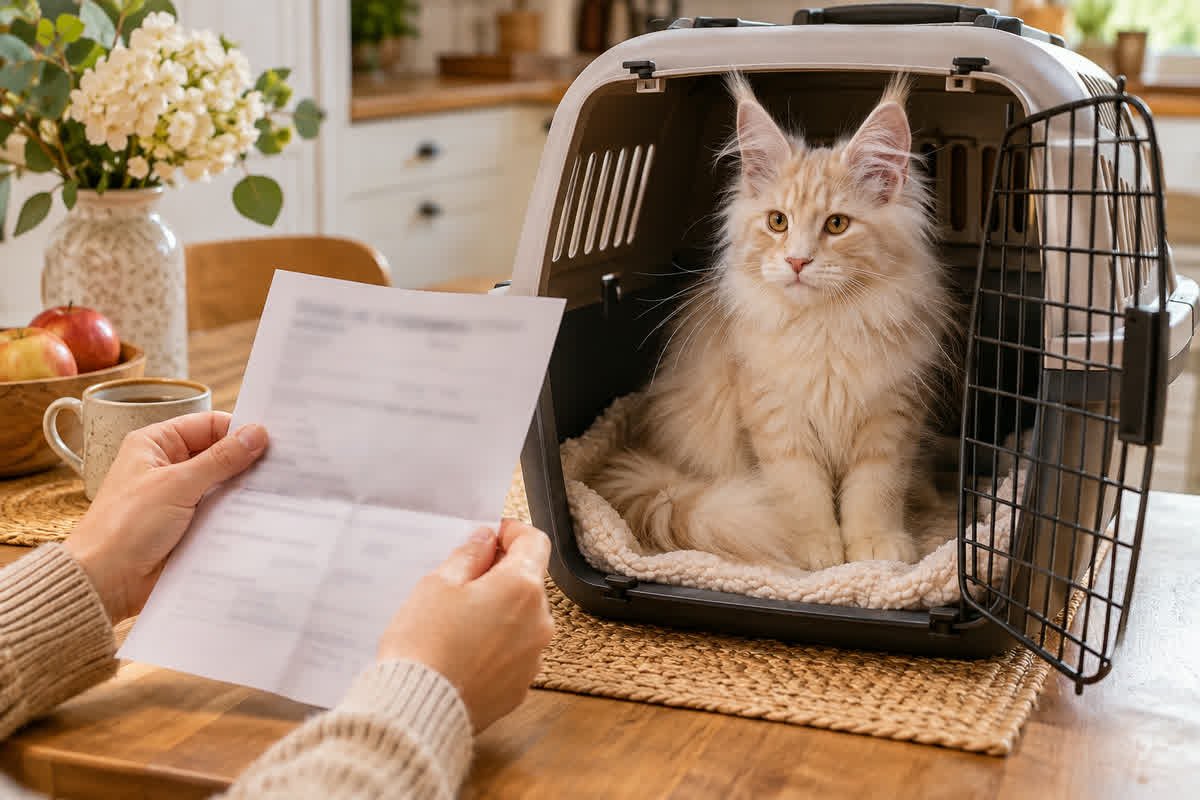
Eye colour does not help much with any of this. The standard allows shades of green, gold, green-gold or copper for every colour, and blue or odd eyes only for white cats and cats with white.
FAQ
Do beige cats exist?
Beige is not a CFA Maine Coon colour name. The closest accepted colour is cream, described in the CFA standard as buff cream with pink nose leather. Chocolate and lavender are disqualified colours for the breed.
Is a cream Maine Coon rare?
No registry publishes Maine Coon numbers by colour, so rarity cannot be measured. Cream does need two copies of the recessive dilute gene plus the orange gene, so two parents without those genes cannot produce one.
Can a cream Maine Coon kitten change colour?
A cream kitten keeps its genetic colour, though owners report the visible shade and faint markings shifting as the adult coat grows in. A white undercoat seen at the roots is the more reliable early clue than the shade on top.
If the roots are white and the sides show stripes, you are looking at the silver tabby branch, not a cream smoke. The breeder’s registration colour code will confirm which one.