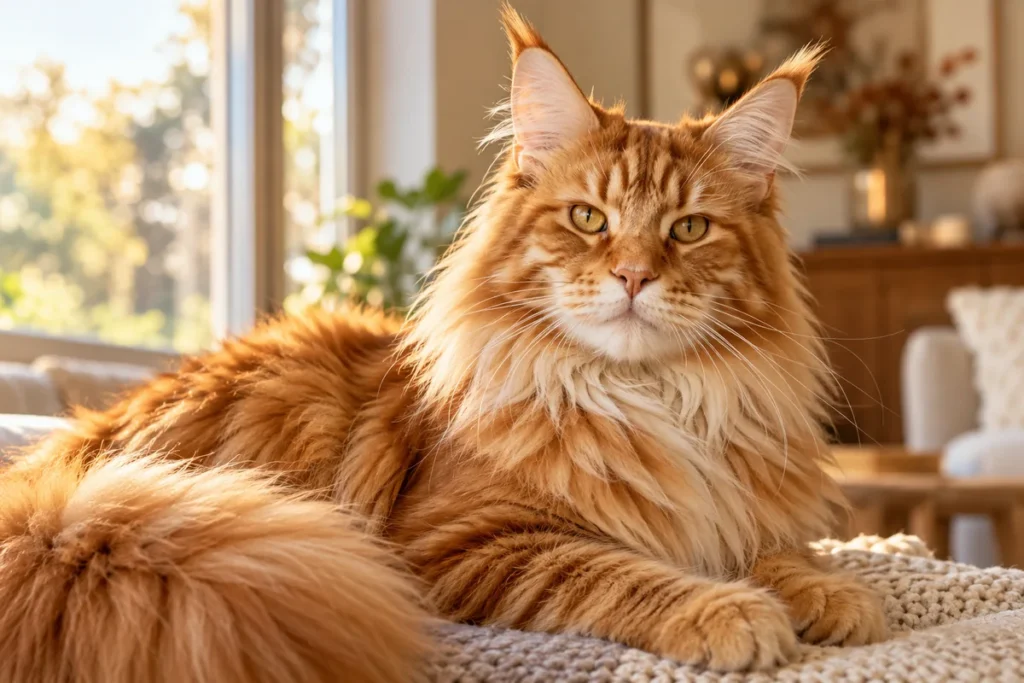
An orange Maine Coon is called a red Maine Coon in the Cat Fanciers’ Association breed standard, which defines red as “deep, rich, clear, brilliant red; without shading, markings, or ticking” and lists red tabby and red and white among its classes.
Most orange cats are male because the orange gene sits on the X chromosome, while size is described for the breed as a whole, not by colour.
What is an orange Maine Coon called in the breed standard?
The Cat Fanciers’ Association standard calls the colour red. The breed page read on 31 October 2026 does not use the word orange anywhere in the text covered, so a cat sold as orange is a red one on paper.
That definition is for solid red, which carries no markings. Tabby cats do carry markings, so the standard lists red tabby and red and white as classes of their own. Cream is a separate colour in the same standard, defined as “one level shade of buff cream, without markings.”
Chocolate, lavender and the Himalayan pattern are ruled out when they come from hybridization, and red is not on that list, so it is a fully accepted show colour.
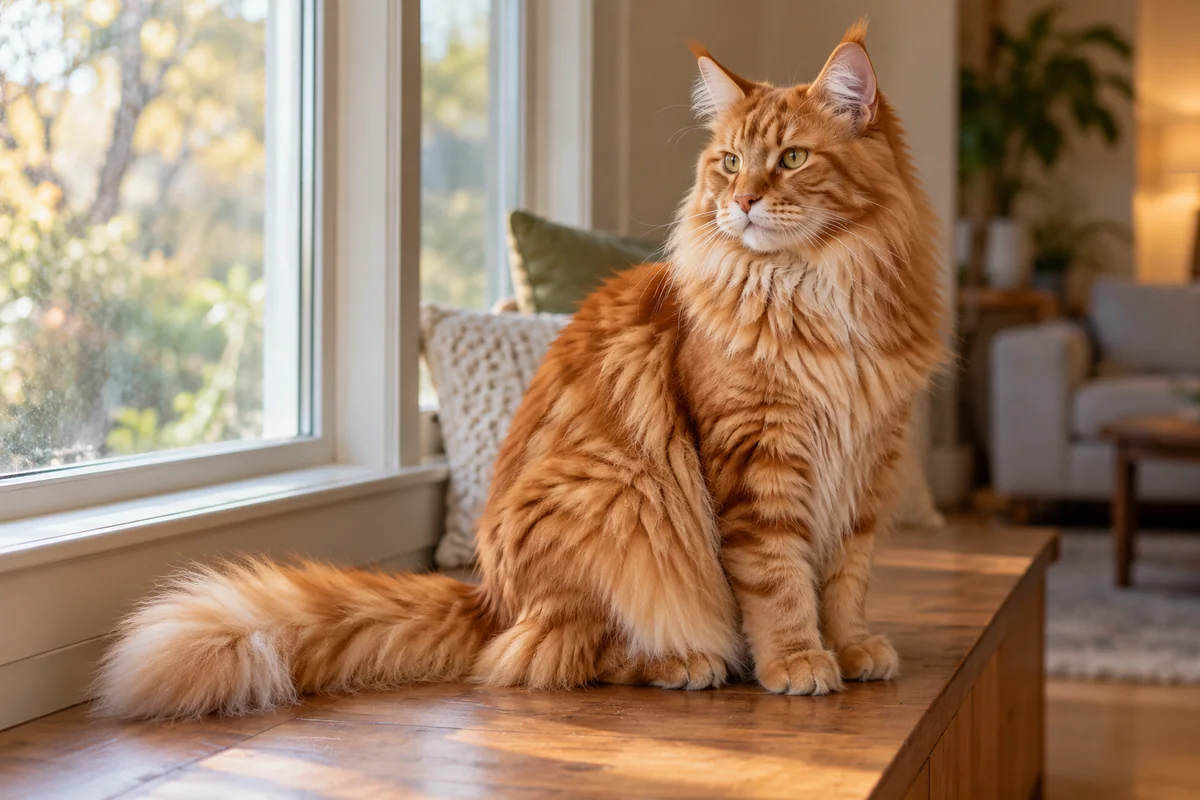
Owners use both names for the same cat, and one r/Catnames poster wrote:
“He’s a red tabby Maine Coon. I like punny names or references to red/orange things. He’ll get pretty big (20+lbs) and has 26 toe beans (polydactyl) so maybe there’s something there??”
– r/Catnames (216 upvotes)
Why are most orange Maine Coons male?
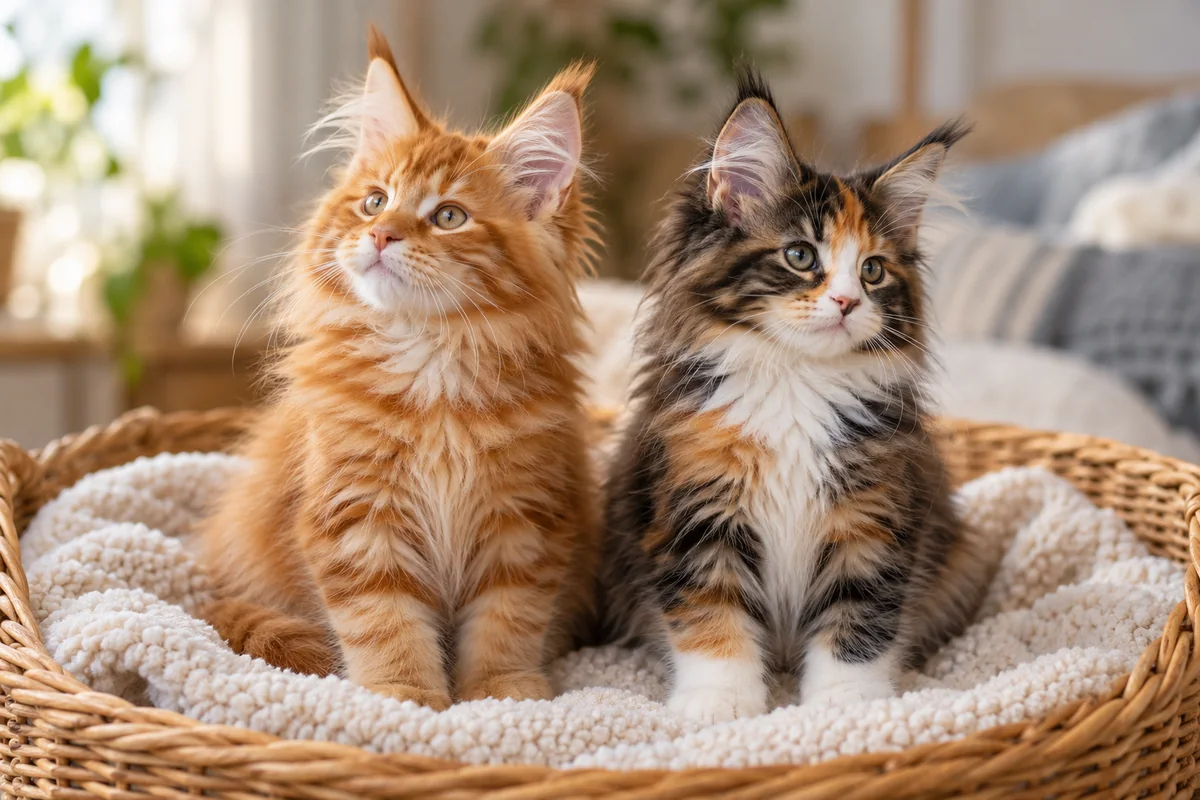
Kyushu University researchers say a male, with one X chromosome, is orange if he inherits the orange gene, while a female needs two copies to be fully orange. Most orange tabbies are therefore male, and calicos and tortoiseshells are nearly always female.
The gene was found in 2025. A Kyushu University team led by Hiroyuki Sasaki reported in Current Biology that all ten orange cats in its first sample shared a deletion in the X-linked ARHGAP36 gene, and none of the eight non-orange cats carried it. The pattern held in 49 more cats. A separate Stanford study reached the same result independently.
| Cat | Orange genes on the X chromosomes | Coat |
|---|---|---|
| Male | One | Orange |
| Female | Two | Fully orange, and less common |
| Female | One orange, one non-orange version | Patchy: tortoiseshell or calico |
Random X inactivation explains the patches: one X chromosome in each cell is switched off early in development, so some patches show orange and some do not.
About 80% male is the figure that circulates on breeder pages. Neither the Kyushu University page nor the Science News report on the studies gives a percentage, so 80% is a repeated estimate rather than a counted one. Females with the patchy coat are covered in the calico Maine Coon guide.
Are orange Maine Coons friendlier than other colours?
In a 2012 online survey of 189 people, orange cats were rated relatively high in friendliness and low in aloofness and shyness compared with four other colours. That measures what people believe about coat colour, not how cats behave.
Real cats did not show the pattern in the shelter study the survey authors cite. A 2010 assessment of 130 adoptable cats in a Florida shelter, by Munera, found no significant differences between coat-colour groups on either aspect of behaviour. The survey authors also note that orange cats are likely to be male, so the ratings may reflect beliefs about male cats rather than about colour.
No source read compares Maine Coon colours with each other on temperament. Treat the friendliness reputation as an owner belief. Judge the individual kitten, not the coat.
Is an orange Maine Coon bigger than other colours?
The CFA breed page describes size for the whole breed, not by colour. It calls the Maine Coon slow-maturing, able to take up to three years to reach full growth, and says a mature male reaching or exceeding 20 pounds is not unusual.
Females are usually smaller. What owners report at each age is in the Maine Coon growth chart.
Does the orange colour cost more in a Maine Coon?
Two of the five US cattery price lists read for the price guide tie the figure to colour. Oregon Maine Coon lists red shaded at $4,300 against $3,000 for a regular colour, and Freedom Mountain Maine Coons quotes $2,500 to $5,500 per kitten depending on colour variations and type.
The Oregon list does not itemise a plain red tabby. It prices “regular color” at $3,000 without naming the colours that count, so ask a cattery in writing whether its quoted price covers the colour you want.
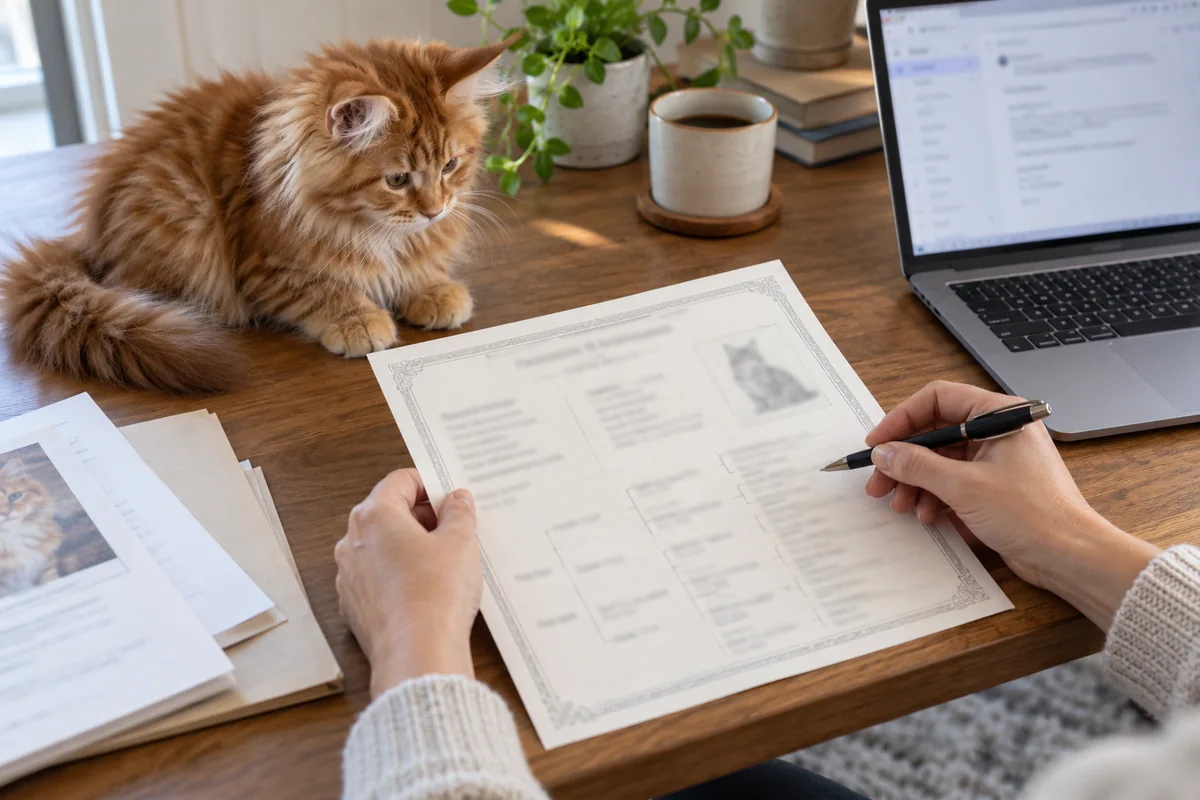
Four questions, asked in writing, settle most of the uncertainty:
- Which colour and pattern does the kitten’s registration paperwork give, such as red tabby or red and white?
- Is the quoted price for that exact colour, or is colour a separate charge?
- Which colours are the two parents registered as?
- Is the price current on the day of the quote?
Both lists were read on 1 October 2026 and checked again on 14 October 2026, and a cattery can change its prices at any time. All five lists, with tax, delivery and rescue fees, are in the Maine Coon price guide.
Finding the colour is a separate problem from paying for it. A commenter in an r/mainecoons thread on orange cats wrote:
“I am amazed how many red/orange Maine Coon tabbies are featured here. It took us forever to find a breeder that had red/orange littermate tabby brothers. Turns out we found a breeder within 10 miles of home.”
– r/mainecoons (45 upvotes)
How can you tell an orange cat is a Maine Coon?
Colour cannot tell you the breed. The gene work above covers orange cats in general, so orange fur is not specific to the Maine Coon, and registration papers on the parents are what confirm a purebred cat.
Without papers, the CFA standard’s features for the head, ears, eyes, body, tail and coat are the thing to compare against. The Maine Coon traits checklist scores ten of them, and the guide to telling if a cat is a Maine Coon mix explains why a checklist can only suggest a breed and never prove it.
FAQ
What do registries call an orange Maine Coon?
The Cat Fanciers’ Association calls it red and lists red tabby and red and white classes. The CFA Maine Coon breed page defines red as “deep, rich, clear, brilliant red; without shading, markings, or ticking.”
Can an orange Maine Coon be female?
Yes. A female needs two copies of the orange gene to be fully orange, according to the Kyushu University research summary, which is why fully orange females are less common than males.
Are orange Maine Coons more aggressive?
No source read shows that colour makes a Maine Coon more aggressive. The 2012 survey authors cite an unpublished 1996 study in which red and cream kittens reacted more aggressively than other colours when held by a stranger, and the 2010 shelter study of 130 cats that found no coat-colour differences.
Are orange Maine Coons rare?
Red is an accepted colour in the CFA standard with its own tabby and bicolour classes. No source read counts how many Maine Coons are orange, so the only thing the sources call less common is the fully orange female.