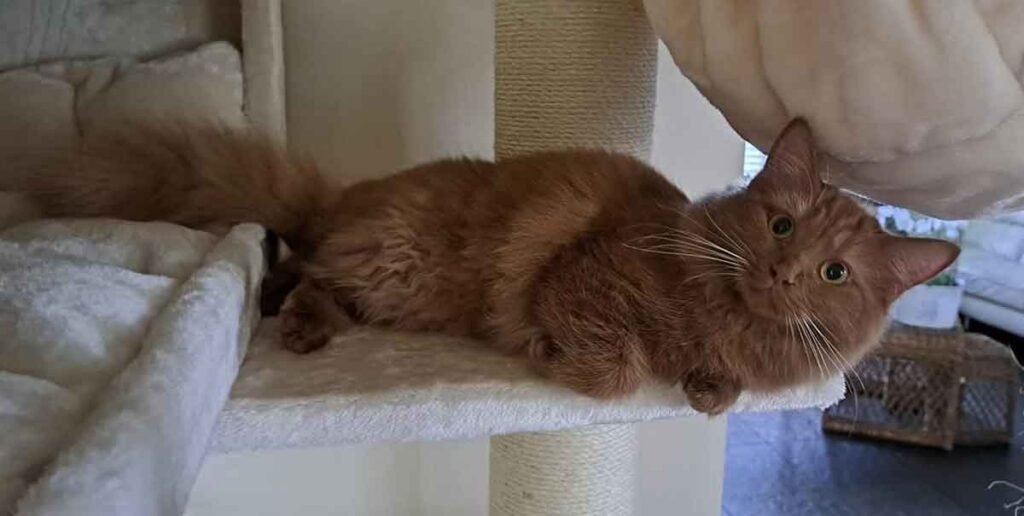
Ragdolls are usually associated with familiar colors such as seal, blue, chocolate and lilac. However, cinnamon adds a much warmer shade to the breed. It can look light reddish-brown, softly copper-toned or almost warm caramel depending on the cat’s age, pattern and lighting.
That appearance is only part of what makes a cinnamon Ragdoll cat interesting. Cinnamon has a specific genetic basis, it can be confused with chocolate or seal in photographs, and the color continues developing as a Ragdoll matures.
For families researching this color, understanding those differences matters. A rare-looking kitten is not automatically cinnamon simply because its coat appears brown. Genetics, parentage, pigmentation and age all provide more useful information than color alone.
Table of Contents
- What is a cinnamon Ragdoll?
- Why cinnamon is genetically different from chocolate and seal
- How cinnamon inheritance works
- Why cinnamon Ragdolls are still uncommon
- Cinnamon vs chocolate vs seal Ragdolls
- How cinnamon color develops as a kitten grows
- Patterns can change how cinnamon looks
- What “brown Ragdoll” really means
- Are cinnamon Ragdolls recognized?
- What prospective families should verify
- Why color should never be the only reason to choose a kitten
What Is a Cinnamon Ragdoll?
A cinnamon Ragdoll is a Ragdoll whose genetically determined dark pigment has been modified into a warm reddish-brown tone.
In a pointed cinnamon Ragdoll, that warmer pigment appears most clearly on the cooler parts of the body. These include the ears, face, legs and tail. The body remains lighter, which creates the contrast associated with pointed cats.
Cinnamon should not be confused with red or cream. Although cinnamon can look warm, it belongs to the same genetic color family that produces black-based, chocolate and related brown tones.
It is also different from simply calling a cat “brown.”
That distinction is important because people searching online for brown Ragdolls may be looking at several genetically different colors.
Why Cinnamon Is Genetically Different From Chocolate and Seal
The easiest way to understand cinnamon is to start with the B locus, which influences black-based pigment in cats.
Veterinary genetics laboratories describe three important forms of this gene:
- B — full black-based pigment
- b — chocolate
- bˡ — cinnamon
Their dominance order is:
B > b > bˡ
In practical terms, black-based pigment dominates chocolate, while chocolate dominates cinnamon.
Therefore, a cat can carry cinnamon without looking cinnamon.
That single fact explains much of the confusion surrounding rare Ragdoll colors.
For example, a seal Ragdoll may carry cinnamon genetically while still appearing seal. Likewise, a chocolate Ragdoll can carry cinnamon while looking chocolate.
The hidden gene only becomes visually obvious when the correct combination is inherited.
How Cinnamon Inheritance Works
Cinnamon is recessive.
For a cat to express cinnamon at the B locus, it needs to inherit the cinnamon allele from both parents.
A simple cinnamon genotype can be written as:
bˡ/bˡ
That means the kitten received one cinnamon allele from its mother and another from its father.
However, carriers can look completely different.
Consider these simplified examples.
Full-color cat carrying cinnamon
B/bˡ
The dominant B allele determines the visible pigment. Therefore, the cat does not look cinnamon even though it can pass cinnamon to its kittens.
Chocolate cat carrying cinnamon
b/bˡ
Chocolate dominates cinnamon. As a result, this cat looks chocolate but still carries one cinnamon allele.
Cinnamon cat
bˡ/bˡ
There is no dominant black or chocolate allele present to mask cinnamon. Therefore, cinnamon becomes visible.
This is one reason visual identification alone has limits. Looking at a cat can tell us a great deal, but DNA testing and known parent genetics can answer questions that photographs cannot.
Why Cinnamon Ragdolls Are Still Uncommon
Cinnamon remains less common than traditional Ragdoll colors because breeders need the appropriate genetics in their breeding lines.
A breeder cannot simply pair two attractive brown-toned Ragdolls and expect cinnamon kittens.
Both parents must contribute the necessary genetic material.
Historically, cinnamon also had to be established within Ragdoll breeding populations while breeders continued selecting for recognizable Ragdoll structure, coat, temperament and overall breed characteristics.
That takes generations of thoughtful breeding.
Today, cinnamon is more visible than it was years ago, but families will still find far fewer breeders working with the color compared with seal, blue or other established Ragdoll colors.
Rarity, however, should never become an excuse to compromise health, temperament or responsible breeding.
A rare color is only desirable when the rest of the cat receives equal attention.
Cinnamon vs Chocolate vs Seal Ragdolls
This is probably the area that causes the most confusion.
A photograph taken under warm indoor lighting can make a seal Ragdoll look chocolate. Similarly, chocolate can sometimes appear warmer than expected.
Cinnamon adds another layer because it is also part of the brown pigment family.
Here is a useful general comparison:
| Color | General appearance | Genetic relationship |
| Seal | Deep brown to very dark brown points | Dominant full pigment at the B locus |
| Chocolate | Warmer, softer milk-chocolate brown | Recessive to B, dominant to cinnamon |
| Cinnamon | Lighter reddish-brown or warm cinnamon-toned points | Recessive to both full pigment and chocolate |
These descriptions help, but they are not a substitute for genetics.
Age also matters.
A young pointed kitten may have relatively little visible pigment. Therefore, trying to identify subtle differences from one early photograph can produce incorrect conclusions.
Natural daylight usually gives a better impression than heavily edited breeder photographs or warm indoor lighting.
Nose leather, paw-pad pigmentation, known parent colors and DNA results can also provide additional clues.
How Cinnamon Color Develops as a Kitten Grows
Ragdoll kittens do not arrive looking like miniature adults.
Pointed kittens are born very light because the gene responsible for pointed coloration responds to temperature. Pigment develops more strongly in cooler areas of the body.
As the kitten grows, color becomes increasingly visible on the:
- ears
- face
- tail
- feet
- legs
The body generally stays lighter than the points.
This process does not finish in a few weeks.
Ragdolls mature slowly, and their coat color can continue developing for years. Therefore, a cinnamon kitten at twelve weeks may look noticeably different at one year of age and different again as a fully mature adult.
This is one reason long-term photographs are especially valuable when researching unusual Ragdoll colors.
Ideally, breeders working with cinnamon should document kittens at different ages rather than showing only one carefully selected photograph.
A sequence from early kittenhood through adulthood tells prospective families much more about how the color truly develops.
Patterns Can Change How Cinnamon Looks
Color and pattern are separate characteristics.
That means two genetically cinnamon Ragdolls can look surprisingly different if they have different patterns.
Common Ragdoll patterns include:
Colorpoint
The ears, face, feet, legs and tail carry the point color. There is no white mitt or large white facial marking.
Mitted
Mitted Ragdolls have white on the feet along with other characteristic white areas. Because part of the legs is white, less cinnamon pigmentation may be visible there.
Bicolor
A bicolor Ragdoll has considerably more white, including the familiar inverted white “V” on the face. Consequently, the cinnamon areas may appear more separated by white markings.
Lynx striping can add another visual layer.
Therefore, families should avoid expecting every cinnamon kitten to look the same.
The underlying color may be cinnamon while pattern, white spotting, sex, age and individual development produce a very different overall appearance.
What Does “Brown Ragdoll” Really Mean?
“Brown Ragdoll” is a common search phrase, but it is not very precise.
A person looking for a brown Ragdoll may actually be interested in:
- seal
- chocolate
- cinnamon
- a lynx variation of one of those colors
Seal Ragdolls often appear deep brown rather than visually black. Chocolate produces a warmer brown. Cinnamon shifts further toward a lighter reddish-brown tone.
Therefore, someone searching for brown Ragdoll kittens should first decide what type of brown appearance they actually prefer.
This makes photographs of mature cats especially helpful.
A kitten’s early coat may not provide a complete picture of its future appearance.
Are Cinnamon Ragdolls Recognized?
Registry terminology is another area where outdated information causes confusion.
The International Cat Association currently includes cinnamon among the colors listed for Ragdolls. TICA also lists fawn, which is the dilute counterpart associated with cinnamon genetics.
However, not every cat registry uses identical breed standards or color classifications.
That is why statements such as “cinnamon is recognized everywhere” or “cinnamon is not a Ragdoll color” are both too simplistic.
Prospective families should ask a more useful question:
Which registry is being discussed, and what does its current breed standard say?
Registry policies can also change over time. Therefore, current primary sources are more reliable than old forum posts or articles that may never have been updated.
What Prospective Families Should Verify
Because cinnamon is uncommon, buyers can become overly focused on finding the color.
That can make them easier targets for poor breeding practices or misleading advertisements.
Before looking for cinnamon Ragdoll kittens for sale, families should evaluate much more than coat color.
Ask how the kitten’s color was determined
Was it based only on appearance?
Or does the breeder know the parents’ genetics and have DNA information available when appropriate?
A responsible answer should make biological sense.
Ask about the parents
Prospective families should be able to learn about both parents, not only the kitten.
Relevant information includes:
- registered names and pedigrees
- colors and patterns
- temperament
- health testing
- age
- breeding history
Review health testing
Rare color should never take priority over health.
Ragdolls have known health considerations, including hypertrophic cardiomyopathy. Families should understand which tests the breeder performs and what those tests actually mean.
A DNA result is useful evidence, but no single genetic test guarantees that a cat will never develop any health problem.
Look beyond staged photographs
Beautiful photography is useful, but it should not be the only evidence a breeder provides.
Videos, age-progressive photographs and live interaction can give families a much better understanding of the kitten.
Ask about socialization
Color does not create temperament.
Daily handling, household exposure, positive human interaction and appropriate early experiences all influence how comfortably a kitten transitions into its future home.
Why Color Should Never Be the Only Reason to Choose a Kitten
Cinnamon is visually distinctive, and it is understandable that families become interested in a Ragdoll after first seeing that warm coat color.
However, a kitten will live with its family for many years.
Temperament, health, socialization and compatibility with the household matter far more over the long term than a particular shade of brown.
A family with young children may need a different personality than a quiet adult household. Likewise, a home with an established cat or dog needs thoughtful temperament matching.
Good breeders pay attention to those differences.
The best match is not necessarily the darkest cinnamon kitten, the lightest kitten or the kitten with the most dramatic markings.
It is the kitten whose health, temperament and needs fit the home waiting for it.
Final Thoughts
Cinnamon adds another fascinating layer to Ragdoll color genetics, but understanding it requires more than looking at photographs.
It is genetically different from chocolate and seal. It follows recessive inheritance at the B locus. Its appearance develops as the kitten matures, and patterns can make two cinnamon Ragdolls look very different from one another.
Most importantly, rarity should add interest to a well-bred Ragdoll rather than become the entire purpose of breeding one.
For prospective families, learning how the genetics work makes it easier to ask better questions, recognize misleading claims and appreciate what makes a genuine cinnamon Ragdoll distinctive.