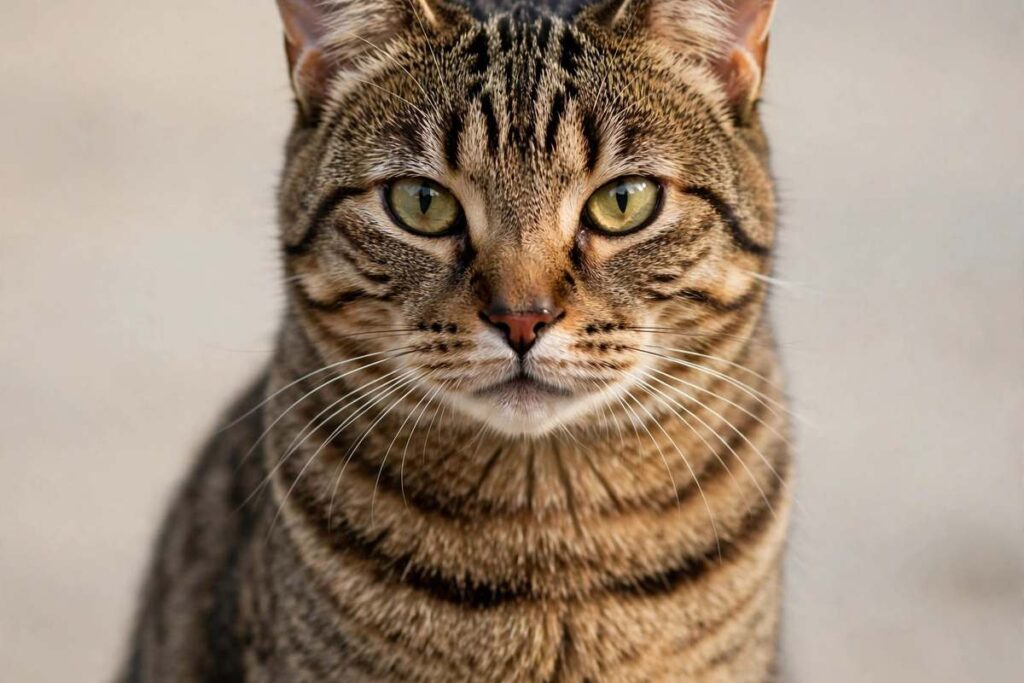
A tabby cat is a cat with a coat pattern, not a breed. Four patterns are standard: mackerel, classic (also called blotched), spotted and ticked, and a 2012 study in Science traced the difference between the first two to mutations in a gene called Taqpep.
Those four types of tabby cats cover what a coat can do with stripes, swirls, spots and banded hairs. Each one has a body signature you can check in daylight, and the marks people reach for first, the M and the necklaces, won’t separate them. The gene comes after the names here, because it explains how two kittens from the same litter can end up with different patterns.
Tabby Is a Pattern, Not a Breed
CFA’s own description starts with the correction: tabby is a pattern, not a color and not a breed. The word describes how pigment is arranged in the hair and across the body, and it can sit on a pedigree Maine Coon, a shelter domestic shorthair, or a cat with no papers at all.
- Pattern: mackerel, classic, spotted or ticked; patched and tabby-and-white add color or white.
- Breed: any. No registry lists Tabby as a breed name.
- Color: separate from pattern. Brown, silver, blue, red and cream tabbies all exist.
- Shared marks: an M on the forehead, necklaces, leg bars, tail rings, belly spots.
- Gene: Taqpep decides mackerel versus classic; other genes handle spotting and ticking.
So the breed question doesn’t have a coat-based answer. A cat’s build, head shape, coat length and pedigree say more than the markings do, and most tabbies are domestic shorthairs or longhairs rather than any pedigree breed. On a Maine Coon the two words describe different things, a distinction Maine Coon vs tabby sets out.
Tabby doesn’t work as a color name either. Breeders write brown, silver, blue, red and cream tabbies, with the color first and the pattern second. A cat can be tabby and white, tabby and silver, or patched tabby without leaving the pattern family.
The 4 Types of Tabby Cats: Mackerel, Classic, Spotted and Ticked
CFA recognizes four tabby patterns on the body and adds patched as a combination rather than a fifth type. The quickest way to separate them is to look at the sides, then the tail, then the legs and chest.
Pattern names describe the whole coat, not one marking. A classic cat with a pale belly still counts as classic, and a mackerel with a few broken stripes on one flank still counts as mackerel. Breed standards describe the body first and treat the face as supporting detail, which is the order the four descriptions below follow.
Mackerel Tabby
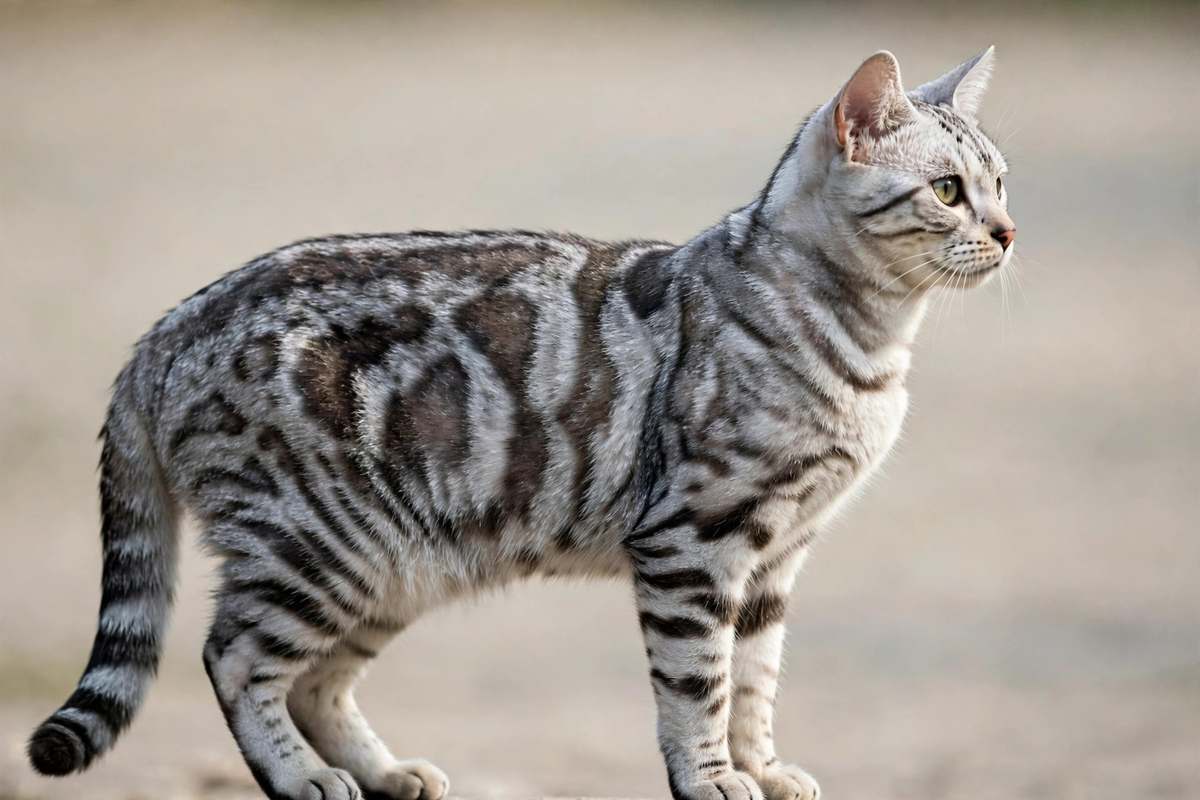
Mackerel is the most common pattern and the closest to the wild ancestor. Narrow vertical stripes run down each side from a thin spine line. The flank reads like a fish skeleton, the legs carry even bracelets, the tail is ringed, and the spine line stays narrow from shoulders to hips. A brown mackerel tabby Maine Coon is the example CFA uses on its pattern page.
Classic (Blotched) Tabby
Classic swaps stripes for swirls. A broad butterfly shape sits across the shoulders, a circular bullseye or solid blotch fills each flank, and three thick lines run down the back. The markings are wider and denser than a mackerel’s, with less ground color between them, and breeders often call the look marble. Classic is recessive to mackerel, so two classic parents produce classic kittens while a mackerel can hide a classic gene.
Spotted Tabby
Spotted tabbies have spots where the stripes would be, including a spotted spine line. The spots can be round, oval or rosette-shaped, often in rows that hint at the stripes underneath. Egyptian Maus, Ocicats and Bengals are bred for the look. Motion sells it: a mackerel can pass as spotted because the stripes break up as the coat shifts.
Ticked Tabby
Ticked is the odd one out. The body looks almost solid because each hair carries alternating bands of light and dark pigment, the agouti banding CFA describes. Body stripes and blotches are absent. The face and legs keep tabby markings, and the underside may keep a few. Abyssinians, Somalis and Singapuras are the best-known examples. The CFA pattern page, which supplied the definitions above, is the reference to check a cat against.
The Genetics: Taqpep and the Mackerel-to-Classic Switch
In 2012, a team led by Christopher Kaelin traced the mackerel-classic difference to Taqpep, a gene that encodes transmembrane aminopeptidase Q, a membrane-bound metalloprotease. The same work found Taqpep mutations behind the king cheetah, whose spots merge into blotches and stripes, after comparing 31 other felid species, as the 2012 Science paper reports.
Mackerel is the ancestral form. Classic appears when Taqpep stops working, and the mutation is recessive, so a classic cat inherits a broken copy from each parent. That explains the litter result above: two mackerel parents that each carry one hidden copy can produce classic kittens, and two classic parents can’t produce mackerel.
The study’s model runs in two stages. Taqpep helps establish a periodic pre-pattern in the skin while the embryo develops, before any hair forms. Edn3, a signaling molecule, then implements that pattern through local differences in pigment. The layout is set before birth, it isn’t something a cat grows into or loses with age, and grooming doesn’t change it.
Two limits are worth keeping. The gene explains mackerel versus classic, not spotted versus ticked, which involve other loci and modifiers. Pattern also sits on top of color: the orange gene is separate, so an orange cat can be mackerel, classic or patched. Orange coats show tabby patterning so consistently that breeders treat red as almost always tabby; the breeds that come in orange are listed in orange cat breeds.
Patched Tabbies, Torbies and Tabby-and-White
Patched tabby is a tabby pattern with patches of red or cream worked into it. CFA calls it a combination, since any of the four patterns can be patched. When the base is black, the result is a torbie; when white is also present, some registries say caliby. Neither is a fifth pattern.
The patches can be small or cover a whole flank.
The sex bias comes from the genetics. Red and black pigment sit on the X chromosome, so a coat showing both needs two X chromosomes. Patched tabbies are female in almost every case, and a male patched cat is a chromosomal rarity. That also explains why the patchwork turns up in some lines and skips others.
Torbie is the older shorthand for a tortoiseshell cat that also carries tabby striping, and the two names overlap in casual use. The distinction that matters for identification is the base: a torbie shows the tabby pattern inside its red and black patches, while a plain tortoiseshell shows solid patches with little striping.
Tabby and white works differently. White spotting switches off pigment in patches, usually the chest, paws, chin and belly, and the tabby pattern appears only on the colored areas. A tabby-and-white cat can carry any of the four patterns underneath. The two looks get confused when the colored patches are red, because a red-and-white tabby can read as patched at a glance. Maine Coon torbie goes through the version seen in the breed.
Reading a Tabby Coat: Sides, Tail, Legs
A tabby’s pattern is easiest to read from the body, not the face. In daylight, check the sides first: unbroken narrow stripes mean mackerel, wide swirls or a bullseye mean classic, separate spots mean spotted, and an even body with banded hairs means ticked. The tail and legs confirm it.
Every tabby carries the same furniture: the M on the forehead, necklaces on the chest, bars on the legs, rings on the tail and spots on the belly. Those marks prove the cat is a tabby. They can’t tell you which pattern it is, and a cat with a strong M and a spotted belly can still be a classic.
Photographs mislead more than they help. Flash flattens a bullseye into a blotch, and a curled cat hides the spine line that separates mackerel from classic. Take the picture outdoors on a dry day, from directly above and from both sides, then compare the flanks before the face.
| Pattern | Sides | Tail | Legs and chest | Breeds known for it |
|---|---|---|---|---|
| Mackerel | Narrow vertical stripes, thin spine line | Evenly ringed | Narrow bracelets, distinct necklaces | Most random-bred cats; Maine Coon |
| Classic | Butterfly at the shoulders, bullseye or solid blotch | Broad rings | Thick bars, several necklaces | American Shorthair; Maine Coon |
| Spotted | Round or oval spots, often in rows | Spotted or broken rings | Spots and bars | Egyptian Mau, Ocicat, Bengal |
| Ticked | Even, no body stripes, banded hairs | Faint rings | Tabby face and legs, faint chest marks | Abyssinian, Somali, Singapura |
| Patched | Any of the above plus red or cream patches | Follows the base pattern | Follows the base pattern | Torbie and caliby cats, mostly female |
Sources for the table: CFA pattern descriptions and the CFA Maine Coon standard, plus Kaelin et al., Science, 2012.
Wet fur lies flat and reads as solid, so check a dry cat.
A recent thread on r/TabbyCats captures the confusion. An owner describes a kitten with a “swirly coat” whose belly is “covered in tiny little cheetah spots.” The swirls point to classic; the belly spots are shared furniture, not a second pattern.
“The craziest kitten ive ever had with the sharpest teeth ive ever seen and the most beautiful swirly coat. Her belly is that same tan but covered in tiny little cheetah spots”
– r/TabbyCats, June 2026 (3,524 upvotes)
Tabby Maine Coons: What the Standard Says
Brown tabby is the color the breed is best known for, and the CFA Maine Coon standard writes out three tabby patterns: classic, mackerel and ticked. The tabby section asks for dense, clearly defined markings, an M formed by the frown marks, several unbroken necklaces (“the more the better”), evenly barred legs and an evenly ringed tail.
Classic in a long coat is the show version most often photographed: a butterfly across the shoulders, a solid blotch on each flank encircled by rings, three well-separated spine stripes, and matching sides. Mackerel is narrower, with fine pencillings around the body, a narrow saddle where the spine lines meet, and chain-like necklaces. Ticked Maine Coons are accepted under the same standard but show an even, ticked body with full tabby face and legs and no body stripes.
The color class is judged separately from the pattern. Silver changes the ground color rather than the stripes, and red or cream tabbies follow the orange gene, so their pattern can look softer than a brown tabby’s.
Coat length affects how the pattern reads, not which pattern it is. A classic Maine Coon’s swirls can look softer under a long ruff, and a mackerel’s stripes can look blurred along the flanks. The checks above still apply. For the breed detail, tabby Maine Coon goes deeper into brown tabby, silver and the color classes.
Types of Tabby Cats: Quick Answers
What is the rarest type of tabby?
Ticked is the least common of the four standard patterns in the general cat population, because it is concentrated in a few breeds. Patched tabbies are rarer still, but patching is a color combination rather than a fifth pattern, and it needs a female cat. Classic is less common than mackerel but far from rare.
How do I tell what breed my tabby cat is?
The coat can’t tell you. Pattern is shared across breeds, so breed ID comes from body shape, head and muzzle, ear set, coat length and texture, and any pedigree. A DNA test can estimate ancestry; most short-haired tabbies are domestic shorthairs with mixed ancestry.
Is tabby a breed of cat?
No. Tabby is a coat pattern that appears in pedigree and non-pedigree cats alike. No major registry lists Tabby as a breed, and a tabby cat can carry a hidden classic gene without showing it.
Why do tabby cats have an M on their forehead?
The M is part of the tabby facial pattern; CFA’s Maine Coon standard calls the shape “frown marks” that form a letter M. Folklore gives it religious stories, and none has a biological role. The mark is not a breed sign and doesn’t identify the pattern, since ticked and patched cats carry it too.
What two breeds make a tabby cat?
None. A tabby isn’t a cross between two breeds. The pattern comes from the cat’s own pigment genes and can appear in any breed or in a cat with no breed at all. A page naming “the two breeds” is describing a designer cross, not tabby itself.
One Comment