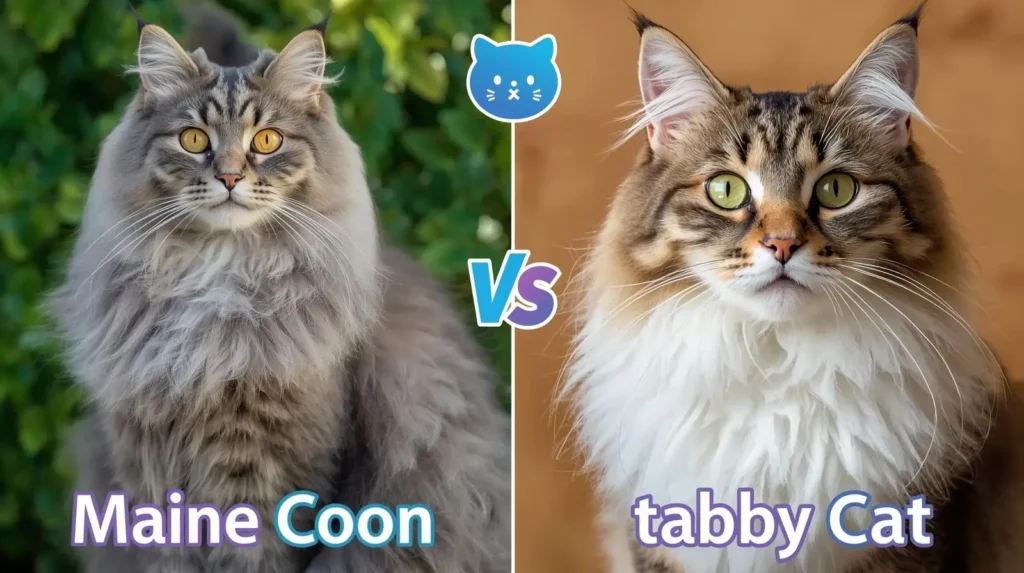
When choosing the perfect feline companion, understanding the differences between various cat types becomes essential. The Maine Coon vs tabby debate represents one of the most common comparisons prospective cat owners make. While these two categories differ significantly in their classification, both offer unique characteristics that appeal to different households.
Maine Coons represent a specific breed known for their impressive size and gentle nature, while tabby refers to a coat pattern found across multiple breeds. This fundamental distinction shapes every aspect of the Maine Coon vs tabby comparison, from physical characteristics to care requirements.
Understanding Maine Coon Cats
Maine Coon Physical Characteristics
Adult males can weigh up to 25 pounds, with their slightly daintier female counterparts weighing 10–14 pounds. The Maine Coon vs tabby size difference becomes immediately apparent when examining these statistics. Males typically weigh between 20-25 lbs at full maturity, while females are generally smaller, averaging 10-15 lbs at full size.
This cat breed is typically known for its massive size—up to 40 inches in length, making the Maine Coon vs tabby comparison heavily weighted toward the Maine Coon in terms of sheer physical presence. Their distinctive features include:
- Large, tufted ears set wide apart
- Rectangular body shape with substantial boning
- Long, flowing tail with dramatic plumage
- Thick, water-resistant double coat
- Large, round paws with fur tufts
Maine Coon Temperament Traits
The Maine Coon is often cited as having “dog-like” characteristics and is commonly referred to as “the gentle giant.” This temperament significantly influences the Maine Coon vs tabby personality comparison, as Maine Coons display:
- High intelligence and trainability
- Social and outgoing nature
- Gentle demeanor despite large size
- Loyalty to family members
- Playful attitude throughout adulthood
Understanding Tabby Cats
What Defines a Tabby Cat
Unlike Maine Coons, tabby represents a coat pattern rather than a breed. The genes that create tabby coats are dominant, which is why tabbies are so common. This genetic dominance makes the Maine Coon vs tabby availability comparison interesting, as tabbies appear across numerous breeds.
80% of modern-day cats have the recessive allele responsible for the classic pattern. The tabby pattern appears in four main varieties:
- Classic (blotched) tabby with swirled patterns
- Mackerel tabby with narrow stripes
- Spotted tabby with distinct spots
- Ticked tabby with banded hairs
Tabby Coat Genetics
When a cat has a tabby pattern, the dark markings are made of solid hairs of the base color while the fur in between the markings is composed of agouti hairs. This genetic complexity affects the Maine Coon vs tabby breeding considerations, as tabby cats can come in any existing cat colors, such as black, blue, chocolate, lilac, cinnamon, and fawn.
Maine Coon vs Tabby Size Comparison
| Characteristic | Maine Coon | Tabby (Average) |
|---|---|---|
| Male Weight | 20–25 lbs | 8–15 lbs |
| Female Weight | 10–15 lbs | 6–12 lbs |
| Length | Up to 40 inches | 15–25 inches |
| Height | 10–16 inches | 8–12 inches |
| Maturity Age | 3–5 years | 1–2 years |
The Maine Coon vs tabby size difference represents the most dramatic distinction between these categories. They grow slowly and don’t reach full size until they are around five-years-old. This extended growth period distinguishes Maine Coons from most tabby cats, regardless of the tabby’s underlying breed.
Temperament: Maine Coon vs Tabby
Maine Coon Personality Profile
Maine Coons exhibit consistent temperamental traits due to their breed standardization. The Maine Coon vs tabby personality comparison reveals Maine Coons typically display:
- Exceptional intelligence and problem-solving abilities
- Strong social bonds with family members
- Calm, patient nature with children
- Vocal communication through chirps and trills
- High adaptability to household changes
For comprehensive information about Maine Coon behavior patterns, Mianecoon Guides provides detailed insights into breed-specific characteristics.
Tabby Personality Variations
Many tabby cat owners say their cats are friendly, affectionate, and playful. However, the Maine Coon vs tabby temperament comparison becomes complex because tabby personality depends entirely on the underlying breed. Tabby patterns appear in:
- American Shorthairs (calm, easygoing)
- British Shorthairs (reserved, dignified)
- Domestic Shorthairs (varied personalities)
- Maine Coons (gentle, social)
- Persian cats (quiet, docile)
Care Requirements: Maine Coon vs Tabby
Grooming Needs Assessment
The Maine Coon vs tabby grooming comparison heavily favors tabbies in terms of maintenance requirements. Maine Coons require:
- Daily brushing to prevent matting
- Professional grooming every 6-8 weeks
- Regular nail trimming due to large claws
- Ear cleaning to prevent wax buildup
- Dental care for large mouths
Tabby cats’ grooming needs vary by underlying breed and coat length, making the Maine Coon and tabby maintenance comparison dependent on specific circumstances.
Nutritional Requirements
Large Maine Coons require significantly more nutrition than average tabbies. The Maine Coon vs tabby feeding comparison includes:
Maine Coon Feeding:
- 400-600 calories daily for adults
- High-protein diet (minimum 32%)
- Large kibble size for substantial jaws
- Multiple small meals throughout the day
Tabby Feeding:
- 200-400 calories daily (breed-dependent)
- Standard protein requirements (28-32%)
- Standard kibble sizing
- Traditional twice-daily feeding schedule
Health Considerations: Maine Coon vs Tabby
Breed-Specific Health Issues
The Maine Coon vs tabby health comparison reveals distinct considerations. Maine Coons face specific genetic predispositions:
- Hypertrophic cardiomyopathy (heart condition)
- Hip dysplasia due to large size
- Spinal muscular atrophy
- Polycystic kidney disease
These breed-specific concerns make the Maine Coon vs tabby veterinary care comparison more intensive for Maine Coons.
Lifespan Expectations
Maine Coons typically live 12-15 years, while tabby lifespans vary by underlying breed. The Maine Coon vs tabby longevity comparison shows mixed results, with some tabby breeds living longer due to genetic diversity benefits.
Living Space: Maine Coon vs Tabby
Space Requirements
The Maine Coon vs tabby housing comparison strongly favors smaller living spaces for tabbies. Maine Coons require:
- Tall cat trees for climbing
- Large litter boxes accommodating size
- Spacious feeding areas
- Multiple resting spots for large bodies
Most tabby cats adapt well to apartments, while Maine Coons thrive in larger homes with room for exploration.
Cost Analysis: Maine Coon vs Tabby
Initial Purchase Costs
The Maine Coon vs tabby price comparison shows significant differences:
Maine Coon Costs:
- Purebred kittens: $1,000-$3,000
- Champion bloodlines: $3,000-$5,000
- Initial setup: $500-$800
Tabby Costs:
- Shelter adoption: $50-$200
- Breeder purchases: $200-$1,500 (breed-dependent)
- Initial setup: $200-$400
Ongoing Expenses
The Maine Coon vs tabby maintenance costs favor tabbies:
- Food costs (Maine Coons eat 2-3x more)
- Grooming expenses (professional services)
- Veterinary care (size-related issues)
- Equipment replacement (larger, sturdier items)
Choosing Between Maine Coon vs Tabby
Family Suitability Assessment
The Maine Coon vs tabby family compatibility comparison depends on household dynamics:
Choose Maine Coons for:
- Families wanting gentle giants
- Households with space for large cats
- Owners seeking predictable temperaments
- Homes with children (patient nature)
Choose Tabby Cats for:
- Apartment living situations
- Budget-conscious families
- First-time cat owners
- Preference for varied personalities
Lifestyle Matching
Consider your lifestyle when making the Maine Coon and tabby decision:
- Available grooming time
- Housing space limitations
- Activity level preferences
- Long-term commitment capabilities
Special Considerations
Maine Coon Tabby Combinations
Interestingly, Maine Coons can display tabby patterns, creating Maine Coon vs tabby combinations within single cats. These cats exhibit Maine Coon size and temperament with traditional tabby markings, offering the best of both worlds.
Breeding Implications
The Maine Coon and tabby breeding comparison reveals important considerations. Maine Coon breeding requires:
- Genetic testing for hereditary conditions
- Careful lineage documentation
- Breed standard maintenance
- Professional breeding knowledge
Tabby pattern breeding appears across multiple breeds, making genetic predictions more complex than single-breed programs.
Conclusion
The Maine Coon and tabby comparison ultimately depends on individual preferences, lifestyle requirements, and housing situations. Maine Coons offer predictable gentle giant characteristics with substantial care requirements, while tabbies provide diverse personality options with generally easier maintenance needs.
The Maine Coon vs tabby decision involves weighing size preferences against care capabilities, personality predictability against variety, and initial costs against ongoing expenses. Both options provide loving companionship, though through different approaches to feline friendship.
Understanding these fundamental differences ensures successful pet ownership regardless of choice. The Maine Coon and tabby comparison serves as a framework for matching cat characteristics with human expectations, creating harmonious households for both pets and people.
Whether you choose the majestic presence of a Maine Coon or the diverse charm of a tabby cat, proper research and preparation ensure positive outcomes. The Maine Coon vs tabby debate continues because both options offer unique benefits to different types of cat enthusiasts.
Have you considered which factors matter most in your personal Maine Coon vs tabby decision?