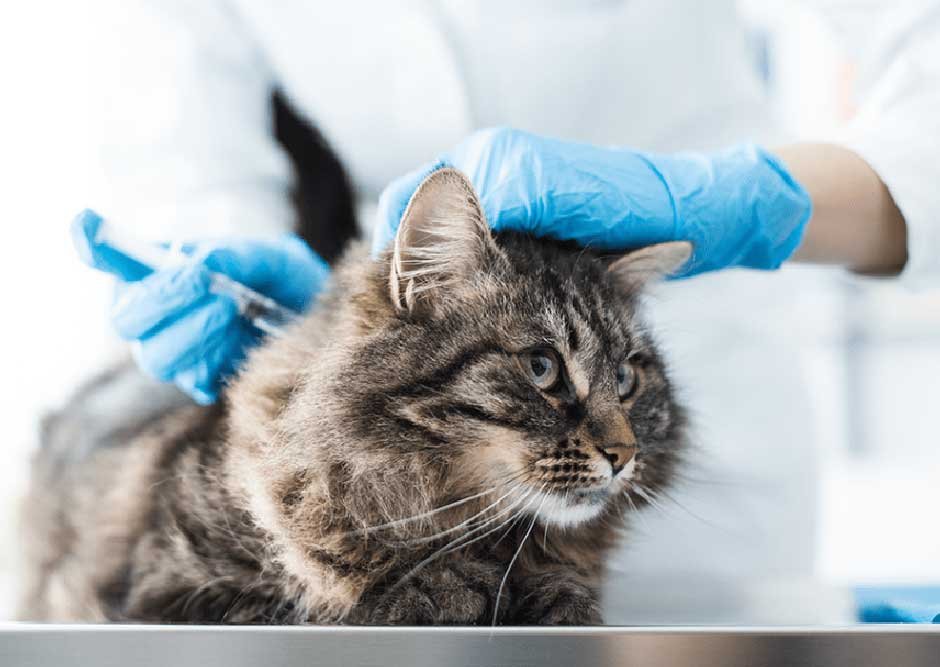
Feline distemper kills up to 90% of unvaccinated kittens who contract it. The FVRCP vaccine, commonly called the distemper shot, protects against panleukopenia, rhinotracheitis, and calicivirus in a single injection. Kittens need their first dose at 6 to 8 weeks old, with boosters every 3 to 4 weeks until 16 weeks of age. Adults then receive a booster at one year, followed by shots every three years for life.
Panleukopenia, the virus behind feline distemper, attacks white blood cells and the intestinal lining. It spreads through contact with infected cats, contaminated surfaces, and even shoes or clothing. The virus survives in the environment for up to a year, making vaccination the only reliable defense.
What Is Feline Distemper and Why Vaccination Matters
Feline distemper is panleukopenia, a highly contagious parvovirus that devastates a cat’s immune system and digestive tract. The American Association of Feline Practitioners (AAFP) classifies the panleukopenia vaccine as a core vaccine, meaning every cat needs it regardless of lifestyle or living situation.
Symptoms show up fast. Within days of infection, a cat may develop severe vomiting, bloody diarrhea, high fever, and extreme dehydration. Kittens under five months old face the highest mortality rates. Adult cats with no vaccination history can also develop fatal cases, though their survival odds improve slightly with aggressive veterinary care.
The virus earned the nickname “distemper” because infected cats appear disoriented and lethargic. Unlike canine distemper, which is a completely different virus, feline distemper belongs to the parvovirus family. This distinction matters: a dog’s distemper vaccine will not protect a cat.
The Kitten Distemper Vaccine Schedule
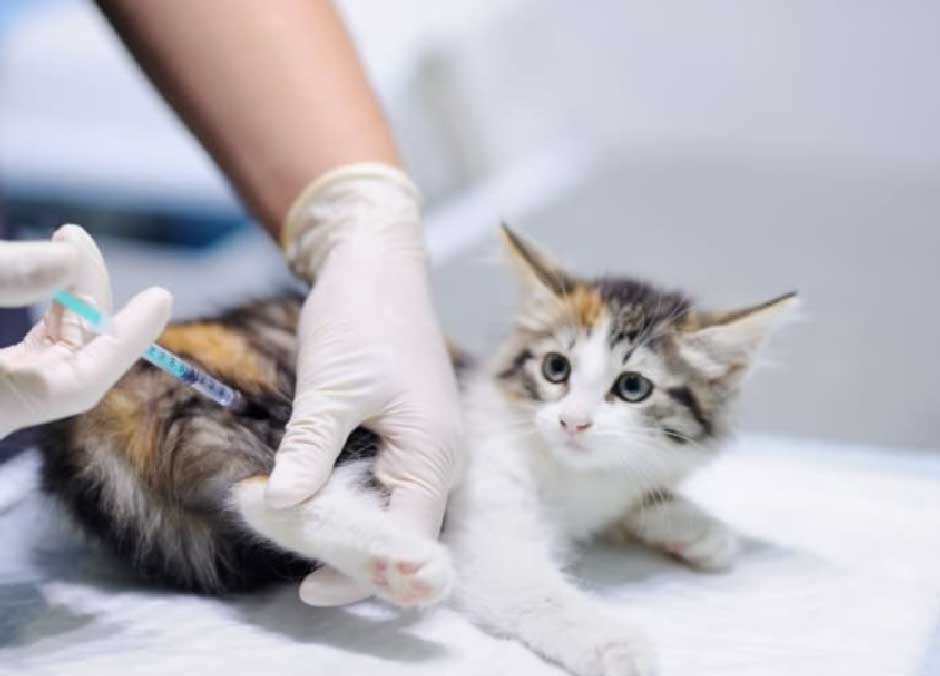
Kittens should receive their first FVRCP dose between 6 and 8 weeks of age, with two additional boosters spaced 3 to 4 weeks apart. The final dose must be given at or after 16 weeks to ensure full immunity, since maternal antibodies can interfere with earlier shots.
| Age | Vaccine | Notes |
|---|---|---|
| 6-8 weeks | FVRCP (1st dose) | Covers panleukopenia, rhinotracheitis, calicivirus |
| 10-12 weeks | FVRCP (2nd dose) | Booster to strengthen immune response |
| 14-16 weeks | FVRCP (3rd dose) + Rabies | Final kitten series; rabies required by law in most states |
| 1 year | FVRCP booster + Rabies booster | Completes initial immunity cycle |
Maternal antibodies from a vaccinated mother cat can block the vaccine’s effectiveness in very young kittens. That is exactly why the series requires multiple doses. Each shot catches kittens whose maternal protection has dropped enough for the vaccine to trigger a proper immune response.
“New kitten and questions about distemper vaccine.. Disagreement with Breeder and Vet?”
— r/AskVet, 1 upvote, 17 comments (2025), source
Breeder-vet disagreements about timing come up often. Some breeders give the first dose at 6 weeks, while certain veterinarians prefer to wait until 8 weeks. Both approaches fall within AAFP guidelines. The critical point is completing all three doses by 16 weeks, not the exact start date.
Adult Cat Booster Schedule
After the initial kitten series and one-year booster, healthy adult cats need an FVRCP booster every three years. The World Small Animal Veterinary Association (WSAVA, 2024) recommends this triennial schedule based on studies showing immunity persists for at least three years after a properly completed primary course.
Cats who missed their kitten series entirely need a different approach. An unvaccinated adult cat should receive two FVRCP doses spaced 3 to 4 weeks apart, followed by a booster one year later. From that point forward, the standard three-year cycle applies.
Senior cats over 10 years old with a complete vaccination history may still benefit from continued boosters. The AAFP does not recommend stopping vaccinations based on age alone, since older cats often have weakened immune function that makes them more vulnerable to panleukopenia outbreaks.
“Is a distemper shot necessary for an adult cat?”
— r/Pets, 4 upvotes, 4 comments (2017), source
The short answer is yes. Even strictly indoor adult cats face exposure risks when the virus hitches a ride on shoes, bags, or visiting pets. One documented panleukopenia outbreak at a shelter in 2023 traced back to a single contaminated carrier brought in by a volunteer.
Indoor vs. Outdoor Cats: Does the Schedule Change?
The distemper vaccine schedule stays the same for indoor and outdoor cats. Panleukopenia is a core vaccine, meaning all cats need it. Lifestyle affects non-core vaccines like FeLV, but not FVRCP.
Outdoor cats do face higher overall exposure risks, so some veterinarians recommend more frequent wellness checks to catch missed boosters. Indoor cats are not risk-free either. The panleukopenia virus is extraordinarily hardy, surviving on surfaces, in soil, and on fabrics for months. A 2019 study in the Journal of Feline Medicine and Surgery confirmed that fomite transmission through contaminated objects accounts for a significant portion of indoor cat infections.
Multi-cat households and cats who board at facilities or attend shows should stay strictly on schedule. Environments where cats share litter boxes, food bowls, and bedding create prime conditions for virus transmission, even among vaccinated animals with waning immunity.
Side Effects and Vaccine Reactions
Most cats experience no side effects from the FVRCP vaccine. Mild reactions, when they occur, typically resolve within 24 to 48 hours without treatment. Serious adverse reactions are rare but worth recognizing.
| Reaction Type | Symptoms | Frequency | Action Needed |
|---|---|---|---|
| Mild | Lethargy, slight fever, reduced appetite | Common (up to 30%) | Monitor at home; resolves in 24-48 hours |
| Moderate | Localized swelling at injection site, sneezing | Occasional (5-10%) | Contact vet if swelling persists beyond 3 days |
| Severe | Facial swelling, vomiting, difficulty breathing | Rare (less than 1%) | Emergency veterinary care immediately |
“Delayed reaction to distemper vaccine?”
— r/SiberianCats, 49 upvotes, 54 comments (2024), source
Delayed reactions, appearing 1 to 3 days after vaccination, generate real anxiety among cat owners. A kitten who suddenly becomes lethargic two days post-shot can alarm even experienced breeders. In the vast majority of cases, the immune system is simply responding to the vaccine as intended, building the protection that could one day save that cat’s life.
What Happens If You Miss a Dose
A single missed dose does not mean starting over from scratch. If a kitten misses one booster in the initial series, the vet will administer it as soon as possible and continue the remaining schedule. Gaps of up to 6 weeks between kitten boosters generally do not require restarting the entire series.
Longer gaps create more uncertainty. A cat who received only one FVRCP dose as a kitten and then went years without boosters should be treated as unvaccinated. Two fresh doses spaced 3 to 4 weeks apart will rebuild foundational immunity.
According to the AAFP (2020), cats who are overdue for their adult three-year booster by more than a few months need just a single dose to restore protection, not a full restart. The immune memory from previous vaccinations means one booster is enough to reactivate a lapsed response.
Frequently Asked Questions
Can indoor kittens skip the distemper vaccine?
No, indoor kittens still need the full FVRCP series. Panleukopenia virus survives on surfaces for up to a year and can enter a home on shoes, clothing, or new pets. The AAFP classifies this as a core vaccine required for all cats regardless of lifestyle.
How much does the FVRCP vaccine cost?
A single FVRCP dose typically costs between $25 and $50 at a private veterinary clinic. Low-cost vaccination clinics and animal shelters often offer it for $10 to $20 per dose. The complete kitten series of three to four doses runs approximately $75 to $200 total.
Is the distemper vaccine the same as FVRCP?
Yes, FVRCP is the combination vaccine commonly called the distemper shot. It protects against three diseases: feline viral rhinotracheitis, calicivirus, and panleukopenia (distemper). “Distemper vaccine” and “FVRCP” refer to the same injection.
What if my kitten misses a scheduled vaccine?
Schedule the missed dose as soon as possible and continue with the remaining series. Gaps of up to six weeks between kitten boosters usually do not require restarting the sequence. Your vet will adjust the timeline based on how many doses were completed before the gap.
Can a vaccinated cat still get distemper?
Breakthrough infections are extremely rare in cats who completed the full vaccination series. No vaccine provides 100% protection, but properly vaccinated cats who do contract panleukopenia typically develop milder symptoms and have significantly higher survival rates than unvaccinated cats.
Keeping Your Cat Protected
The cat distemper vaccine schedule follows a straightforward pattern: three doses for kittens starting at 6 to 8 weeks, a one-year booster, then every three years for life. Sticking to this timeline gives cats the strongest possible defense against a virus that remains lethal in unvaccinated populations. Talk to your veterinarian about which non-core vaccines (FeLV, FIV) might also make sense based on your cat’s environment and risk factors.