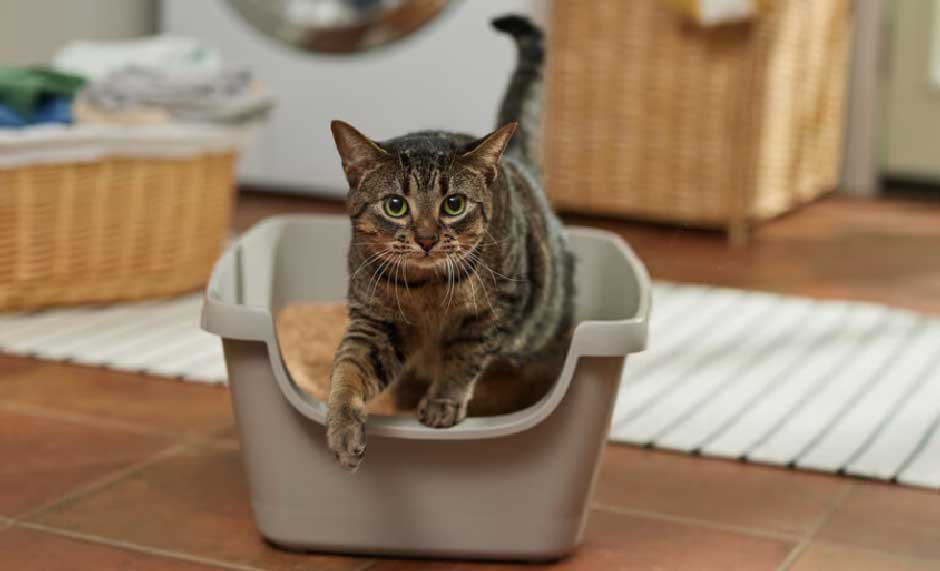
Cat diarrhea when to worry comes down to blood, repetition, watery stool, vomiting, weakness, or diarrhea that lasts more than a day or two. Kittens, senior cats, and cats with known illness should be handled sooner.
A single soft stool from an otherwise bright adult cat is often not an emergency. The part that deserves attention is the pattern: how often your cat is going, what the stool looks like, whether your cat is eating, and whether the normal little household habits have changed.
Quick Answer: When Cat Diarrhea Needs a Vet
Call a veterinarian promptly if diarrhea continues beyond 24 to 48 hours, repeats several times in a short window, or comes with appetite loss, vomiting, lethargy, pain, dehydration, or blood. For cat diarrhea when to worry, those companion signs matter more than stool softness alone.
The Cornell Feline Health Center notes that diarrhea lasting longer than a day or two plus systemic signs such as poor appetite, lethargy, or vomiting should be seen by a veterinarian as soon as possible. That is the cleanest rule for a worried owner: duration matters, but behavior matters more.
| What you see | How worried to be | Best next step |
|---|---|---|
| One loose stool, normal appetite, normal play, no vomiting | Low, but keep watching | Monitor litter box, water intake, and appetite for the next 24 hours |
| Two or more watery stools in a few hours | Moderate | Call your vet for advice, especially if it continues into the next day |
| Diarrhea plus vomiting, weakness, hiding, fever, pain, or no appetite | High | Same-day veterinary advice is the safer move |
| Blood, black tarry stool, collapse, pale gums, or severe dehydration signs | Urgent | Contact an emergency vet now |
| Kitten, senior cat, diabetic cat, kidney disease cat, or immune-compromised cat | Higher than average | Do not wait long; call early even if signs look mild |
The messy truth is that litter box evidence can look dramatic before the problem is dangerous. It can also look unimpressive while the cat is quietly getting dehydrated.
Emergency Red Flags That Should Not Wait
Emergency concern rises when diarrhea is repeated or continuous, especially with vomiting, blood, weakness, collapse, suspected poisoning, or signs that your cat is becoming less responsive.
VCA Animal Hospitals lists repeated or continuous vomiting or diarrhea as a reason to contact a veterinarian, especially if blood is present or symptoms persist beyond 6 to 12 hours, because dehydration is a major concern in cats. Blood in stool, weakness, or a cat that seems less responsive is not a wait-and-see situation.
Blood or Black Stool
Fresh red streaks can happen with straining, but blood should still move the case into vet-call territory. Black, tarry stool is more concerning because it can indicate digested blood from higher in the gastrointestinal tract.
Take a photo before cleaning the box if you can do that without delaying care. Vets do not need a perfect photo, just enough to see color, amount, and texture.
Vomiting Alongside Diarrhea
Diarrhea and vomiting together drain fluid faster and narrow the list of safe home options. A cat that cannot keep food or water down can slide from uncomfortable to dehydrated faster than an owner expects.
Do not force water into a vomiting cat’s mouth. That can backfire if the cat aspirates or becomes more stressed.
Weakness, Pain, or Collapse
A cat that is weak, hiding unusually, crying when picked up, hunched over, breathing oddly, or collapsing needs urgent evaluation. Diarrhea may be only one visible sign of poisoning, obstruction, infection, pancreatitis, or another systemic problem.
This is where the normal “cats are private” problem gets annoying. By the time a cat stops pretending everything is fine, the situation may already deserve help.
How Long Is Too Long for Cat Diarrhea?
For a healthy adult cat, diarrhea that does not improve within 24 to 48 hours deserves a vet call. For kittens, seniors, fragile cats, or cats with other symptoms, the clock should be shorter.
Duration alone is not enough to judge safety. One loose stool on Tuesday night and a normal breakfast Wednesday morning is different from six watery trips, a skipped meal, and a cat lying in the closet.
- Under 24 hours: monitor closely if your adult cat is otherwise normal.
- 24 to 48 hours: call your veterinarian, especially if stools stay watery or frequent.
- More than 48 hours: veterinary evaluation is strongly recommended, even if your cat still acts fairly normal.
- Any duration with red flags: call sooner rather than using the timeline.
A Reddit owner captured the common gray area well: a cat was acting normal, eating and playing, but had diarrhea for about two days and the owner wondered when to contact a vet.
“I have a 4 year old cat, acting perfectly normal, eating, drinking, playing and behaviorly all as usual but has had diarrhea for about 2 days nows. Wondering when I should contact a vet.”
– r/CATHELP, October 2025
That is exactly the moment when a phone call is reasonable. Not panic, not shrugging it off, just a quick professional check before dehydration or an underlying cause has more time to build.
Dehydration Is the Part Owners Miss
Diarrhea matters because it can pull water and electrolytes out of the body. Watch gums, energy, appetite, eyes, and skin elasticity, but call a vet if you suspect dehydration.
The Cornell Feline Health Center hydration guide lists lethargy, weakness, poor appetite, dry mucous membranes, and sunken eyes among signs of dehydration. Cornell also explains that diarrhea and vomiting are common causes of increased water loss.
Home Checks That Can Help
Look at the gums first. Healthy gums are usually moist rather than sticky or dry, though gum color and feel can vary by cat.
You can also gently lift the skin over the shoulders and see whether it snaps back quickly. Cornell cautions that older cats may have reduced skin elasticity even when hydrated, so the skin test should not be treated as a perfect answer.
Water, Food, and Litter Box Clues
A cat eating wet food may drink less visibly than a dry-food cat, so do not judge hydration by bowl level alone. Watch the whole picture: urine clumps, appetite, gum moisture, energy, and stool frequency.
In practice, the clearest clue is often ordinary routine. The cat who normally barges into the kitchen for dinner but stays tucked behind the sofa is telling you more than the litter box alone.
What Can Cause Cat Diarrhea?
Cat diarrhea can come from food changes, stress, parasites, infections, toxins, medications, inflammatory bowel disease, organ disease, obstruction, or cancer. The cause is not always in the intestines.
Cornell describes diarrhea as a sign that can be brief and harmless, but also one that may reflect inflammatory, infectious, neoplastic, kidney, liver, thyroid, neurologic, viral, or immune-related disease. That range is why guessing from stool texture alone is risky.
| Possible cause | Clues owners may notice | Why a vet may need to check |
|---|---|---|
| Diet change or rich food | Loose stool after new food, treats, table scraps, or stolen dog food | Usually mild, but can overlap with pancreatitis or food intolerance |
| Stress | Move, travel, boarding, new pet, construction noise, disrupted routine | Stress may trigger diarrhea, but it should still improve quickly |
| Parasites or infection | Watery stool, mucus, repeated episodes, kitten exposure, multi-cat spread | Fecal testing may be needed, and some parasites are hard to detect |
| Toxin or foreign object | Vomiting, pain, drooling, missing string or toy, sudden severe illness | Obstruction or poisoning can become life-threatening |
| Chronic disease | Weight loss, recurring diarrhea, appetite changes, vomiting, older cat | Bloodwork, fecal tests, imaging, or diet trials may be needed |
The Merck Veterinary Manual notes that gastrointestinal obstruction can cause vomiting, loss of appetite, lethargy, diarrhea, abdominal pain, fever or low temperature, dehydration, and shock. If string, yarn, sewing thread, ribbon, or a missing toy is part of the story, mention it immediately.
What You Can Do at Home While You Decide
If your adult cat has mild diarrhea but is bright, eating, drinking, and not vomiting, monitor closely, keep water available, avoid sudden food experiments, and call your vet if it persists.
Start boring and practical: clean the litter box so you can count new episodes, keep fresh water easy to reach, and write down when the diarrhea started. If you call the clinic, those details help more than a vague “he seems off.”
Safe Monitoring Steps
- Check appetite at the next normal meal.
- Count every diarrhea episode for 24 hours.
- Note vomiting, hiding, drooling, pain, blood, or unusual vocalizing.
- Keep a fresh stool sample if your vet asks for one.
- Do not add supplements, pumpkin, rice, probiotics, or medication without veterinary guidance if your cat has other symptoms.
Plain chicken or pumpkin advice gets passed around constantly, and some vets may recommend short-term diet changes for specific cats. The catch is that the wrong food change can muddy the picture or make a sick cat eat less.
What Not to Give a Cat
Do not give human anti-diarrhea medicine unless your veterinarian specifically tells you to. Cats metabolize many drugs differently from people, and “just a tiny amount” is not a safe dosing plan.
Also avoid forcing food after repeated vomiting, delaying care because the stool briefly firms up, or assuming indoor cats cannot get parasites. Indoor cats still encounter insects, contaminated shoes, new pets, boarding exposure, and food-related problems.
What Your Vet May Ask About
A useful vet call covers duration, frequency, stool appearance, appetite, vomiting, energy, water intake, medications, diet changes, toxin access, and whether your cat may have swallowed string or another object.
VCA’s diarrhea testing guidance says diagnosis starts with history and a physical exam, including details like frequency, urgency, appearance, unusual foods, table scraps, weight loss, poor appetite, or vomiting. Screening tests may include bloodwork, urinalysis, and fecal parasite testing when diarrhea continues, recurs, or comes with fever or abdominal pain.
- When did the first abnormal stool happen?
- How many episodes happened in the last 6, 12, and 24 hours?
- Is the stool watery, soft, mucusy, bloody, black, yellow, gray, or unusually foul?
- Is your cat eating, drinking, urinating, grooming, and moving normally?
- Any vomiting, coughing, drooling, fever, pain, weight loss, or hiding?
- Any new food, treats, plants, medications, cleaning products, string, ribbon, or toys?
Save the guesswork for after the exam. Before the exam, your job is to bring the pattern.
Cats That Should Be Seen Sooner
Kittens, senior cats, very small cats, cats with chronic disease, and cats with poor appetite or vomiting have less room for delay. Mild-looking diarrhea can become serious faster in these groups.
Kittens can dehydrate quickly, and diarrhea in a kitten is rarely something to casually watch for several days. Senior cats deserve extra caution because diarrhea may connect to kidney disease, thyroid disease, cancer, inflammatory bowel disease, or medication effects.
For Maine Coons, the decision rules are the same as for other cats, but size can fool the eye. A large cat may look sturdy while still losing fluid through repeated watery stool.
FAQ
Cat diarrhea when to worry?
For cat diarrhea when to worry, the answer is bloody stool, repeated watery stool, diarrhea lasting over 24 to 48 hours, or diarrhea with vomiting, lethargy, appetite loss, pain, or dehydration signs.
Is cat diarrhea an emergency?
Cat diarrhea can be an emergency when it is severe, bloody, paired with vomiting or weakness, or linked to suspected poisoning or swallowed string. A single soft stool in a normal adult cat is usually less urgent.
Should I feed my cat if it has diarrhea?
Do not withhold food from a cat without veterinary guidance, especially if your cat is already eating poorly. If your cat is vomiting, refusing food, or acting sick, call your vet before trying diet changes.
Can stress cause cat diarrhea?
Stress can cause temporary diarrhea in some cats, especially after travel, boarding, moving, or household disruption. Stress should not be blamed if diarrhea is severe, persistent, bloody, or paired with other illness signs.
What color cat diarrhea is bad?
Black, tarry, bloody, gray, yellow, or very pale diarrhea deserves a vet call, especially if it repeats or your cat acts unwell. Color is only one clue, so pair it with behavior, appetite, and hydration.
The Sensible Line
One loose stool can be a footnote. Repeated diarrhea, blood, vomiting, weakness, poor appetite, dehydration signs, or diarrhea that keeps going into the next day belongs in a vet conversation.
That is the practical line: watch calmly when the cat is truly normal, but call early when the pattern changes. Cats do not give long speeches before they get into trouble.