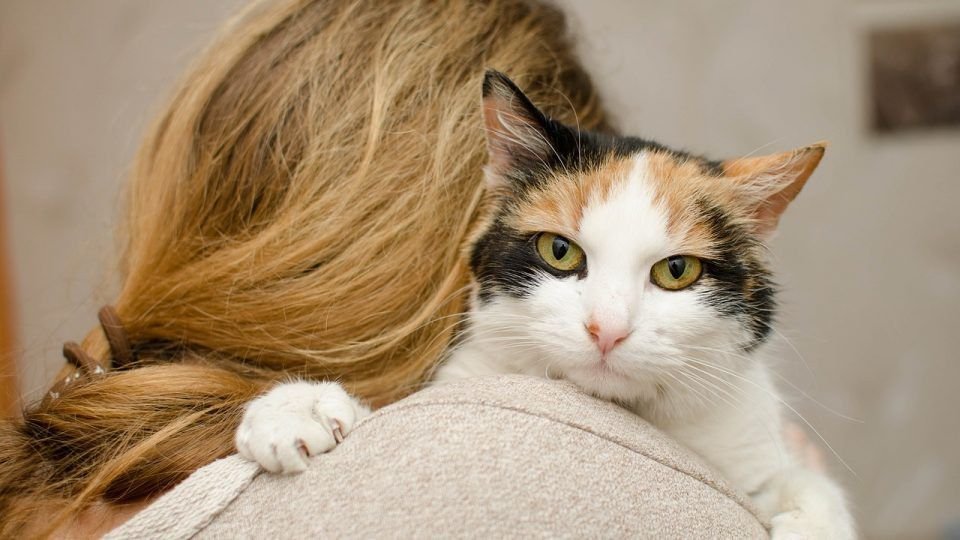
According to the Cat Fanciers’ Association’s Most Popular Breeds Report, 2023, the Devon Rex is officially described as delivering “mischievous and affectionate nature” that makes it “a delightful choice for individuals and young families who want a playful, cuddly pet” — making it one of only a handful of breeds the CFA directly labels with the cuddly designation in its official breed descriptions.
That specificity matters. Every cat owner wants affection, but “affectionate” covers a wide range of actual behaviors: from a cat that sits nearby to one that physically attaches itself to its person and refuses to leave. Understanding what cuddly cats actually deliver, and how the expression of affection differs between breeds, is what turns a wishful breed choice into a reliably rewarding one.
The most cuddly cat breeds are breeds whose attachment style includes consistent physical proximity, contact-seeking behavior, and a measurable preference for their owner’s presence over independent activity.
Which Cat Breeds Are the Most Cuddly?
The five breeds below represent the most consistently affectionate options in the pedigree cat market. Each delivers genuine closeness, but in a different style: from active vocal devotion to quiet lap-seeking to full-body physical contact. Matching the style to your household is as important as choosing the breed.
1. Oriental Cat
The Oriental Cat is the most intensely cuddly breed on this list for a specific reason: its attachment is concentrated on one person and expressed actively rather than passively. It does not wait to be approached. It seeks contact, monitors its owner’s location, and treats proximity as a priority rather than a preference.
What daily life with an Oriental Cat looks like:
- Follows its primary person between rooms consistently throughout the day
- Vocalizes to maintain contact when separated, even briefly
- Initiates physical affection rather than waiting to be picked up
- Responds to human speech with apparent comprehension and conversational engagement
- Forms a singular, deep bond with one person above all others in the household
For owners who want a cat that is genuinely devoted to them as an individual, the Oriental Cat is the strongest available choice.
2. Ragdoll
The Ragdoll earns its place among cuddly cats through its extraordinary physical passivity in human company. It goes limp when held, the behavior the breed is named for, and seeks lap contact with a consistency that most breeds reserve for occasional moods. Ragdolls follow their owners between rooms not with the vocal insistence of the Oriental Cat, but with a quiet, devoted presence that positions them reliably nearby throughout the day.
Their calm, low-frustration temperament makes them among the most practical cuddly cat breeds for households with children, as their patience with handling is exceptional even by affectionate breed standards.
3. Devon Rex
The CFA’s “cuddly” designation for the Devon Rex reflects its physical approach to affection. This breed climbs onto shoulders, burrows under covers, and seeks body warmth through direct contact rather than nearby proximity. Its large ears, wide eyes, and wavy coat give it an immediately distinctive appearance, and its affection is as distinctive as its looks: active, warm, and physically expressive.
Devon Rex cats bond broadly, integrating into family life rather than attaching to a single person, making them one of the best cuddly cat breeds for multi-person households.
4. Burmese
The Burmese delivers affection through physical closeness and an unhurried warmth that owners describe as one of the most comforting presences of any breed. It settles into laps readily, sleeps against its owners by preference, and initiates contact throughout the day with a soft, musical vocalization that communicates without demanding. The National Alliance of Burmese Breeders has formally nicknamed it the “ultimate companion cat,” a designation reflecting decades of owner consensus.
Its moderate energy level means it delivers warmth consistently across the whole day rather than in high-energy bursts followed by independent retreat.
5. Ragamuffin
The Ragamuffin is among the most overlooked cuddly cat breeds in the pedigree market: a large, plush-coated breed developed from Ragdoll lines that carries the same physical passivity and lap-seeking behavior as its relative, often in an even more relaxed frame. Ragamuffins are consistently described by TICA breeders as cats that actively enjoy being held, carried, and handled, not merely tolerating it but seeking it as a preferred state. Their dense, rabbit-like coat adds a tactile quality to contact that owners find particularly satisfying.
How Do These Breeds Compare?
| Breed | Affection Style | Physical Contact | Best For |
| Oriental Cat | Active, vocal, one-person focused | Persistent proximity-seeking | Single owners, devoted companionship |
| Ragdoll | Quiet, devoted, lap-seeking | Goes limp when held | Families, calm households |
| Devon Rex | Energetic, physical, broad | Climbs on, burrows under | Active families, multi-person homes |
| Burmese | Warm, steady, musical | Lap-settling, sleeps close | Any household wanting quiet closeness |
| Ragamuffin | Calm, passive, tactile | Enjoys being held and carried | Owners who want a cat that loves arms |
What to Consider Before Choosing a Cuddly Cat Breed
Before deciding which breed fits your household, be honest about three practical factors:
- How often are you home? Oriental Cats, Devon Rex Cats, and Burmese have genuine social dependency and do not manage extended daily solitude well. Ragdolls and Ragamuffins are more tolerant of owner absence while still delivering deep affection when the owner is present.
- Do you want one-person devotion or family-wide affection? The Oriental Cat bonds intensely with one individual. The Devon Rex and Ragamuffin distribute affection broadly across the whole household.
- How much physical contact do you actually want? A Ragdoll offers lap warmth at its own pace. A Devon Rex will be on your shoulder. Matching the contact style to your preference matters as much as the affection level.
Choose the Cat Whose Affection Style Matches How You Want to Be Loved
The most important distinction among cuddly cats is not how much they give but how they give it, and matching that style to your daily life is what turns a loving breed into the right loving breed for you specifically.
An Oriental Cat’s active, vocal devotion is extraordinary for an owner who is home regularly and craves genuine engagement. A Ragdoll’s quiet lap presence is equally extraordinary for an owner who wants warmth without demand. Both deliver affection at the highest available level. Neither is better. They are simply different expressions of the same fundamental quality that makes cuddly cat breeds so consistently rewarding to live with.
Frequently Asked Questions
What are the most cuddly cat breeds for someone who lives alone?
The Oriental Cat and the Burmese are the strongest choices for single-person households. Both form intense attachments to their primary person, seek consistent physical proximity, and provide companionship that is felt throughout the day rather than in occasional bursts. The Oriental’s vocal engagement and the Burmese’s quiet warmth represent two different expressions of the same deep devotion.
Are cuddly cat breeds good for families with children?
Yes. Ragdolls, Devon Rex Cats, and Ragamuffins are particularly well-suited to family environments. Their broad social affection distributes across multiple family members rather than concentrating on one person, their patience with handling is high, and their physical approach to closeness suits children who want a cat that is genuinely present and interactive.
Do most cuddly cats need more attention than independent breeds?
Yes, proportionally. Breeds like the Oriental Cat, Devon Rex, and Burmese have genuine social dependency and need regular interaction. The trade-off is that they deliver far more consistent affection in return. Owners away from home for long hours should consider a companion cat or structured enrichment to meet these breeds’ social needs adequately.
Can a cuddly cat breed become less affectionate with age?
Most cuddly cat breeds maintain their affectionate nature across their full lifespan, though the expression may shift slightly from active play-based contact to quieter proximity-seeking as cats reach senior age. The fundamental attachment remains. Affection in these breeds is a temperament trait.
Which cuddly cat breed is easiest to groom?
The Oriental Cat and Devon Rex require the least grooming: the Oriental’s short, close-lying coat needs once-weekly brushing, and the Devon Rex’s wavy coat is similarly low-maintenance. The Ragdoll and Ragamuffin require two to three brushing sessions weekly to manage their semi-longhair coats. The Burmese, with its short satin coat, falls closest to the no-maintenance end of the spectrum.