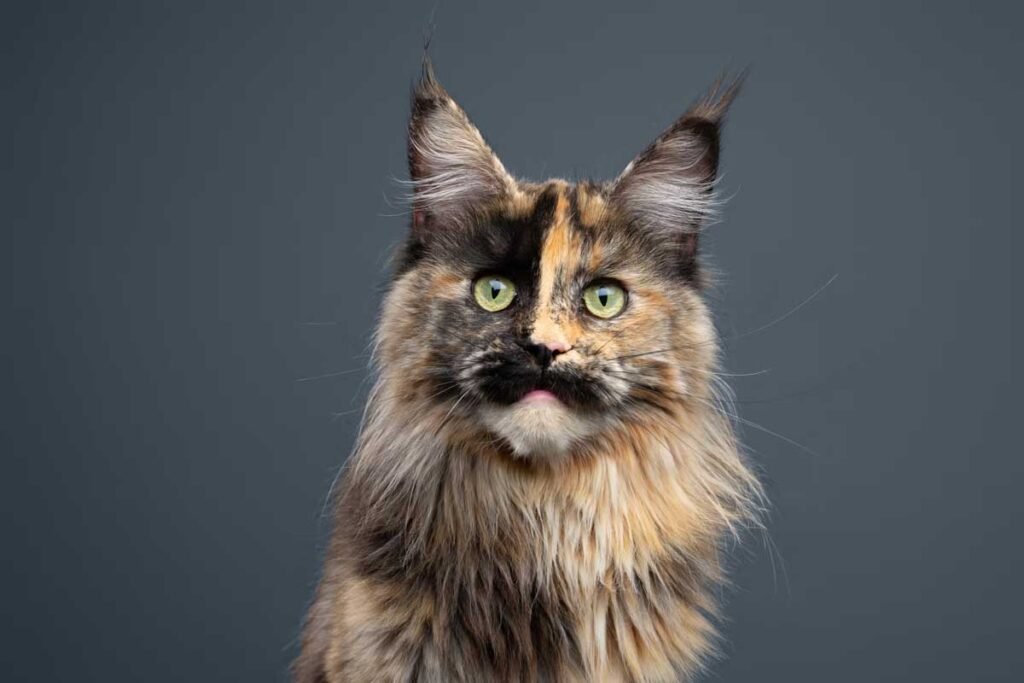
Nearly every tortoiseshell Maine Coon is female. That single fact explains most of what makes these cats feel special: the color is common enough in litters, but a male wearing it is a genuine genetic accident, and breeders cannot produce the pattern on demand the way they can with blue or cream.
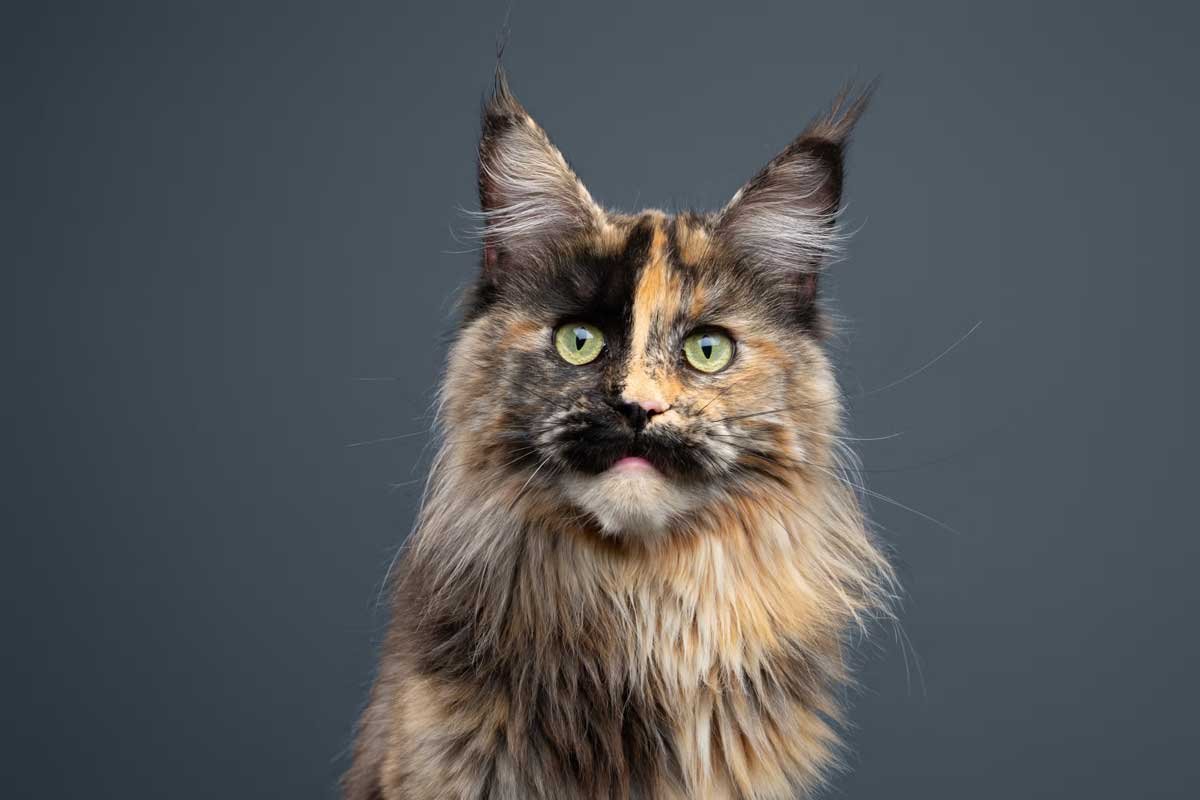
A tortie is a color class, not a separate breed or a hybrid. She competes under the same CFA and TICA breed standard as a brown tabby, grows to the same 10 to 18 pounds, and needs the same grooming. What changes is the coat lottery behind her, and the waitlist you join if you want one.
Why Nearly Every Tortoiseshell Maine Coon Is Female
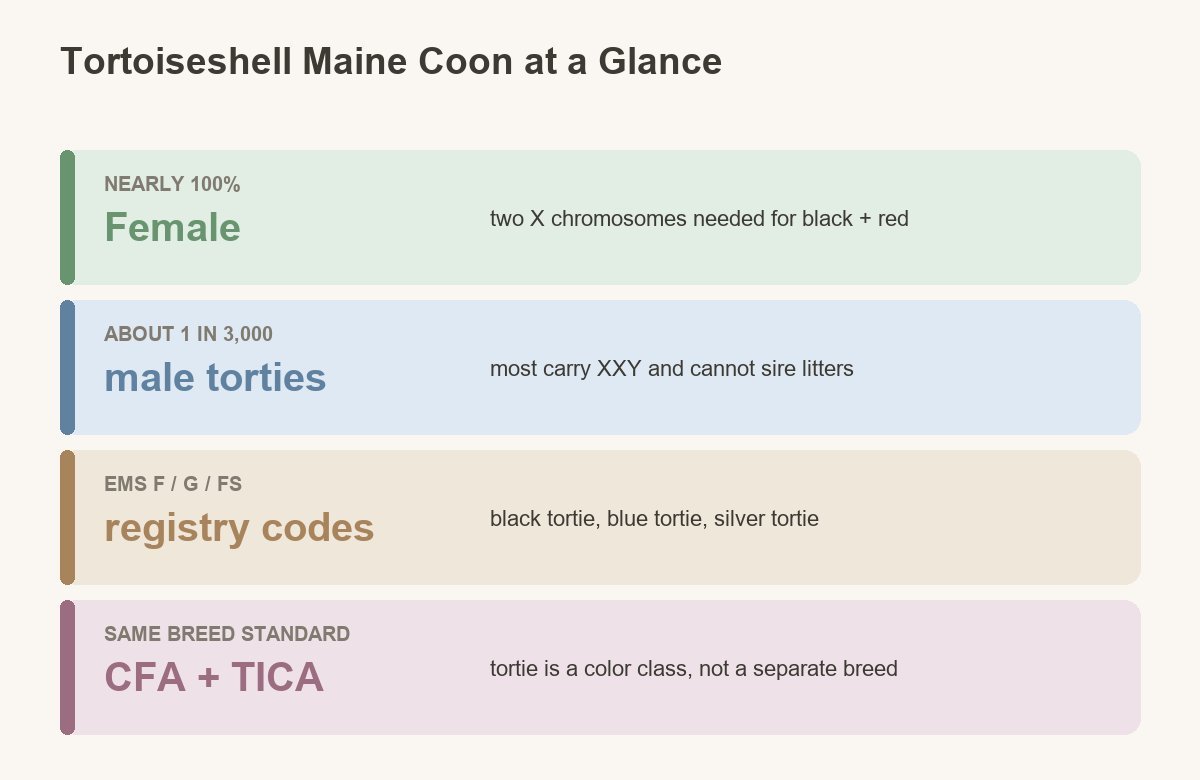
Tortoiseshell coloring requires one black-based gene and one red-based gene at the same time, and in cats the red gene lives on the X chromosome. A cat showing both colors therefore needs two X chromosomes, which in practice means a female. Males get one X, so they come out black-based or red-based, not both.
The rare exceptions make the rule vivid. Wikipedia’s genetics summary for tortoiseshell cats puts males at roughly 1 in 3,000, and most of those are XXY cats with Klinefelter syndrome, almost always sterile. A breeder who advertises a fertile male tortie Maine Coon is describing a cat that veterinary genetics says should barely exist, and that claim deserves paperwork before money moves. The pattern also cannot be line-bred the way silver or smoke can, because the red gene reshuffles every generation. Each tortie kitten is a fresh roll of two X chromosomes.
In every litter, tortie girls show up when the parents’ colors allow it, and never otherwise. A red or cream sire with a black-based dam is the classic pairing that produces them.
Tortie, Torbie, Dilute, or Calico: Reading the Coat
Registries file these coats under EMS codes, and breeders label kittens with them from the first photo. Working catteries such as SlowBlink list their black torties as EMS f, and the code on a pedigree tells you more than the marketing name ever will.
| Coat | EMS code | What you see |
|---|---|---|
| Black tortie | f | Black coat brindled with red patches, no white |
| Blue (dilute) tortie | g | Soft grey-blue mottled with cream instead of red |
| Silver / smoke tortie | fs | Tortie patches over a pale silver undercoat |
| Torbie | f 22 / f 23 | Tortie patches plus visible tabby stripes |
| Calico (tortie and white) | f 02 / f 03 | Distinct black and red patches on a white base |
The quick field test: stripes woven through the patches make her a torbie, large white areas make her a calico, and a muted grey-and-cream coat means dilute. A true black tortie reads as almost marbled, with the two colors swirled tightly together.
Owners tend to fall for the mix of colors before anything else, and the long Maine Coon coat exaggerates it beautifully.
“I really love her colors, her ear tips, and that curious Maine Coon expression.”
– r/mainecoons, June 2026 (891 upvotes)
What a Tortoiseshell Maine Coon Costs
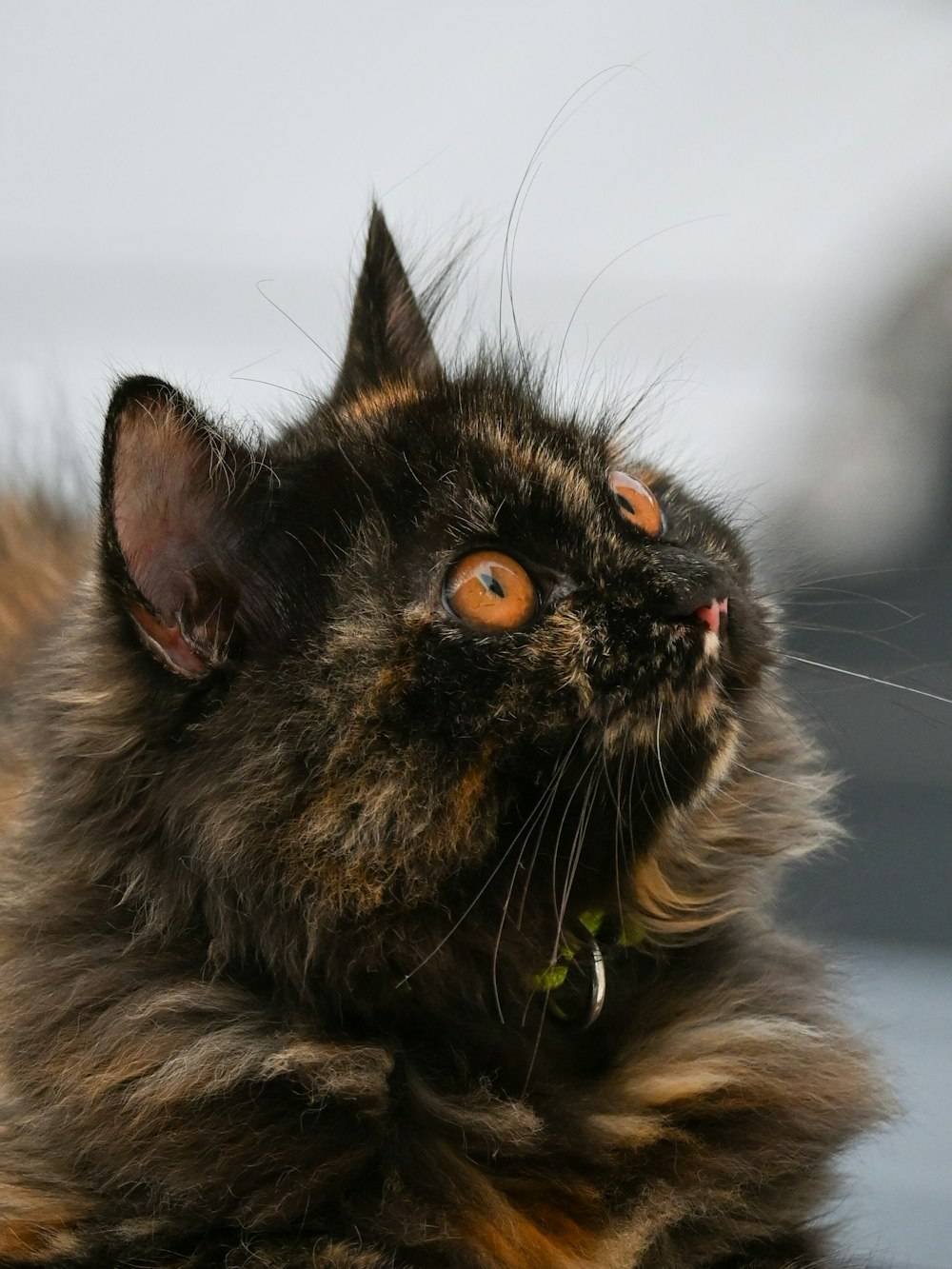
Expect pedigree tortie Maine Coon kittens to sell in the same band as other colors from the same cattery, with live UK listings on Pets4Homes ranging from about £995 to £1,390 for registered tortie girls, and Maine Coon crosses from around £350. US catteries commonly price pet-quality kittens in the low four figures, and color alone rarely moves that number from an ethical breeder.
Where you will see a premium is demand, not rarity pricing. Torties are always female, females book out faster on many waitlists, and a striking high-contrast girl gets reserved early. If a seller quotes a large surcharge specifically for tortoiseshell, treat it as a marketing test, because the registries treat the color as ordinary.
Does Tortitude Survive the Maine Coon Temperament?
Tortitude describes a real pattern of owner reports, but breed temperament matters more than coat color in a Maine Coon. A survey study in the Journal of Applied Animal Welfare Science by Stelow, Bain, and Kass reported that owners described tortoiseshell, calico, and torbie females as aggressive toward humans somewhat more often than other cats, while noting the differences were modest.
Set that against what Maine Coons are selected for: a relaxed, dog-like, people-oriented temperament that breeders have prioritized for decades. Tortie Maine Coon owners mostly describe opinionated but gentle cats, quick to follow you between rooms and vocal about dinner, with the classic chirping trill intact. If you meet a standoffish tortie, her upbringing and socialization are the likelier cause.
Color genes and behavior genes are not the same genes.
Is Your Tortoiseshell Cat Actually a Maine Coon?
A long-haired tortie with ear tufts is usually a domestic longhair, not a Maine Coon, unless registration papers say otherwise. Shelters and rehoming posts label big fluffy cats as Maine Coon mixes constantly, and the honest test has little to do with looks.
“Did you buy her from a breeder and receive papers saying so? If not, then no.”
– r/IDMyCat, July 2026 (27 upvotes)
That standard sounds harsh and it protects you. Breed identity in cats comes from a documented pedigree, not from size or coat, and a DNA panel can only report breed-associated markers, not confer papers. None of it makes an unpapered tortie less of a cat: she has the same X-linked coat lottery behind her and often the same shaggy charm. What she lacks is a claim you can put on a pedigree or a show bench.
If Maine Coon traits specifically matter to you, buy from a registered cattery and ask to see the dam. If a tortoiseshell coat is the thing you love, your local shelter probably has one this month.
Add white to a tortoiseshell coat and you get a calico. Our calico Maine Coon guide covers the three calico patterns, the price range and how rare the colour actually is.
FAQ
Are tortie Maine Coons rare?
Tortie Maine Coons are uncommon on waitlists but not genetically rare: the color appears reliably whenever a red-based parent is paired with a black-based one. Scarcity comes from every tortie being female and from few litters producing more than one or two.
Which Maine Coon color is the rarest?
No registry publishes color frequency, so any single rarest color claim is a guess. Fertile male torties are the strongest candidate on genetics alone, at roughly 1 in 3,000 tortoiseshell births, with solid white and gold-shaded coats also scarce in most breeding programs.
Can a male Maine Coon be a tortoiseshell?
Male tortoiseshell Maine Coons exist but are exceptional, usually XXY cats that are sterile and sometimes have related health issues. A male tortie sold as a future stud warrants a vet check and registry paperwork first, because working male torties are nearly unheard of.