
If your dog has a dull coat, itchy skin, or stiff joints, the fix might be simpler than you think. Fish oil supplements for dogs are one of the most researched ways to support overall canine health, and the right one can make a real difference. But with so many products on the shelf, choosing between them isn’t easy. In this guide, we break down five of the best options for 2026, explain what actually matters when you shop, and help you match a supplement to your dog’s needs. Let’s start with why omega-3s deserve a spot in your dog’s routine.
Why Do Dogs Need Omega-3 Fatty Acids?
Omega-3 fatty acids are essential fats that dogs can’t produce on their own. They have to get them through diet or supplements. The two that matter most are EPA and DHA, both found in fish and salmon oil.
Studies suggest these fats play a role across the whole body. EPA helps calm inflammation, which supports canine joint health and comfort in older dogs. DHA supports brain development in puppies and healthy vision throughout life.
Veterinary experts recommend omega-3 for dogs dealing with dry skin, shedding, allergies, or joint stiffness. Research indicates that a steady supply can also support heart and kidney function. In short, these small fats do a lot of quiet, important work.
Key takeaway: Omega-3s support skin, coat, joints, brain, and heart, and most diets don’t provide enough on their own.
What to Look for in Fish Oil Supplements for Dogs
Not all products are equal. Before you buy, check a few things that separate quality options from filler.
- EPA and DHA content: These are the active ingredients. A label listing only “fish oil” tells you little. Look for specific EPA and DHA amounts per serving.
- Omega-3 source: Wild-caught fish and salmon oil for dogs tend to be cleaner than farmed sources.
- Purity testing: Third-party testing for heavy metals and toxins signals a trustworthy brand.
- Freshness: Rancid oil smells sharp and loses benefits. Sealed bottles or individually wrapped chews help.
- Format: Liquid oil, softgels, or soft chews. Pick what your dog will actually take.
When comparing the best dog supplements, prioritize transparency. Brands that share sourcing and testing details usually stand behind their products.
The Top 5 Fish Oil Supplements for Dogs in 2026
Here are five options worth considering this year. Each fits a different dog and budget, so read the “best for” notes closely.
1. Kaiivo Salmon Herbal Chews — Best Herbal-Infused Fish Oil Soft Chew for Daily Wellness
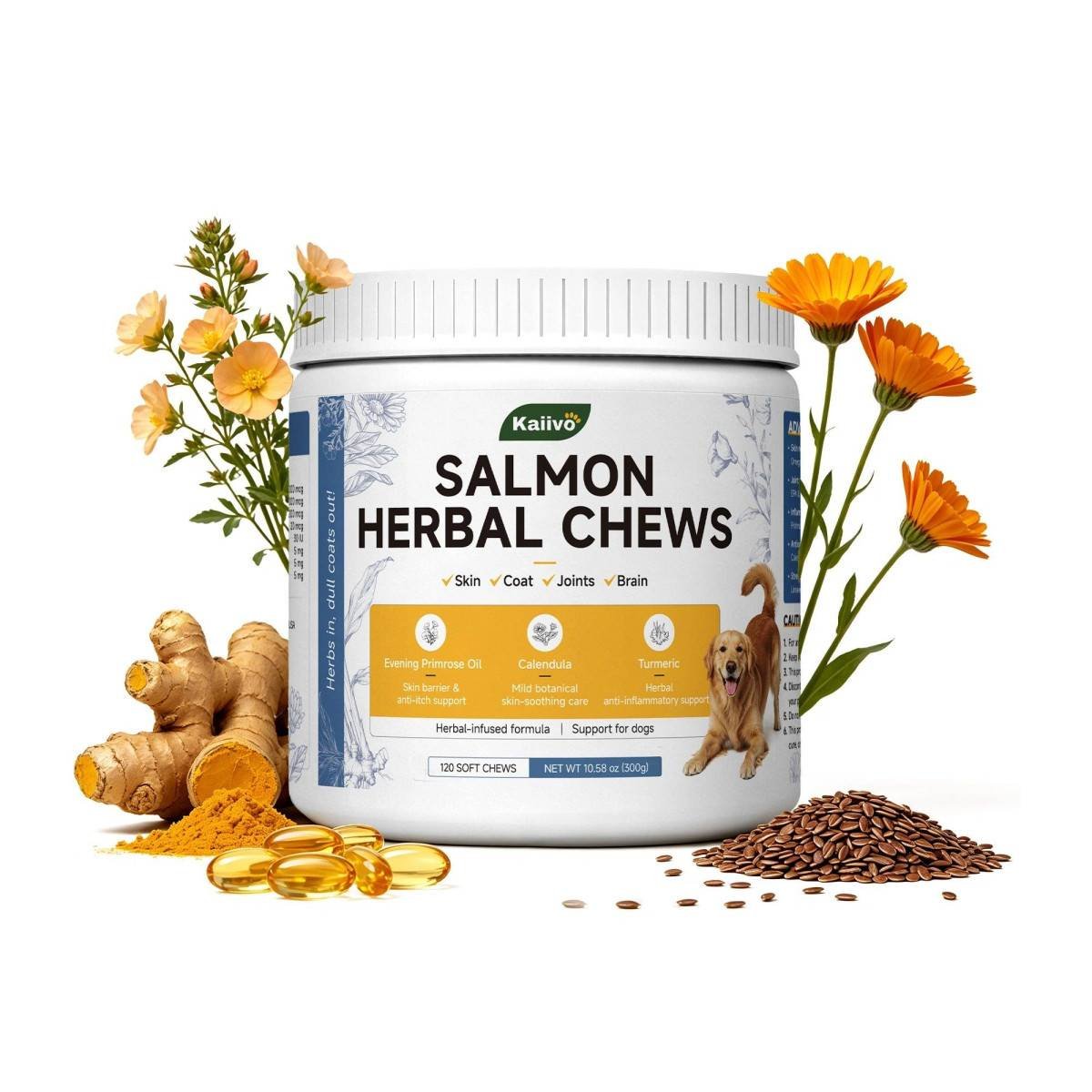
Kaiivo Salmon Herbal Chews take a slightly different path. They pair salmon oil with supporting botanicals in a soft chew built for everyday use. That combination is what sets them apart from plain oil products.
- Main ingredients: Salmon oil plus herbal botanicals chosen to support skin, coat, and joint comfort.
- Omega-3 source: Salmon, delivering natural EPA and DHA.
- Benefits: Supports healthy skin and coat, eases everyday joint stiffness, and encourages general wellness through the added herbal blend.
- Best for: Dogs who refuse liquid oil and owners who want a daily wellness chew rather than a single-issue supplement.
- Pros: Easy to serve, palatable, and pairs omega-3s with plant-based support.
- Drawbacks: Herbal blends aren’t ideal for every dog, so check ingredients if yours has sensitivities.
These chews suit owners who want a simple, consistent addition to their dog’s routine without wrestling with a dropper.
2. Nordic Naturals Omega-3 Pet
Nordic Naturals Omega-3 Pet is a liquid oil trusted for its purity standards.
- Main ingredients: Wild-caught fish oil in triglyceride form.
- Omega-3 source: Anchovy and sardine.
- EPA/DHA: Concentrations are clearly listed per serving, which helps with dosing.
- Benefits: Supports coat shine, skin health, and joint comfort.
- Best for: Owners who want a well-documented, third-party-tested liquid.
- Pros: Strong purity testing and clear labeling.
- Drawbacks: Liquid format can be messy, and some dogs dislike the pump.
3. Zesty Paws Wild Alaskan Salmon Oil
Zesty Paws Wild Alaskan Salmon Oil is a popular, budget-friendly liquid.
- Main ingredients: Wild Alaskan salmon oil.
- Omega-3 source: Salmon.
- Benefits: Promotes healthy skin and coat and supports immune and joint function.
- Best for: Multi-pet homes and owners who want to pour omega-3s straight over food.
- Pros: Affordable, easy to use, and widely available.
- Drawbacks: EPA and DHA amounts are less precisely stated than clinical brands.
4. PetHonesty Omega-3 Fish Oil
PetHonesty Omega-3 Fish Oil blends fish oil with immune support ingredients.
- Main ingredients: Fish oil with added antioxidants.
- Omega-3 source: Wild-caught fish.
- Benefits: Targets skin, coat, and immune health together.
- Best for: Dogs needing broad daily support in one product.
- Pros: Combines omega-3s with extra nutrients.
- Drawbacks: Added ingredients may not suit dogs on restricted diets.
5. NaturVet Omega-Gold Plus Salmon Oil Soft Chews
NaturVet Omega-Gold Plus Salmon Oil Soft Chews offer omega-3s in a treat-like form.
- Main ingredients: Salmon oil in a soft chew base.
- Omega-3 source: Salmon.
- Benefits: Supports skin, coat, and joint health.
- Best for: Picky dogs who take chews more readily than oil.
- Pros: Palatable and convenient.
- Drawbacks: Chews contain more added ingredients than pure oil.
Fish Oil vs Soft Chews
Both formats deliver omega-3s, so the right choice comes down to your dog and your routine.
Liquid oil usually offers higher, more concentrated EPA and DHA per serving. You can adjust the dose easily, which helps with large breeds. The downside is mess, smell, and the occasional refusal at mealtime.
Soft chews win on convenience. They’re clean, easy to store, and most dogs treat them like a snack. The trade-off is a lower omega-3 dose per piece and more added ingredients.
So what? If your dog needs a therapeutic dose for joint issues, liquid may serve better. For everyday maintenance and fussy eaters, chews are often the easier win.
How Much Fish Oil Does a Dog Need?
Dosage depends on your dog’s weight, health, and the product’s EPA and DHA concentration. That’s why labels matter more than the total oil amount.
As a general rule, larger dogs need more omega-3s than small ones, and dogs with joint or skin conditions often need higher amounts than healthy dogs. The American Kennel Club and veterinary nutritionists both stress the same point: start conservatively and increase slowly.
Always confirm the right amount with your vet before adding any new supplement, especially if your dog takes medication or has a health condition. Too much fish oil can cause loose stools or interfere with clotting.
Key takeaway: Dose by EPA and DHA content, not bottle size, and let your vet set the target.
Frequently Asked Questions
Are fish oil supplements safe for dogs?
For most dogs, yes, when dosed correctly. Side effects like loose stools usually point to too high a dose.
How long until I see results?
Coat and skin improvements often appear within a few weeks. Joint benefits can take longer with consistent use.
Can I give my dog human fish oil?
It’s better to use products formulated for dogs. Human doses and added ingredients aren’t always appropriate for canine nutrition.
Do puppies need omega-3s?
DHA supports brain and eye development, so many puppy diets already include it. Ask your vet before supplementing.
What are the main fish oil benefits for dogs?
Healthier skin and coat, calmer inflammation, better joint comfort, and support for heart and brain function.
Conclusion
Choosing among fish oil supplements for dogs comes down to your dog’s needs, your daily routine, and label transparency. Liquid oils like Nordic Naturals and Zesty Paws deliver concentrated EPA and DHA, while soft chews such as Kaiivo Salmon Herbal Chews and NaturVet make daily dosing simple for picky eaters. Whichever you pick, focus on omega-3 source, purity testing, and clear EPA and DHA amounts. Introduce any new supplement slowly and confirm the dose with your vet. With consistent use, the right product can support your dog’s skin, coat, joints, and long-term canine health for years to come.