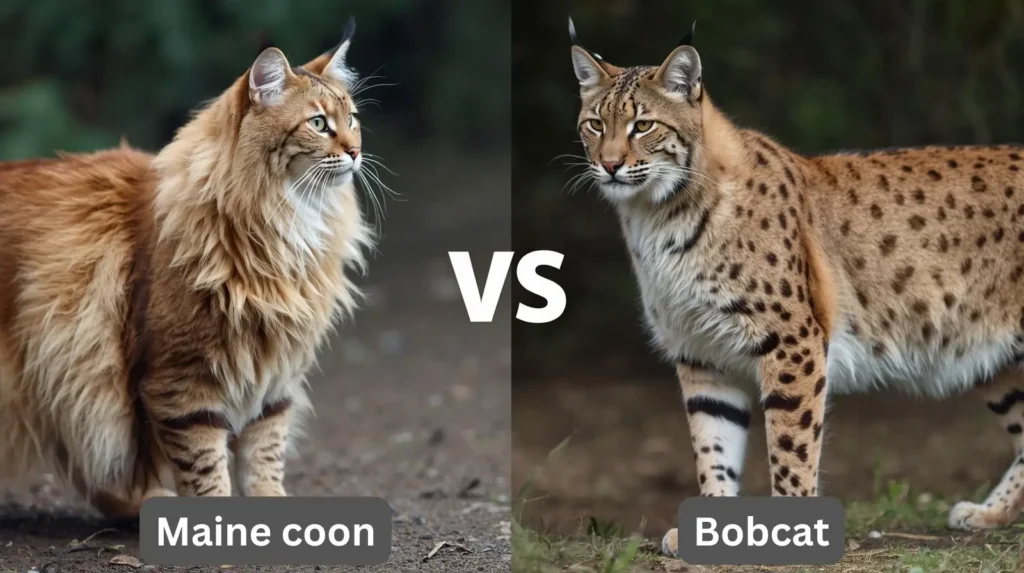
When comparing felines, the Maine coon vs bobcat discussion often sparks curiosity among cat enthusiasts and wildlife lovers alike. These two remarkable cats share surprising similarities in size and appearance, yet they represent vastly different worlds—one domestic, one wild. Understanding the differences between these magnificent creatures helps us appreciate both the gentle giants of the domestic cat world and the fierce predators of North American wilderness.
Heard rumors of Maine Coon-bobcat hybrids? We break down the truth behind the Maine Coon bobcat mix myth.
Physical Characteristics: Size and Appearance
Size Comparison Between Maine Coons and Bobcats
The maine coon vs bobcat size debate reveals fascinating similarities. Maine Coons average 18 to 22 pounds for males and 12 to 15 pounds for females, with heights ranging from 10 to 16 inches and lengths up to 38 inches including the tail. Bobcats show similar ranges, with males weighing 14-40 pounds (average 21 pounds) and females 8.8-33.7 pounds (average 15 pounds).
Remarkably, a large Maine coon can actually be around the same size and weight as a small bobcat. However, while bobcats and Maine Coons can be around the same size, the larger bobcat is easily four times as large as the smallest Maine Coon.
| Feature | Maine Coon | Bobcat |
|---|---|---|
| Male Weight | 18–22 lbs | 14–40 lbs (avg 21 lbs) |
| Female Weight | 12–15 lbs | 8.8–33.7 lbs (avg 15 lbs) |
| Height | 10–16 inches | Up to 21 inches |
| Length (with tail) | Up to 38 inches | 26–41 inches |
| Tail Length | Up to 14 inches | 4–8 inches |
Distinctive Physical Features
The maine coon vs bobcat appearance comparison reveals key identifying features. Bobcats are generally tan to yellowish brown with dark brown or black streaks, white underparts with black spots, and legs marked with black bars. Their most distinctive feature is pointed ears with short, black tufts and a short tail that appears “bobbed”.
Maine Coons display varied coat colors and patterns, but their signature features include long, flowing fur, large paws, and notably long, bushy tails. Their ear tufts are longer and more pronounced than those of bobcats, contributing to their majestic appearance.
Habitat and Geographic Distribution
Natural Environments
The maine coon vs bobcat habitat discussion highlights their different environmental needs. Bobcats live in all sorts of habitat, from subtropical forests to high and dry rimrock, including chaparral, wooded streams, river bottoms, canyon lands, and coniferous forests to 9,000 feet in elevation.
Maine Coons, originally developed in Maine’s harsh climate, thrive in domestic environments worldwide. Their thick, water-resistant coats make them well-suited to cold climates, though they adapt successfully to various indoor conditions with proper care and mainecoon Guides for optimal care practices.
Territory and Range
Bobcats maintain territories ranging from 1 to 18 square miles depending on prey availability and habitat quality. They mark their territories with scent and prefer areas with dense cover for stalking prey.
Maine Coons, being domestic cats, don’t establish wild territories but benefit from spacious homes where they can exercise their natural climbing and hunting instincts safely indoors.
Behavioral Differences
Hunting and Diet Patterns
The maine coon vs bobcat hunting comparison reveals stark differences in their predatory behaviors. Bobcats’ primary diet is rabbit, but they also eat rodents, beaver, peccaries, birds and bats, and deer. Living in the north they mainly eat snowshoe hares, while those living in the south will mainly eat cottontail rabbits.
Maine Coons retain hunting instincts but rely on commercial cat food supplemented with occasional treats. Their hunting behavior typically manifests through play, chasing toys, and catching small household pests.
Social Behavior and Communication
The bobcat hardly ever vocalizes, although it often yowls and hisses during the mating season. These solitary cats avoid human contact and remain largely silent to prevent detection by prey.
Maine Coons are notably vocal, often “chattering” with their owners and expressing various needs through different vocalizations. They’re known for their dog-like loyalty and social nature, often following family members around the house.
Temperament and Human Interaction
The maine coon vs bobcat temperament comparison couldn’t be more different. Bobcats are wild animals with natural fear and aggression toward humans. They avoid human settlements except when seeking easy prey like domestic pets or livestock.
Maine Coons are renowned for their gentle, friendly personalities. They’re excellent family pets, patient with children, and often described as “dog-like” in their social behaviors and loyalty to their human families.
Legal and Ownership Considerations
Pet Ownership Laws
Understanding the maine coon vs bobcat ownership legality is crucial for potential owners. Maine Coons are fully domestic cats, legally owned worldwide without special permits or restrictions beyond standard pet ownership requirements.
Bobcat ownership is heavily regulated or completely prohibited in most jurisdictions. These wild animals require specialized care, enormous space, and pose significant safety risks to owners and communities.
Care Requirements
Maine Coons require standard domestic cat care: quality nutrition, regular veterinary checkups, grooming (especially during shedding seasons), and environmental enrichment through toys and climbing structures.
Bobcats need expert wildlife care, including species-appropriate diets of whole prey, extensive secure enclosures, minimal human contact to maintain their wild nature, and specialized veterinary care from wildlife experts.
Health and Lifespan Comparison
Life Expectancy
The maine coon vs bobcat lifespan reveals the benefits of domestic care. Maine Coons typically live 12-15 years with proper veterinary care and nutrition. Some reach 18-20 years, enjoying long, healthy lives with their families.
Wild bobcats live 7-10 years on average, facing challenges from predators, disease, vehicle strikes, and food scarcity. Captive bobcats may live slightly longer but still face stress-related health issues from confinement.
Common Health Issues
Maine Coons are prone to certain genetic conditions including hypertrophic cardiomyopathy, hip dysplasia, and spinal muscular atrophy. Responsible breeding and regular health screening help minimize these risks.
Wild bobcats face parasites, injuries from prey animals, territorial fights, and seasonal food shortages. They’ve evolved robust immune systems but lack access to veterinary intervention when seriously injured or ill.
Conservation Status and Environmental Impact
Population Status
The maine coon vs bobcat conservation status differs significantly. Maine Coons face no conservation concerns, with millions thriving as beloved pets worldwide. Breeding programs ensure genetic diversity and continued breed improvement.
Bobcat populations remain stable across most of their range, though some subspecies face regional pressures from habitat loss and urbanization. They play crucial roles as apex predators in their ecosystems, controlling rodent and rabbit populations.
Ecological Importance
Maine Coons contribute to human companionship and emotional well-being but have minimal direct ecological impact beyond their domestic environment.
Bobcats serve as vital ecological regulators, controlling prey species that could otherwise damage vegetation through overgrazing. Their presence indicates healthy ecosystem balance and biodiversity.
Conclusion
The maine coon vs bobcat comparison illuminates the remarkable diversity within the feline family. While these cats share surprising physical similarities, their lifestyles, needs, and relationships with humans differ dramatically. Maine Coons represent the successful domestication of feline traits we admire—size, beauty, and hunting prowess—while maintaining gentle, social temperaments perfect for family life. Bobcats embody the wild essence of their feline heritage, remaining independent predators crucial to their ecosystems.
Understanding these differences helps us appreciate both species appropriately: Maine Coons as cherished companions and bobcats as respected wildlife requiring protection and distance. Whether you’re drawn to the domestic charm of a Maine Coon or fascinated by the wild majesty of bobcats, both cats demonstrate the incredible adaptability and beauty of the feline family.
As we continue learning about these magnificent creatures, one question remains: how can we better support both domestic cat welfare and wild bobcat conservation in our changing world?