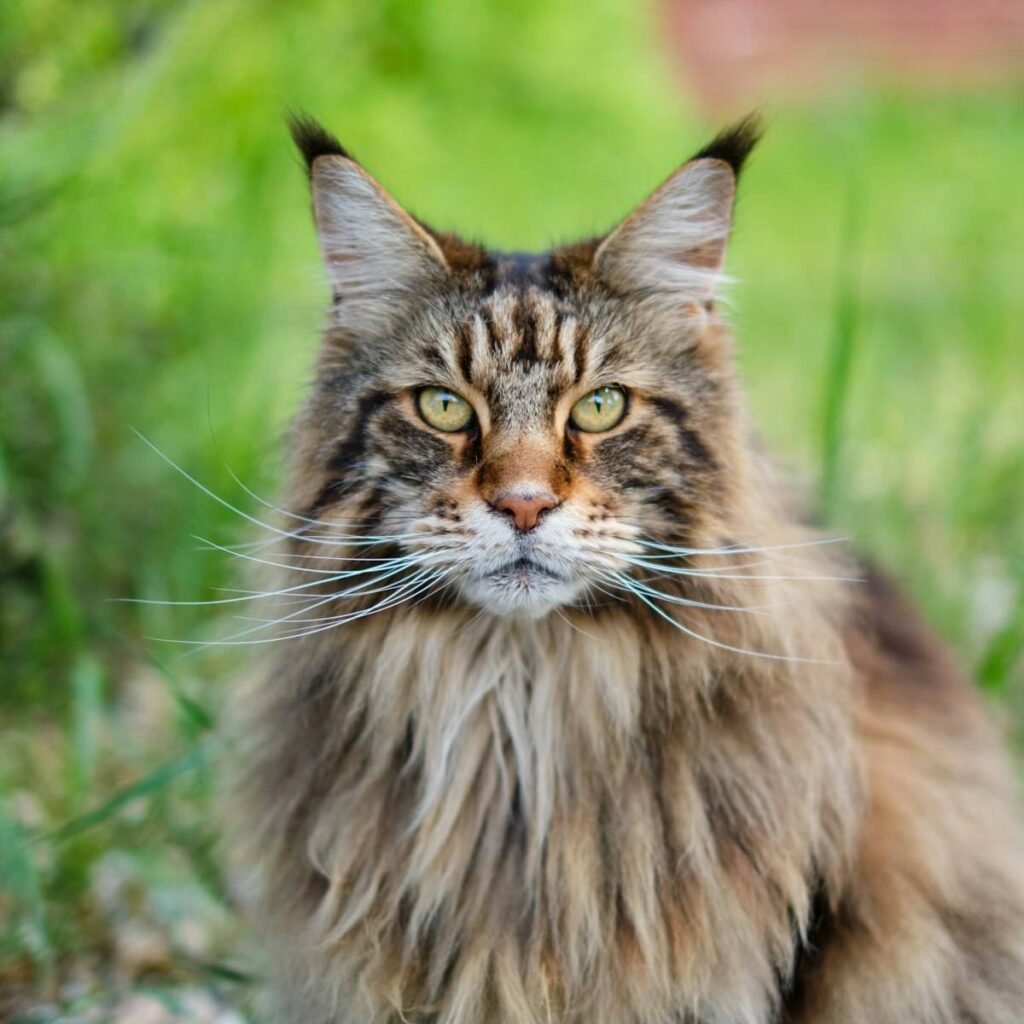
Stripes tell you nothing about whether your cat is mixed. Tabby is a coat pattern rather than a breed, and the classic brown tabby is one of the most common colours in registered Maine Coon lines, so a striped cat is at least as consistent with a purebred as with a cross.
The question worth asking is not whether your cat is a Maine Coon tabby mix. It is what a tabby pattern can and cannot reveal, and where the real evidence sits.
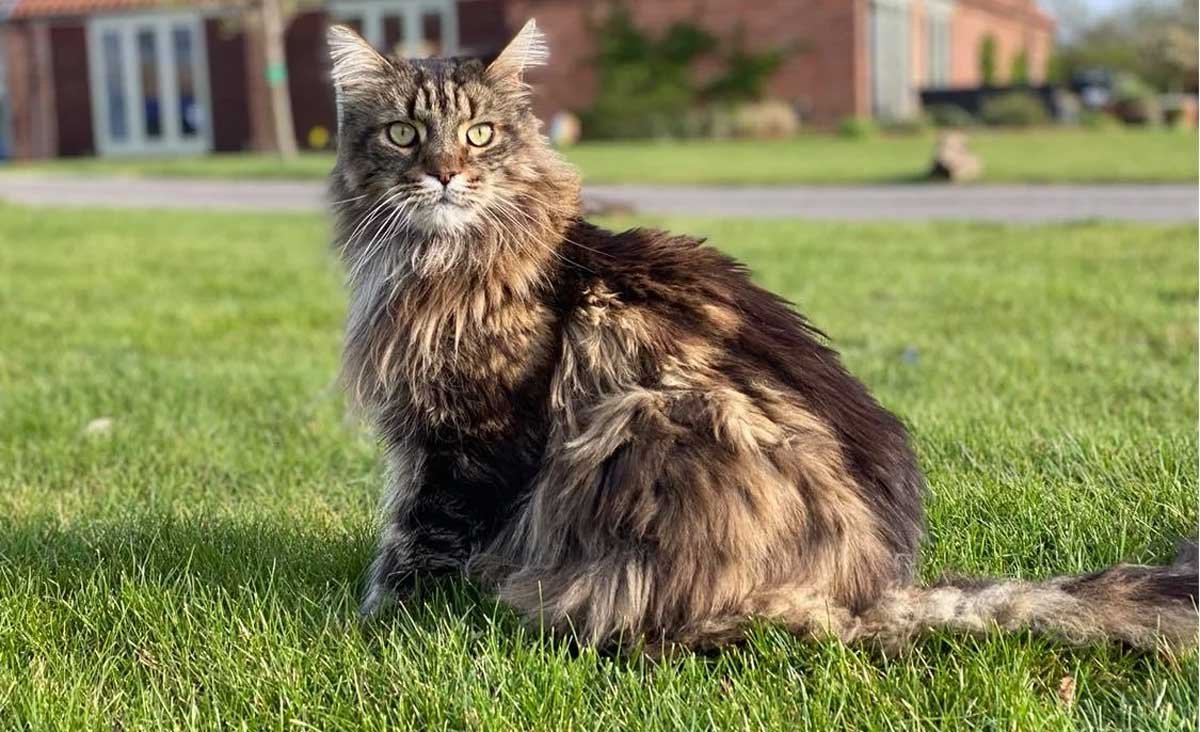
Every Cat Is a Tabby Underneath
The pattern is controlled by the agouti gene, and the version of it your cat carries decides only whether the stripes show. Cats carrying the dominant A allele display their tabby pattern. Cats with two copies of the recessive form, written aa, are solid black or blue with the same pattern still coded underneath, sometimes visible as faint ghost striping in strong sunlight.
So a solid black Maine Coon is a tabby with the pattern switched off. Nothing about carrying stripes marks a cat as mixed, because the underlying pattern is universal and the switch is a single gene that runs freely through pedigree and random-bred cats alike.
Ancestry lives in structure and paperwork. The coat is decoration both populations share.
The Four Patterns, and Why the Spotted One Causes Trouble
Registries recognise four distinct tabby patterns, each with its own genetics, and Maine Coons appear in all of them.
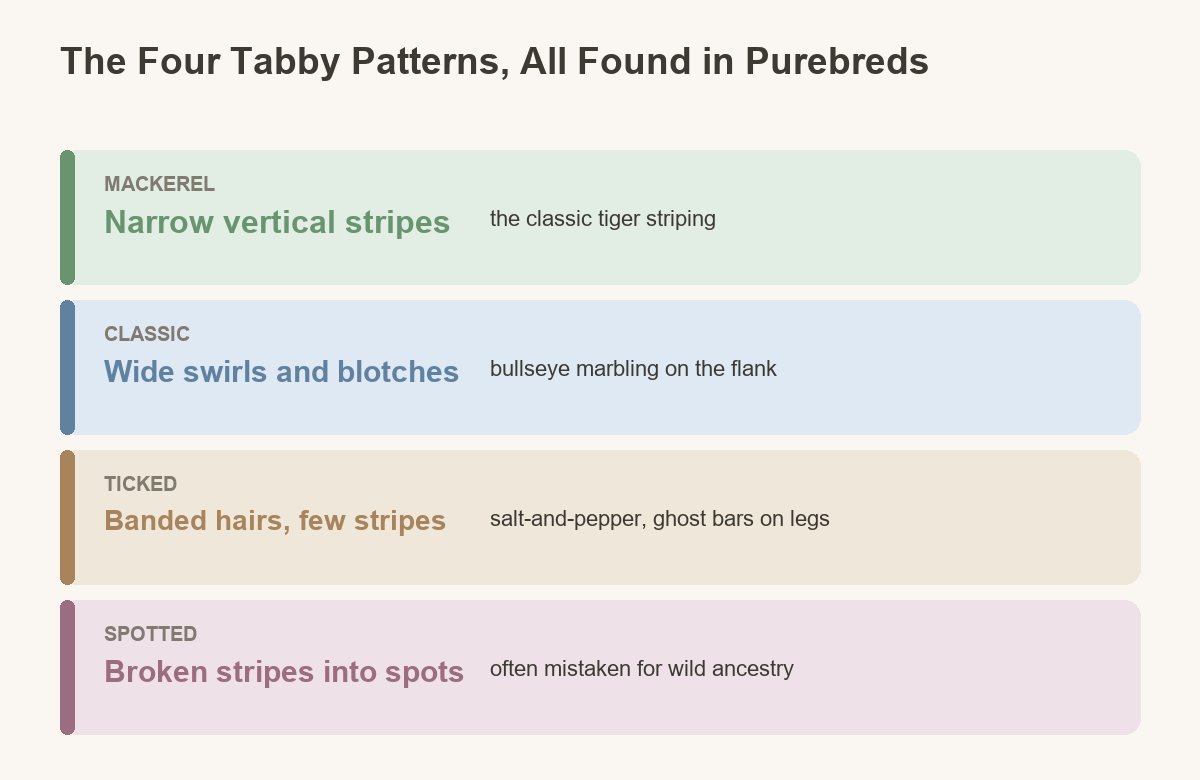
Mackerel is the narrow vertical striping most people picture. Classic, also called blotched, produces broad swirls and the bullseye whorl on the flank, and it is the pattern that photographs like marble. Ticked tabbies carry banded hairs with almost no body striping, which reads as a solid cat until you look at the legs and find ghost bars.
Spotted is the one that starts arguments. Broken striping resolves into discrete spots, an owner sees a small wild cat looking back, and within a week the rehoming listing has grown a Bengal or a serval somewhere in the family tree. None of that follows from the coat: the spotted pattern is an ordinary tabby variant that arises without any exotic input at all, and it turns up in random-bred cats on every continent. The forehead M, incidentally, appears in all four patterns and proves nothing beyond the presence of the tabby gene.
What People Actually Mean by a Tabby Mix
The phrase covers two different cats, and they call for different answers. Some owners mean a Maine Coon crossed with a random-bred cat that happens to wear tabby markings, which is a genuine mix whose adult size and coat length are a lottery. Others mean a Maine Coon that simply has tabby markings, which is not a mix at all.
Only the first is a crossbreed. Even then the tabby half of the description is doing no work, because what matters is that one parent was a random-bred cat rather than what pattern that parent happened to wear. Drop the word tabby from the question and nothing about the answer changes.
“He’s probably just a long hair but he does have some characteristics that made a few people ask if he was a mix. What do you think?”
– r/cats, May 2026 (4,165 upvotes)
That thread drew thousands of replies and the consensus landed where it always does: a big striped longhair with tufty ears is usually a domestic longhair. Our guide to telling whether your cat is a Maine Coon mix works through the structural checks that carry real weight, and our mixed breed guide covers the crosses that do turn up.
Size, Coat, and What Owners Pay
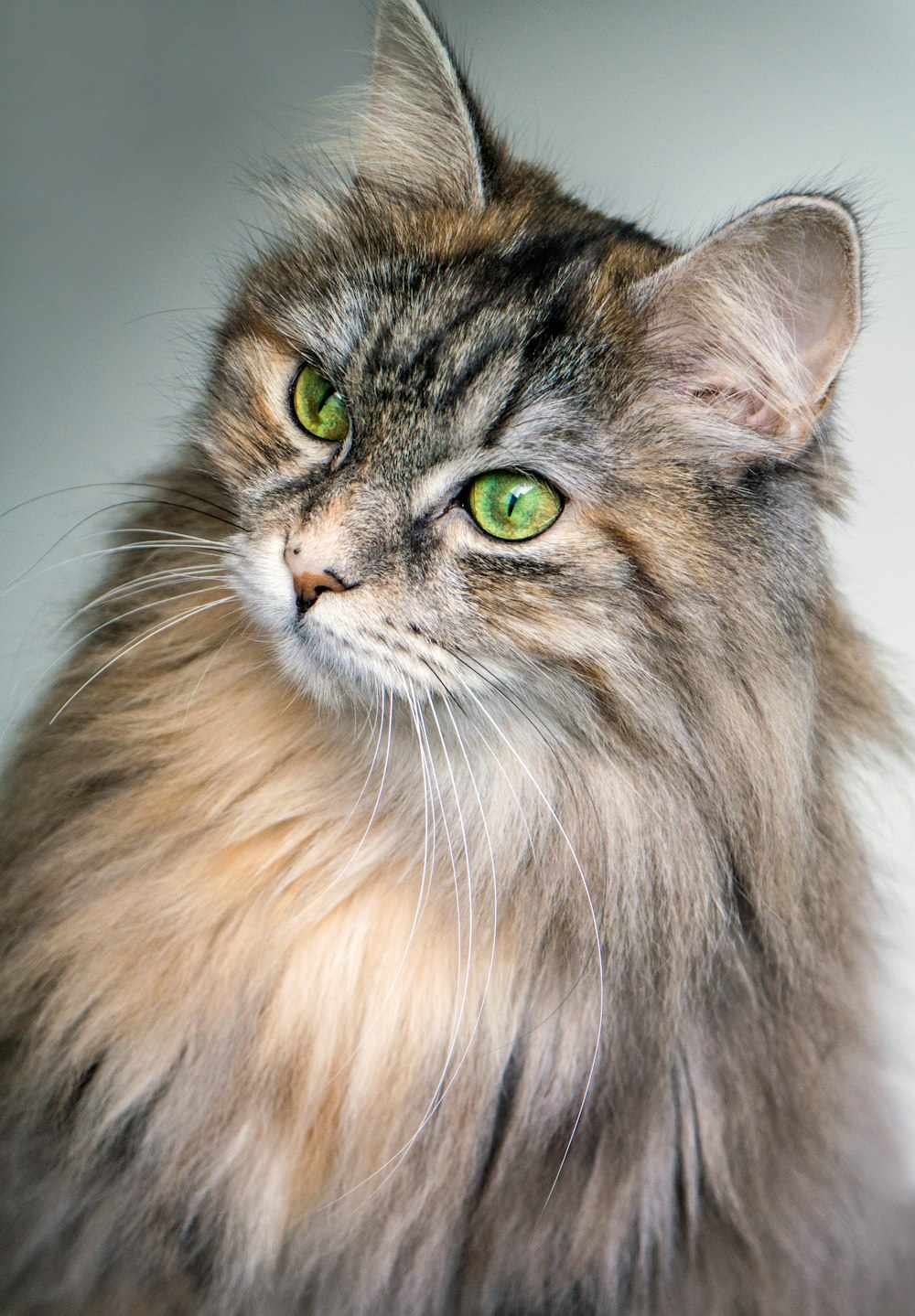
A true Maine Coon crossed with a domestic cat usually lands between the two parents and finishes growing sooner. Expect something in the region of 10 to 15 pounds rather than the 18 to 20 a large purebred male reaches, and expect the growth to stop around two years instead of continuing toward four.
Coat length is the least predictable trait in the cross. Longhair is recessive, so a Maine Coon bred to a shorthaired tabby can produce short-coated kittens that carry the gene without showing it, which is why owners of a semi-longhaired mix and a nearly shorthaired one can be describing littermates.
Price separates the two meanings cleanly. A registered Maine Coon with tabby markings is priced as a pedigree kitten, in the low four figures from a health-testing cattery. A genuine mix has no registry, no papers, and no pedigree price attached, and usually reaches its owner through a rescue fee or a neighbour’s accidental litter. A four-figure ask for an unpapered tabby mix is the clearest warning sign in this whole category.
Checking Your Own Cat
Ignore the coat entirely for ten minutes and look at the frame instead. Maine Coon type means a long rectangular body, heavy legs, a square muzzle with a visible break, large ears set high and wide, and a tail as long as the body. Two or three of those appearing together mean something. Tufted ears on their own mean almost nothing, which is unfortunate, because tufted ears are the first thing everybody notices and the thing rehoming listings lead with.
Then check the paperwork, which is the only thing that settles it. Registration from CFA or TICA on at least one parent turns a resemblance into an ancestry claim, and nothing else does. A DNA panel can report breed-associated markers but cannot issue a pedigree, and it performs poorly for a breed drawn from ordinary North American farm cats.
If both checks come back empty, you have a domestic longhair with good bones and a nice coat. That cat is not a lesser animal, and the guides on this site for grooming, feeding, and growth apply to him exactly as they do to a papered one.
A tabby carrying large white areas alongside black and red patches is a calico rather than a torbie; our calico Maine Coon guide sets out the difference.
FAQ
How can you tell if your tabby is part Maine Coon?
Structure rather than markings gives the answer: look for a rectangular body, heavy boning, a square muzzle with a break, and a tail as long as the body. Tabby stripes appear in most random-bred cats and in many purebred Maine Coons, so they carry no evidence either way.
Are Maine Coon tabby cats rare?
Tabby Maine Coons are the opposite of rare, since brown tabby is among the most common colours in the breed and all four tabby patterns are recognised. Solid colours and silver-based coats are scarcer in most breeding programmes.
How big does a tabby Maine Coon mix get?
A Maine Coon crossed with a domestic cat typically reaches 10 to 15 pounds and finishes growing near two years old. Purebred males commonly run 18 to 20 pounds and keep filling out until about four, so a mix usually lands below both marks.
Can a Maine Coon tabby mix have short hair?
Short-coated kittens are entirely possible, because the long-hair gene is recessive and a shorthaired parent can mask it. Littermates from one cross often differ in coat length, and a short coat does not rule out Maine Coon ancestry.