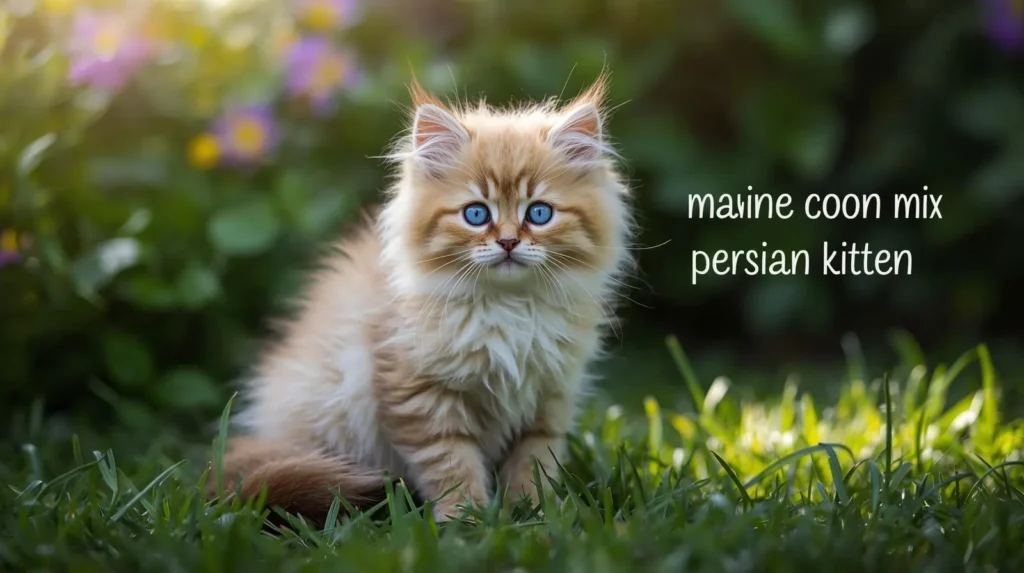
When I first encountered a Maine Coon Mix Persian kitten, I was immediately captivated by its luxurious coat and gentle demeanor. This remarkable crossbreed combines the majestic presence of America’s largest domestic cat with the sweet, calm temperament of one of the world’s most beloved breeds. The Maine Coon Mix Persian kitten represents a fascinating blend that’s capturing hearts across the United States, particularly as the Maine Coon was crowned as the top pedigreed cat breed for 2026.
Comparing the two purebreds instead? See our side-by-side Maine Coon vs Persian breed guide.
Understanding the Maine Coon Mix Persian Kitten
A Maine Coon Mix Persian kitten is born when one parent is a purebred Maine Coon and the other is a purebred Persian cat. This hybrid inherits distinctive traits from both lineages, creating a unique feline companion. The unpredictability of genetics means each Maine Coon Mix Persian kitten develops its own special characteristics, making every adoption a delightful surprise.
The appeal of the Maine Coon Mix Persian kitten stems from combining two wildly popular breeds. Globally, Persian cats rank second in popularity at 11.21%, while Maine Coons consistently appear in the top rankings. When these genetic powerhouses unite, the result is a kitten that often inherits the best qualities of both parents.
Physical Characteristics and Appearance
Size and Build
The Maine Coon Mix Persian kitten grows into a medium to large-sized cat, though final dimensions vary based on dominant genes. Purebred Maine Coons can reach up to twenty pounds, while Persians typically remain smaller and more compact. Your Maine Coon Mix Persian kitten will likely fall somewhere between these extremes, creating a well-proportioned feline with moderate size.
These kittens develop muscular bodies with long torsos and thick legs. The growth pattern of a Maine Coon Mix Persian kitten extends longer than typical cats, with full maturity occurring between two to four years of age rather than the standard one to two years.
Coat and Grooming Needs
Perhaps the most striking feature of any Maine Coon Mix Persian kitten is its magnificent coat. Both parent breeds boast long, luxurious fur, and their offspring inherit this beautiful characteristic. The texture ranges from the slightly coarser, water-resistant fur of Maine Coons to the silky, dense coat signature to Persians.
Daily brushing becomes essential for Maine Coon Mix Persian kitten owners. Without consistent grooming, mats and tangles develop quickly in their double-layered coat. I’ve learned firsthand that establishing a grooming routine early in your Maine Coon Mix Persian kitten’s life makes the process enjoyable for both cat and owner.
Bathing frequency for a Maine Coon Mix Persian kitten should be once every six weeks to a few months, depending on individual needs and lifestyle. Senior cats and kittens may require more frequent bathing due to potential litter box accidents or difficulty self-grooming.
Facial Features
The facial structure of a Maine Coon Mix Persian kitten presents one of the most variable aspects of appearance. Some inherit the Persian’s characteristic flat face and small nose, while others develop the Maine Coon’s more traditional feline features with a longer muzzle and prominent ear tufts. The ears are medium-sized and typically display tufts of hair, though they may be round like a Persian or pointy like a Maine Coon usually something in between.
Eye color in Maine Coon Mix Persian kittens can be green, copper, or blue. Many are born with blue eyes that may change around six weeks old depending on coat color.
Temperament and Personality Traits
Intelligence and Trainability
The Maine Coon Mix Persian kitten inherits high intelligence from both parent breeds. Maine Coons are renowned for their dog-like characteristics, including the ability to learn tricks and respond to their names. Persian cats, while more reserved, contribute their own cleverness to the mix.
These kittens display curiosity about their surroundings and can learn to respond to names, follow simple commands, and even perform tricks with consistent positive reinforcement training methods. Interactive play becomes both entertainment and mental stimulation for your Maine Coon Mix Persian kitten.
Social Behavior
The social nature of the Maine Coon Mix Persian kitten makes them excellent family companions. They typically develop strong bonds with their human families while maintaining a gentle disposition around children and other pets. Their patient temperament, inherited from both parent breeds, contributes to their reputation as outstanding family cats.
These kittens often exhibit the Maine Coon’s tendency to be near their owners without being overly demanding of attention, combined with the Persian’s calm and affectionate nature. Don’t be surprised if your Maine Coon Mix Persian kitten follows you from room to room, content to simply be in your presence.
Energy Levels
Expect a balanced energy level in your Maine Coon Mix Persian kitten. Maine Coons bring playfulness and moderate activity, while Persians contribute a more laid-back, “couch potato” lifestyle. The result is typically a cat that enjoys playtime and interactive games but also appreciates lengthy cuddle sessions and peaceful napping.
Health Considerations and Lifespan
Life Expectancy
The lifespan of a Maine Coon Mix Persian kitten ranges from twelve to seventeen years, with many falling in the thirteen to fifteen-year range. This extended lifespan often results from the genetic diversity that comes with crossbreeding, which can reduce the likelihood of inherited health issues common in purebred lines.
Common Health Issues
Both Maine Coons and Persians carry breed-specific health concerns that potential owners should understand. Maine Coons face increased risks of:
- Hypertrophic Cardiomyopathy (HCM): A heart condition affecting many large cat breeds
- Hip Dysplasia: Joint abnormalities that can cause lameness and arthritis
- Spinal Muscular Atrophy: A genetic condition affecting muscle development
- Polycystic Kidney Disease (PKD): Though studies show Maine Coon PKD differs from the Persian variety
Persian cats commonly experience:
- Brachycephalic Airway Syndrome: Breathing difficulties due to their flat face structure
- Polycystic Kidney Disease: A genetic kidney condition
- Eye discharge: Due to their facial structure and shortened tear ducts
Your Maine Coon Mix Persian kitten may inherit any combination of these predispositions. Responsible breeders screen parent cats for genetic conditions, significantly reducing risk factors. Always request health clearances when adopting a Maine Coon Mix Persian kitten.
Nutrition and Dietary Requirements
Maine Coon Mix Persian kittens require high-protein diets to support their extended growth period and muscular development. Animal-based proteins should form the foundation of their nutrition plan. Because Maine Coon Mix Persian kittens mature more slowly than other breeds, expect to feed them kitten formula for an extended period sometimes up to two years.
Persian genetics may contribute to hairball issues, so some Maine Coon Mix Persian kitten owners incorporate hairball control formulas into their feeding routine. Fresh water should always be available, as adequate hydration supports kidney health and overall wellbeing.
Cost and Availability
Purchase Price
Purebred Maine Coon kittens cost between $800 to $2000, while purebred Persian kittens range from $1500 to $2000. A Maine Coon Mix Persian kitten typically falls in the $500 to $2000 range, though prices vary significantly based on several factors.
However, finding a Maine Coon Mix Persian kitten from a reputable source proves challenging. Responsible breeders focus on refining existing breed traits rather than creating crossbreeds. Most Maine Coon Mix Persian kittens available come from accidental litters or backyard breeders who may not perform necessary genetic health testing.
Annual Care Costs
Budget approximately $1500 to $2000 annually for basic necessities including:
- High-quality cat food
- Professional grooming supplies or services
- Litter and litter box maintenance
- Toys and enrichment items
- Routine veterinary care including vaccinations
- Dental cleanings
- Preventive medications
Finding a Maine Coon Mix Persian Kitten
Because this mixed breed isn’t officially recognized, locating a Maine Coon Mix Persian kitten requires patience and research. Check with:
- Local animal shelters and rescue organizations (both popular parent breeds frequently appear in shelters)
- Maine Coon breed-specific rescues
- Persian cat rescue groups
- Reputable breeders who occasionally have mixed litters
Care Requirements for Your Maine Coon Mix Persian Kitten
Grooming Essentials
Essential grooming tools for a Maine Coon Mix Persian kitten include:
- Pin and bristle brushes
- Metal comb for removing tangles
- Nail clippers
- Fur clippers for trimming problem areas
- Cat-safe shampoo
- Detangling spray
- Conditioning treatments
Never use human grooming products on your Maine Coon Mix Persian kitten, as ingredients may cause allergic reactions, skin irritation, or discomfort.
Environmental Enrichment
Maine Coon Mix Persian kittens thrive with environmental enrichment. Provide:
- Scratching posts and cat trees for climbing
- Interactive toys that stimulate hunting instincts
- Puzzle feeders for mental stimulation
- Window perches for watching outdoor activities
- Safe spaces for quiet time and relaxation
Socialization
Early socialization ensures your Maine Coon Mix Persian kitten develops into a well-adjusted adult cat. Expose them gradually to various people, gentle handling, household sounds, and potentially other pets while still young. The naturally friendly disposition of both parent breeds makes socialization relatively straightforward.
Comparing Parent Breeds
| Characteristic | Maine Coon | Persian | Maine Coon Mix Persian Kitten |
|---|---|---|---|
| Size | Large (15-25 lbs) | Medium (7-12 lbs) | Medium-Large (10-18 lbs) |
| Coat Length | Long | Long | Long |
| Energy Level | Moderate-High | Low-Moderate | Moderate |
| Grooming Needs | Daily | Daily-Twice Daily | Daily |
| Lifespan | 12-15 years | 12-15 years | 12-17 years |
| Personality | Playful, Social | Calm, Gentle | Balanced, Affectionate |
| Cost | $800-$2000 | $1500-$2000 | $500-$2000 |
The Breeding Debate
Breeders began exploring Maine Coon Persian mixes in the 1970s, aiming for a medium-sized housecat smaller than the larger Maine Coon but bigger than breeds like the Persian and Siamese. However, intentional crossbreeding remains controversial within the purebred cat community.
Responsible breeders question the ethics of deliberately crossing breeds without addressing potential health complications. Both Maine Coons and Persians carry genetic predispositions to serious health conditions. Combining these breeds requires extensive genetic knowledge and health screening to avoid compounding health risks in offspring.
Most Maine Coon Mix Persian kittens result from accidental rather than planned breeding. When considering adoption, always verify that parent cats underwent health screening for breed-specific conditions.
Is a Maine Coon Mix Persian Kitten Right for You?
A Maine Coon Mix Persian kitten makes an excellent choice if you:
- Have time for daily grooming and coat maintenance
- Want a gentle, affectionate family companion
- Appreciate unique, unpredictable physical characteristics
- Can accommodate a medium to large-sized cat
- Are prepared for a longer kitten phase (2-4 years to maturity)
- Have budget flexibility for quality food and regular veterinary care
This crossbreed may not suit you if you:
- Need a hypoallergenic cat (their long coats produce abundant dander)
- Prefer low-maintenance grooming requirements
- Want predictable size and appearance
- Cannot commit to potential health issue management
- Seek a highly energetic, athletic cat
How the Coat Develops, Month by Month
The coat you buy at twelve weeks is not the coat you keep. Both parent breeds are slow-coating, so a Maine Coon Persian mix kitten typically looks like an ordinary fluffy kitten for months before the adult coat, the neck ruff, and the tail plume arrive.
Most owners see the change somewhere between six and eighteen months, and littermates rarely follow the same schedule.
“The coats all come in at different ages. Our boy turned into full floof at about 6 months but his sister has taken until probably 18 months to get to a similar stage, and they have totally different coat textures and lengths.”
– r/mainecoons, December 2025 (27 upvotes)
A thin-coated four-month-old is therefore normal rather than a sign the Persian side lost or that the kitten is unwell. Owners of late bloomers describe the coat arriving suddenly once it starts.
“Cassian was about 9-10 months before he started getting floofy, now there is no stopping it.”
– r/MaineCoon, September 2025 (62 upvotes)
What Changes and What Does Not
Length, density, and the ruff all build over that first eighteen months, and the tail is usually the last part to fill out. Texture shifts as the coarser water-resistant guard hairs of the Maine Coon side grow through the softer kitten fluff, which is what makes a young mix feel silkier than the adult will. Colour placement stays put, though tone can deepen through the first year.
What will not change is the grooming commitment underneath it. A mix carrying the Persian coat needs combing several times a week once the adult fur arrives, and the tangles start under the arms and behind the ears where nobody looks.
Feeding supplements to speed the coat up is the one intervention experienced owners consistently advise against. A kitten on a complete diet grows the coat its genes specify, on its own schedule.
Before assuming any cross, it is worth running the checks in our guide to telling whether a cat is a Maine Coon mix.
Conclusion
The Maine Coon Mix Persian kitten offers a unique blend of two beloved breeds, creating a companion with luxurious looks and a gentle heart. While these crossbreeds bring unpredictability in appearance and temperament, they typically develop into affectionate, family-friendly cats that enrich their owners’ lives for twelve to seventeen years.
Remember that responsible pet ownership starts with education and continues throughout your cat’s lifetime. Whether you ultimately choose a Maine Coon Mix Persian kitten or another feline friend, the bond you’ll build will bring immeasurable joy.
For more detailed information about Maine Coon breeds and mixes, explore comprehensive guides at MaineCoon Guides, where you’ll find expert insights about the breed that now comprises 24.7% of total registered kittens in major global registries.
How Big Will My Maine Coon Mix Persian Kitten Get?
Your Maine Coon Mix Persian kitten will likely reach 10–18 pounds at full maturity, falling between the smaller Persian (7–12 lbs) and larger Maine Coon (15–25 lbs) parent breeds. The exact size depends on which parent’s genes are more dominant.
Do Maine Coon Mix Persian Kittens Shed a Lot?
Yes, Maine Coon Mix Persian kittens inherit the long, dense coats of both parents and shed considerably, especially during seasonal changes. Daily brushing helps manage shedding and prevents matting while distributing natural oils throughout their coat.
Can I Find a Maine Coon Mix Persian Kitten at a Shelter?
Yes, both Maine Coons and Persians frequently appear in shelters due to their popularity, and mixed-breed cats combining these genetics can be found through rescue organizations, local shelters, and breed-specific rescues often at a fraction of breeder costs.
Are Maine Coon Mix Persian Kittens Good with Children?
Maine Coon Mix Persian kittens typically inherit the gentle, patient temperament of both parent breeds, making them excellent companions for families with children. They’re generally tolerant and affectionate, though all cat-child interactions should be supervised to ensure respectful handling.
How Much Does It Cost to Maintain a Maine Coon Mix Persian Kitten Annually?
Annual maintenance costs for a Maine Coon Mix Persian kitten range from $1500–$2000, covering food, grooming supplies, litter, toys, routine veterinary care, vaccinations, and preventive medications. Unexpected health issues or emergency care would increase these costs—so have you budgeted for both routine and unexpected veterinary expenses?