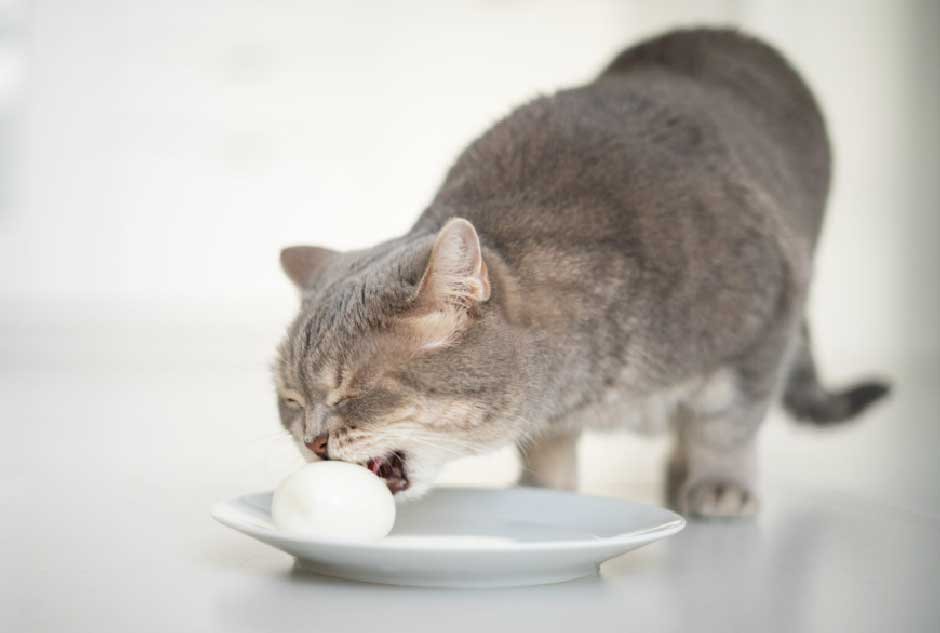
Can cats eat eggs? Yes, most healthy cats can eat a small amount of plain, fully cooked egg as an occasional treat. Eggs provide animal-based protein and fat, which fits a cat’s carnivore biology, but they should not replace a complete and balanced cat food.
The safest answer is simple: cooked egg is okay in moderation; raw egg is not worth the risk. Cats can be exposed to bacteria such as Salmonella from raw or undercooked eggs, and extra calories from egg yolk can quietly add up, especially for indoor cats and big breeds like Maine Coons.
Quick answer: are eggs safe for cats?
Eggs are safe for cats when they are cooked thoroughly and served plain. That means no salt, butter, oil, milk, cheese, onion, garlic, pepper, hot sauce, or seasoning blends. A bite of hard-boiled egg or a teaspoon or two of plain scrambled egg can be a reasonable treat for a healthy adult cat.
Eggs are not a complete meal for cats. According to the Cornell Feline Health Center, cats are obligate carnivores and need a complete balance of nutrients, including specific amino acids, fatty acids, vitamins, and minerals. A commercial cat food labeled complete and balanced should still do the heavy lifting.
Are eggs good for cats?
Eggs can be a useful occasional protein snack, but “good” depends on portion size and your cat’s health. Egg whites are mostly protein with very little fat. Egg yolks contain fat, calories, and nutrients, but they can be too rich for cats who need to lose weight or who have a history of digestive trouble.
For a Maine Coon, it is easy to assume that a larger cat can handle larger treats. That is only partly true. Maine Coons are big, muscular cats, but their treat allowance should still be based on their daily calories, body condition, age, and activity level. A lazy indoor Maine Coon can gain weight from extras just as easily as a smaller cat.
Can cats eat scrambled eggs?
Cats can eat scrambled eggs if they are cooked plain. Use a nonstick pan if possible and skip butter, oil, milk, cream, cheese, and seasonings. Let the egg cool before serving, then offer a small bite or mix a tiny amount into your cat’s normal food.
The problem with many human-style scrambled eggs is not the egg itself. It is the extras. Butter and oil add fat, milk or cheese can upset some cats’ stomachs, and ingredients like onion or garlic are unsafe for cats. If the scrambled eggs came from a restaurant plate, it is better not to share them.
Can cats eat boiled eggs?
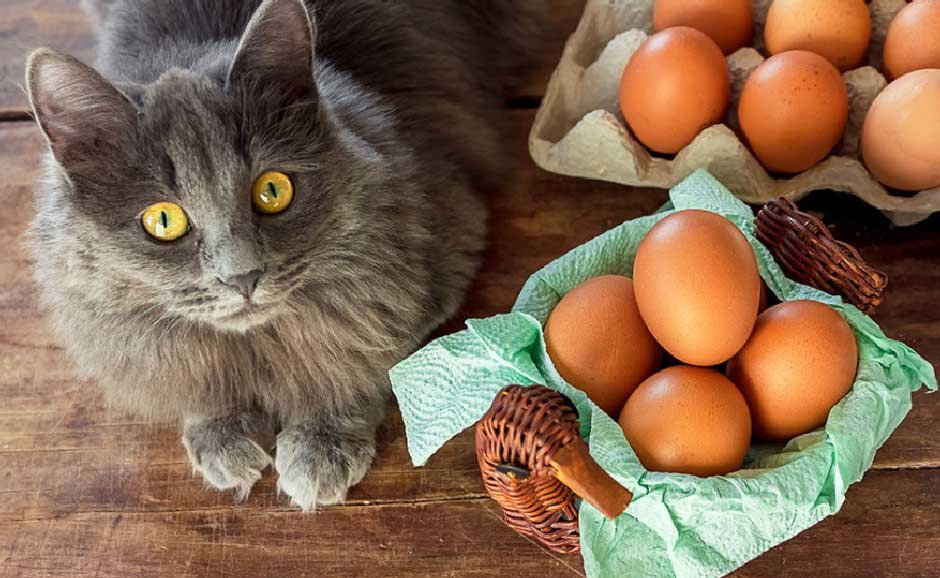
Boiled egg is one of the easiest ways to offer egg safely. Hard-boil the egg, cool it fully, remove the shell, and cut a very small piece. The egg should be fully cooked, with no runny white or yolk. Soft-boiled eggs are less ideal because the center may be undercooked.
If your cat is new to egg, start with less than you think you need. A pea-sized taste is enough for the first try. Watch for vomiting, diarrhea, gas, itchiness, or refusing regular food afterward.
Can cats eat raw eggs?
Cats should not be intentionally fed raw eggs. Raw or undercooked eggs can carry Salmonella and other germs. The U.S. Food and Drug Administration warns that pets can get sick from raw or undercooked animal products and may shed bacteria even when they do not look ill.
Raw egg whites also contain avidin, a protein that can interfere with biotin absorption when raw whites are fed repeatedly. Occasional accidental exposure is different from making raw egg a habit, but there is no strong reason to take the chance when cooked egg is safer.
How much egg can a cat eat?
For most healthy adult cats, keep egg portions tiny: about one teaspoon to one tablespoon of cooked egg, depending on the cat’s size, calorie needs, and how often treats are offered. Smaller cats should stay closer to a teaspoon. Large, active cats may tolerate a little more, but egg should still be occasional.
A practical rule is to keep all treats under about 10% of your cat’s daily calories. Cornell notes that treats are not nutritionally complete and should only be occasional. If your cat already gets dental treats, freeze-dried meat, lickable treats, or table scraps, the egg has to fit inside that same treat budget.
Best way to prepare eggs for cats
Use this simple method:
- Cook the egg thoroughly until both the white and yolk are firm.
- Do not add salt, seasoning, dairy, butter, or oil.
- Let it cool to room temperature.
- Cut or mash a small piece so it is easy to chew.
- Serve it as a treat or topper, not as a meal replacement.
The CDC uses 160 degrees F as a safety benchmark for egg dishes. At home, the simplest cat-safe standard is to cook eggs fully, avoid runny texture, and clean surfaces that touched raw egg.
When should cats avoid eggs?
Skip eggs, or ask your veterinarian first, if your cat has pancreatitis, chronic digestive problems, food allergies, kidney disease, diabetes, obesity, or is on a prescription diet. Kittens, senior cats, pregnant cats, and cats with weakened immune systems deserve extra caution with any new human food.
You should also avoid eggs if they cause even mild digestive upset. Some cats simply do not tolerate new foods well. If your cat vomits after eating egg or has diarrhea later that day, do not keep testing bigger portions.
What if my cat ate raw egg?
If your cat licked a small amount of raw egg once, stay calm and monitor them. Many cats will be fine, but watch for vomiting, diarrhea, loss of appetite, lethargy, fever, or dehydration. Call your veterinarian promptly if symptoms appear, if your cat ate a large amount, or if your cat is very young, elderly, pregnant, or already ill.
Clean the area where the raw egg spilled, wash bowls and utensils well, and wash your hands. Food safety matters for the people in the home too, especially children, older adults, pregnant people, and anyone with a weakened immune system.
Can cats eat eggs every day?
Daily egg is usually unnecessary and can crowd out balanced nutrition. Even healthy foods can become a problem when they displace your cat’s normal diet. If your cat loves egg, offer it occasionally, such as once or twice a week in a tiny portion, and keep the rest of their diet steady.
Can Maine Coons eat eggs?
Maine Coons can eat cooked eggs under the same rules as other cats. Their larger size does not make raw eggs safe, and it does not mean they need human food for protein. A high-quality complete cat food, matched to their age and body condition, should remain the base of the diet.
Where Maine Coon owners should be especially mindful is portion creep. A tablespoon looks small beside a large cat, but extra calories can still matter over time. If your Maine Coon is neutered, indoors, or already carrying extra weight, choose egg white over whole egg and serve less often.
FAQ
Can cats eat egg yolk?
Yes, cats can eat a small amount of cooked egg yolk, but yolk is higher in fat and calories than egg white. Keep it tiny and avoid it for cats who need a low-fat diet unless your vet approves.
Can cats eat egg whites?
Cooked egg whites are generally the leanest way to offer egg. Do not feed raw egg whites as a routine treat.
Can cats eat eggshells?
Do not sprinkle eggshells into your cat’s food unless your veterinarian or a veterinary nutritionist tells you to. Eggshell powder contains minerals, but adding minerals casually can unbalance a cat’s diet.
Can kittens eat eggs?
Kittens should get almost all of their nutrition from a complete kitten food. A tiny taste of fully cooked plain egg is unlikely to be an issue for many kittens, but it should not become a regular add-on without veterinary guidance.
Can cats eat omelets?
Most omelets are not a good choice because they often contain butter, oil, cheese, salt, onion, garlic, or other seasonings. If you want to share egg, cook a plain portion separately for your cat.
Bottom line
Cats can eat eggs when the egg is fully cooked, plain, cooled, and served in a small amount. Boiled egg or plain scrambled egg is the safest option. Avoid raw eggs, avoid seasoned eggs, and treat egg as an occasional snack rather than a nutrition strategy. When in doubt, your cat’s regular complete food is the better bowl-filler.