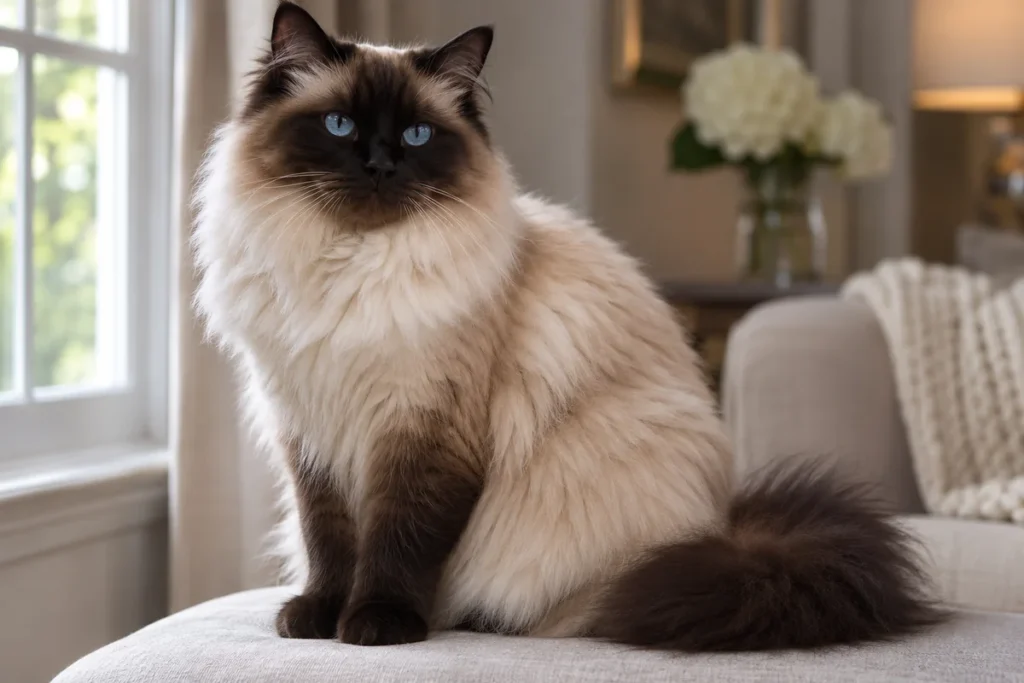
The Cat Fanciers’ Association standard for the Ragdoll has no black coat. Its six point colours are seal, blue, chocolate, lilac, red and cream, every Ragdoll must be pointed, and the word black appears once on the page, in a penalty for eyes. A cat sold as a black Ragdoll is a very dark seal point or a solid cat that registries treat outside the Ragdoll standard.
Buyers and owners use the phrase loosely. Registry wording comes first below, then the labels sellers use, then the questions worth asking before paying for a “black” kitten.
Is there such a thing as a black Ragdoll cat?
Not under the CFA standard. It calls for a pointed cat whose body is lighter than the head, legs and tail, lists six point colours, and disqualifies body and point colours “other than those listed” as well as eyes “other than blue”. Black is not on the list.
The CFA page uses the word once, in a penalty for eye colour: “blue so dark as to appear black”. FIFe is stricter still. A World Cat Congress comparison table carries the text “The FIFe shall not recognise any other colour variety than Siamese pointed with blue eyes in the Ragdoll (RAG); any other variety must be registered as XLH * <RAG>”. The table’s other columns are not labelled clearly enough in the page text to read off the remaining registries.
TICA is less clear from the sources available. A Ragdoll blog says TICA created a separate breed, the Cherubim, for non-pointed cats from 1 May 2025, while one cattery guide describes Cherubim as a TICA category for solid, mink and sepia Ragdoll-line cats. The two descriptions differ, and TICA’s own breed pages returned an access error, so the date and the detail are unconfirmed here.
What do sellers mean by a black Ragdoll?
Three different cats travel under the name: a seal point dark enough to read black, a bicolor with dark patches, and a solid non-pointed cat from Ragdoll-derived lines. The first two are Ragdolls under the CFA wording; the third falls outside the pointed standard.
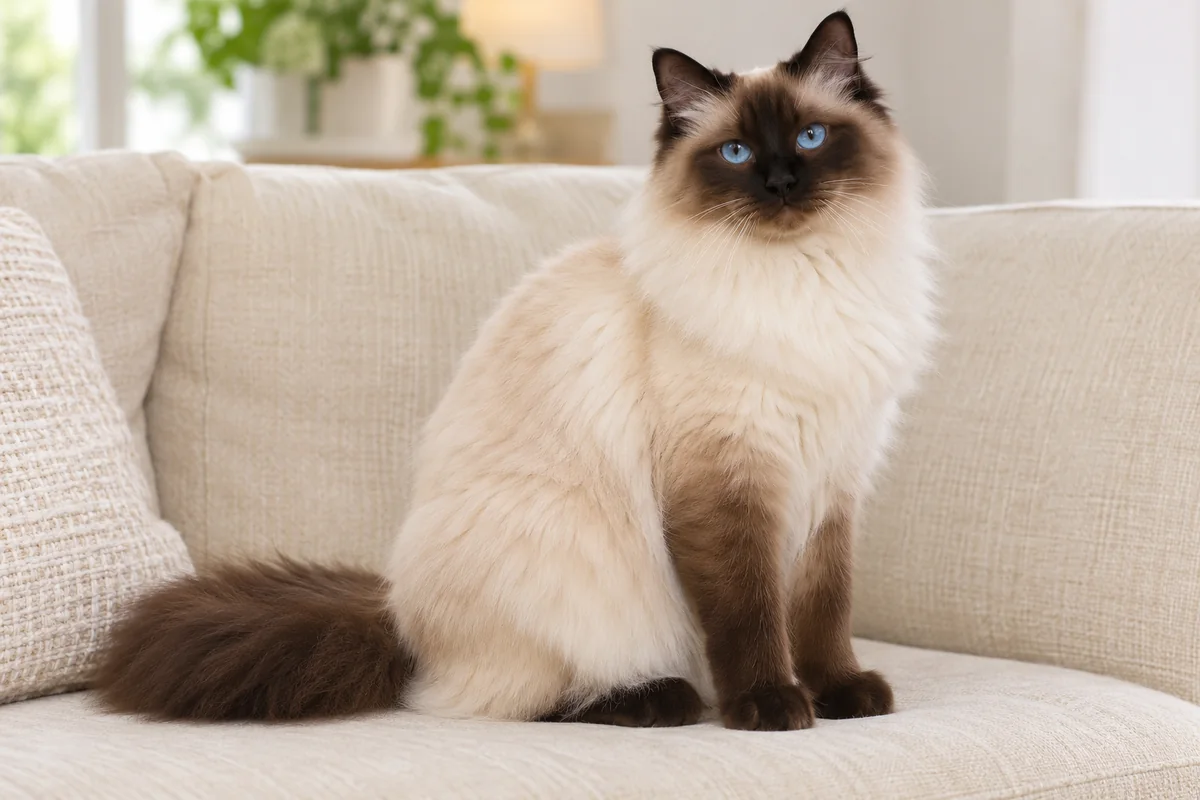
One cattery guide says the phrase covers either very dark Ragdolls or solid black cats from Ragdoll-derived lines. A retail page titled “Black Ragdoll Kittens For Sale” describes its kittens as “renowned for their captivating blue eyes” with “distinctive markings”, wording that fits pointed cats rather than solid black ones, though the page does not say so itself.
| Cat sold or posted as “black” | What the registry wording says |
|---|---|
| Very dark seal point | CFA seal point: body “even pale fawn to cream”, points “deep seal brown”; Ragdolls “generally darken with age” |
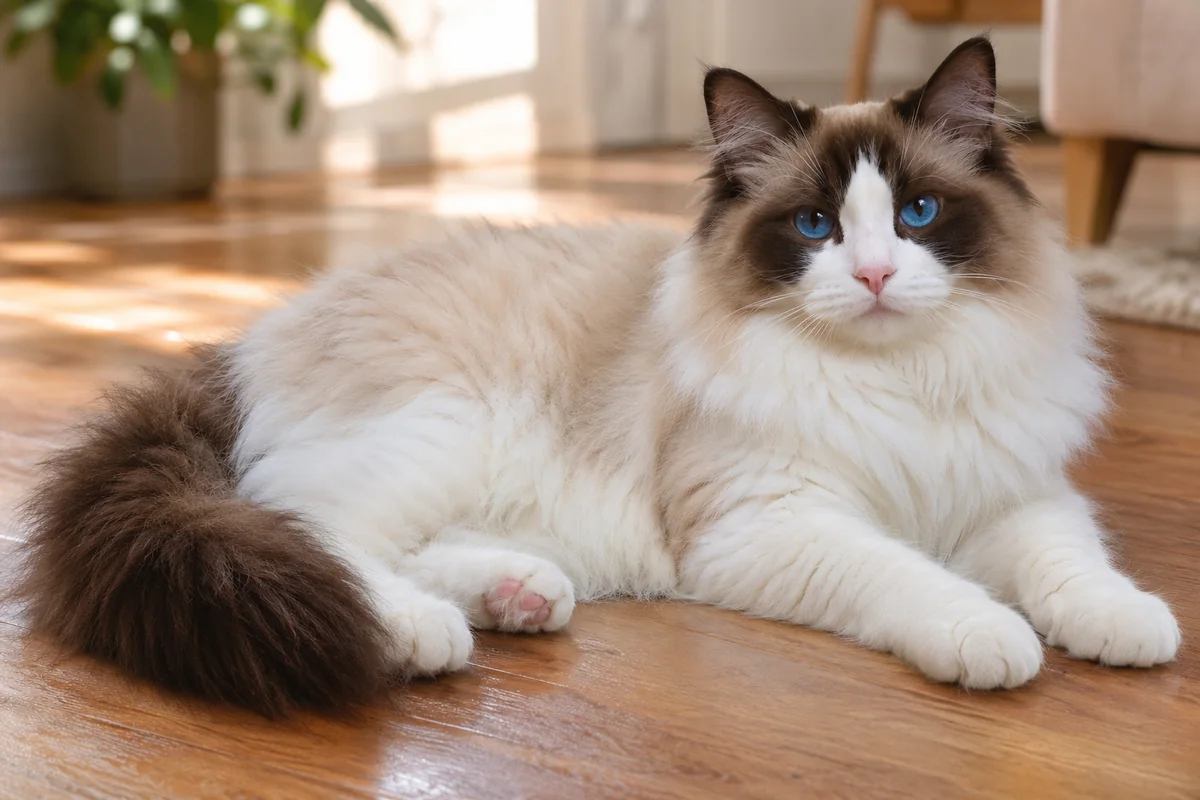
| Bicolor with dark patches | CFA: all Ragdolls are pointed, with points “partially overlaid with white” in the Mitted, Bicolor and Van patterns; the colour name still comes from the six point colours |
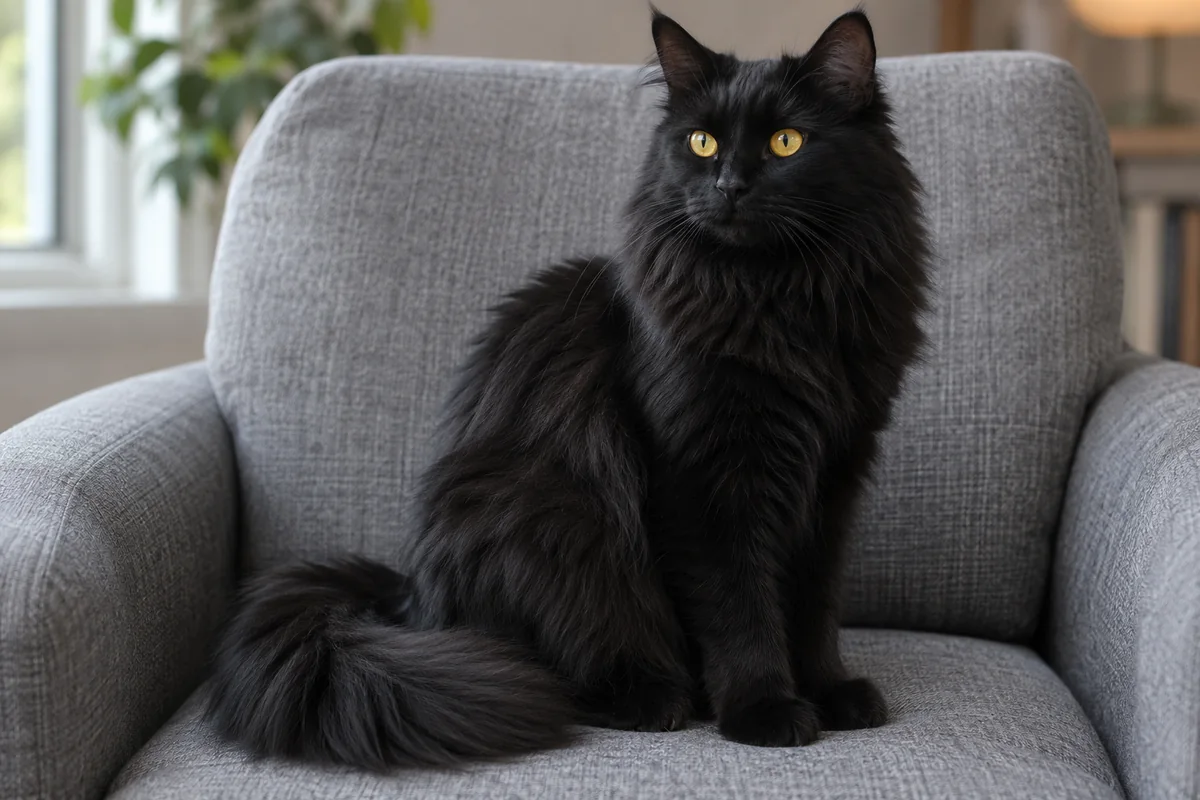
| Solid non-pointed cat | Disqualified colour in the CFA standard; FIFe says other varieties must be registered as XLH * <RAG>; a Ragdoll blog says TICA moved such cats to the Cherubim breed in May 2025 |
Colour names are easy to mix up even among owners. In an r/ragdolls thread about a kitten with a dark mark, whose breeder had called it a blue bicolor, the top reply read:
“Definitely a seal bicolor!”
– r/ragdolls (251 upvotes)
The lilac versus blue Ragdoll guide covers two of the six CFA colours, and the cinnamon Ragdoll guide covers a colour that sits outside them.
Why does a seal point Ragdoll look so dark?
Seal is the darkest of the CFA’s six point colours, with points described as “deep seal brown”, and Ragdolls get darker with age. The standard still demands contrast: a seal point’s body is pale fawn to cream, so a cat that is dark all over does not fit it.
The CFA allows for the darkening. Its standard says “allowance should be made for darker color in older cats”, provided there is “definite contrast between body color and points”. The same page gives two different ages for full colour, two years in the breed description and about three years in the standard text. A pale kitten can therefore look much darker as an adult, and darkening with age alone does not make a different colour in the CFA wording.
What should a buyer ask before paying for a black Ragdoll?
Ask which registry, which breed name and which colour appear on the paperwork. A pointed, blue-eyed cat registered as a Ragdoll falls under the standards above. A solid cat may carry another breed name or a household-cat registration, depending on the registry, and the word black alone settles none of that.
Ask also for photos of the parents and of the kitten’s eyes. Under the CFA standard a Ragdoll’s eyes are vivid blue, so a kitten sold as a Ragdoll with green or gold eyes is a question for the seller. Someone who mainly wants a big, fluffy, solid black cat may find the full-grown black Maine Coon guide closer to what they want, since the CFA’s Maine Coon standard lists a solid black class, “dense coal black”.
FAQ
Are black Ragdoll cats rare?
No source read counts them. Because the CFA treats only pointed cats as Ragdolls, a solid black cat cannot appear in its figures at all, so any rarity claim has no count behind it.
Do black Ragdolls have blue eyes?
Ragdolls under the CFA standard do: it asks for “vivid blue” ovals and disqualifies other eye colours. One cattery guide says non-pointed Ragdoll-line cats have eyes from gold and copper to green, a seller’s description and not a registry rule.
How much does a black Ragdoll cat cost?
No neutral source read gives a price. One cattery guide says to expect $2,000 to $3,500 for a black Ragdoll kitten, a seller’s figure with no sample behind it, and the CFA publishes no prices. Compare any quote with what the paperwork says the cat is.
Is a black Ragdoll cat’s personality different?
No source read ties temperament to coat colour. The CFA describes the breed as having “laid-back, docile personalities” and the standard calls the Ragdoll “an affectionate and intelligent cat”, both statements about the breed as a whole and not about any colour.
What is the rarest Ragdoll colour?
None of the sources read ranks the colours by how often they occur. The CFA only lists the six point colours and the four patterns, and sets no rarity order among them.