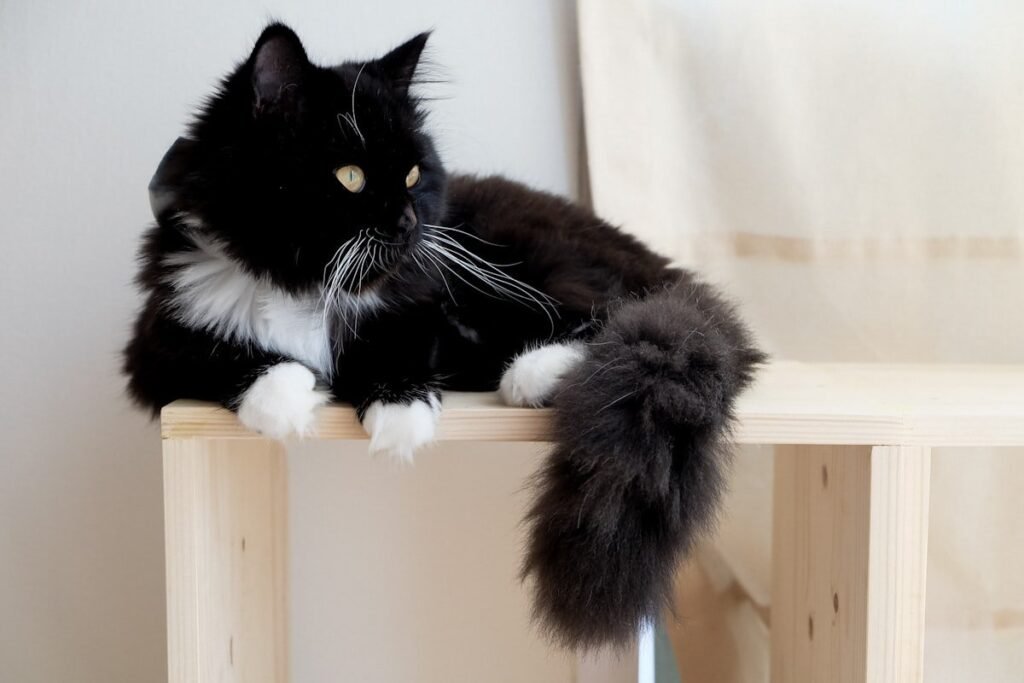
No cat registry recognizes a tuxedo Maine Coon. Ask CFA or TICA and you will be told the cat in front of you is a black and white bicolour, filed under a colour class that says nothing about where the white lands. Tuxedo is a nickname the internet made permanent, and knowing that changes how you read a breeder’s listing.
The cats themselves are real enough, and gorgeous. What is not real is the idea that tuxedo is a variety you can order, breed toward, or pay a premium for.
What Actually Makes a Tuxedo Pattern
A tuxedo Maine Coon is a black cat carrying a low dose of the white spotting gene, which erases pigment from the chest, chin, paws, and sometimes the muzzle while leaving the rest solid. The pattern is subtractive. The cat is not black plus white; it is black with the colour switched off in a few predictable places.
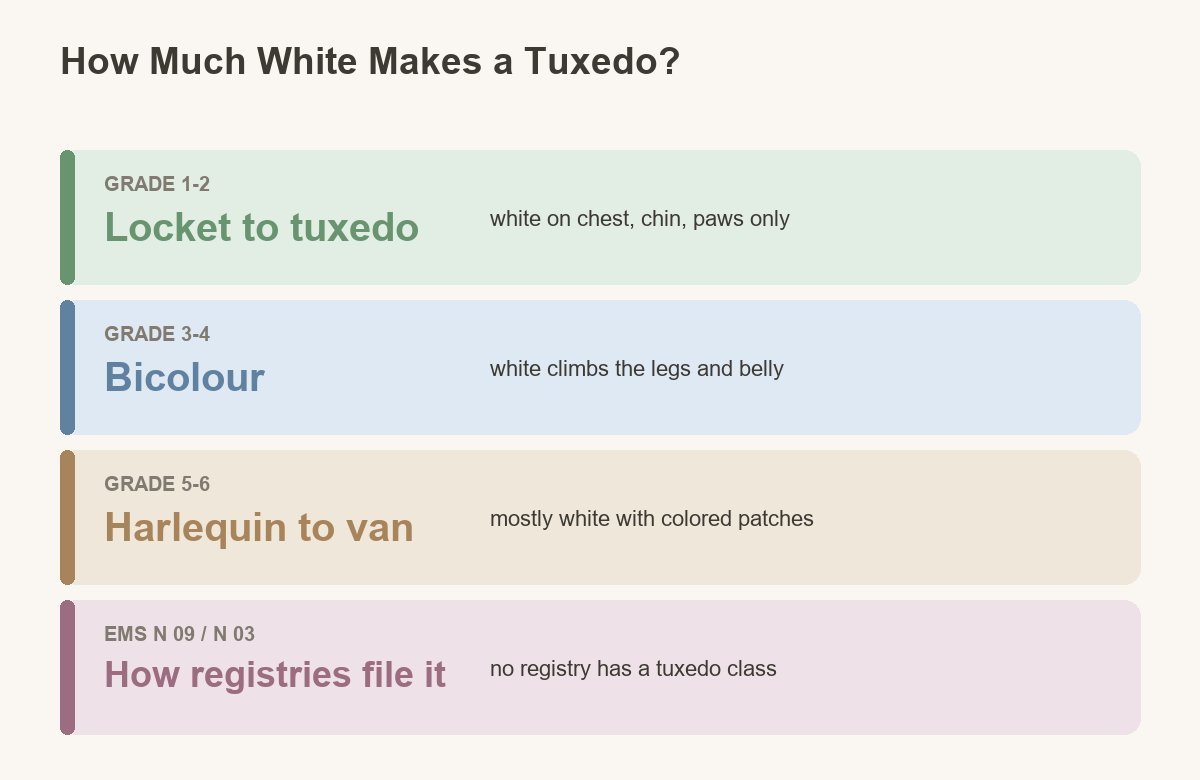
Breeders and judges grade that white on a rough scale from a throat locket up to an almost entirely white cat, and tuxedos sit near the bottom of it. Push the dose higher and the white climbs the legs and belly into a standard bicolour; higher still and you get harlequin and van patterns where colour survives only on the head and tail.
This is also why no cattery can promise you a tuxedo kitten. White spotting expresses unevenly even between littermates from the same pairing, so a queen who produced three tuxedos last year can throw a litter of solids and a van-patterned kitten next time. The gene is inherited; the exact placement is not.
The cat coat genetics literature treats this variable expression as normal, not as a fault. Two kittens from one litter can wear a crisp dinner jacket and a splotchy bib respectively, and both are correct.
Tuxedo, Bicolour, or Just Black and White
Registries file these cats by how much white is present, not by its shape. In the EMS system used across European pedigrees, a black Maine Coon with unspecified white is coded n 09, and a formal bicolour is n 03. The CFA breed pages list bicolour classes without ever using the word tuxedo, and TICA accepts Maine Coons in essentially every colour and pattern, so a tuxedo competes against solids and tabbies on structure alone.
At the point of sale that matters. A pedigree reading n 09 is already describing your tuxedo, in the only vocabulary the registry has, so a listing that invents a special tuxedo designation with a matching price is describing something the paperwork cannot confirm. Ask to see the registration slip and compare the code against the price justification. The two rarely line up.
Show judges never award points for a tidy chest patch, either. They score boning, ear set, muzzle shape, and coat texture, and a beautifully marked cat with a weak profile loses to a plain black one every time.
What a Tuxedo Maine Coon Really Costs
Published asking prices for these kittens run wide, from roughly $2,300 for a pet-quality kitten to $6,500 and beyond at boutique catteries marketing rare patterns. The spread reflects the breeder, not the coat.
Cattery lists and rescue adoption fees read in October 2026 sit side by side in the Maine Coon price guide.
Three things move that number honestly: health testing on the parents (HCM scans, SMA and PKDef screening), registered lineage with a traceable pedigree, and whether the kitten leaves with breeding rights. A pattern surcharge is the fourth thing sellers sometimes add, and it is the one you can push back on. Since no registry ranks tuxedo above black, a large premium priced specifically on the dinner jacket is a story rather than a valuation.
Adoption sits at the other end. Shelters are full of black and white longhairs, and a rescue tuxedo with Maine Coon ancestry costs an adoption fee rather than four figures. Whether that cat is really part Maine Coon is the question most owners get wrong.
Is Your Tuxedo Cat Part Maine Coon?
Probably not, and the tell is structure rather than fluff. Maine Coon type means a long rectangular body, heavy boning, a square muzzle with a visible break, large tufted ears set high and wide, and a tail as long as the body. A big fluffy tuxedo with a round face and a fine frame is a domestic longhair wearing the same coat genes, which are common in the general cat population.
Accidental litters do happen, and they are honest about themselves.
“We got lucky to find this half maine coon striped tuxedo from a local lady. Her pure bred Maine coon got a local cat pregnant and here we are. This guy is a bottomless pit and eats twice as much as any kitten I’ve ever had.”
– r/TuxedoCats, May 2026 (2,185 upvotes)
That owner knows the sire, which is the only kind of half-Maine-Coon claim worth anything. A DNA panel can report breed-associated markers, but it cannot issue a pedigree, and shelters label large fluffy cats as Maine Coon mixes on sight because it helps them find homes.
None of this downgrades the cat on your sofa. It changes what you should expect: a domestic longhair tuxedo will not necessarily reach 15 pounds, keep growing until four, or chirp at you from the top of a bookshelf.
Grooming and Living With One
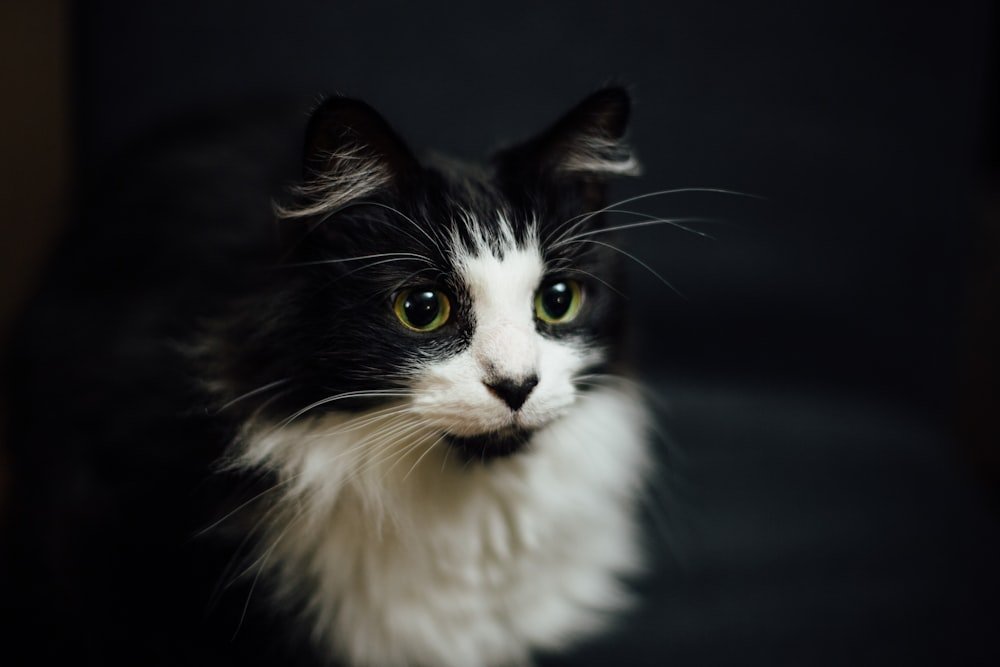
The white parts stain, and that is the practical difference between owning a tuxedo and owning a black Maine Coon. Tear staining shows rust-brown on a white muzzle, saliva marks the chest bib, and litter dust greys the paws. Weekly wiping of the face with a damp cloth handles most of it.
Everything else is standard Maine Coon work: comb the ruff and britches two or three times a week to stay ahead of mats, expect a heavy seasonal moult, and check the belly fur where knots start out of sight.
Temperament tracks the breed, not the coat. These cats are the same trilling, water-curious, follow-you-to-the-bathroom cats the breed is known for, and there is no evidence linking black and white markings to any personality trait.
FAQ
Are tuxedo Maine Coons rare?
Tuxedo Maine Coons are uncommon in show lines but never genetically rare, because low-grade white spotting is one of the most widespread patterns in domestic cats. Catteries breeding for solids or silvers simply produce fewer of them.
What is the rarest Maine Coon colour?
No registry publishes colour frequency data, so any rarest colour claim is an estimate. Gold-shaded and true solid white Maine Coons are scarce in most programmes, and colours requiring several recessive genes at once show up least often.
Is a tuxedo Maine Coon the same as a black and white one?
Every tuxedo is black and white, but not every black and white Maine Coon is a tuxedo. The nickname describes the specific low-white arrangement of jacket, bib, and paws; heavier white makes the cat a bicolour instead.
How big does a tuxedo Maine Coon get?
A pedigree tuxedo Maine Coon reaches about 12 to 18 pounds for males and 8 to 12 for females, matching any other colour in the breed. Coat markings have no bearing on adult size, and growth continues until roughly four years old.