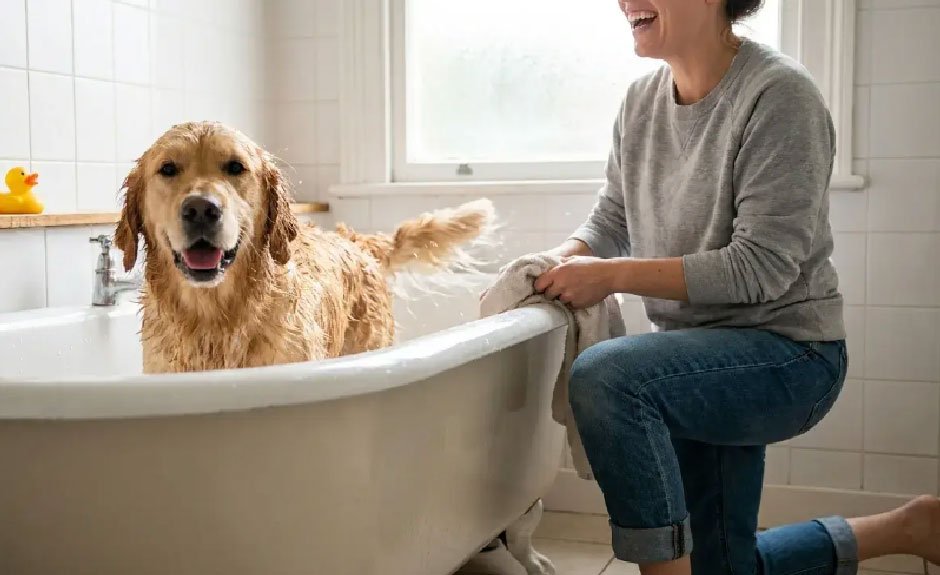
Your dog used to leap into the tub on command, or at least scramble in after a little bribery. These days she pauses at the edge, looks back at you, and waits. You know the drill: crouch down, wrap your arms under her chest and hips, and lift 50-some pounds of wet-dog-to-be over a high tub wall while your lower back files a formal complaint. Many owners don’t talk about it, but aging pets and aging people often hit the same wall at the same time, and bath time is where it shows up first. The good news is that the fix doesn’t have to be a full bathroom remodel. Sometimes it’s as simple as lowering the barrier you both have to cross.
Why Bath Time Gets Harder for Both of You
Senior dogs commonly deal with arthritis, hip dysplasia, weaker hind legs, and reduced balance. Climbing over a standard tub wall, often 14 to 16 inches high, forces them to do the motions that hurt most: push off, lift their back legs, and land on a slick surface.
Meanwhile, the person bathing them often manages stiff joints, a sore back, or balance concerns. Lifting a heavy, nervous, or slippery dog over that same wall is a classic recipe for strained muscles or a fall. Add water on the floor, and a dog who decides to shake halfway through, and the risks stack up quickly.
The result? Many owners start putting off baths, which isn’t great for older dogs who may need more frequent cleanups due to incontinence, skin conditions, or simply not grooming themselves as well as they once did.
What a Tub Insert Actually Changes
A tub-to-shower conversion insert replaces a section of your existing tub wall with a low, watertight step-through opening. Instead of climbing up and over, you and your dog can walk in at nearly floor level. Most designs install in the existing tub without tearing out tile or plumbing, and many can be removed later if your needs change.
For dog owners, a bathtub insert delivers a few specific benefits:
- No more lifting. Many dogs can walk in on their own or with a gentle guide from a harness, protecting your back and sparing their joints.
- Less fear. Dogs who balk at being hoisted often feel more in control when they can step in themselves, which usually means calmer baths.
- Safer footing for you. You can step in alongside a large dog to rinse or support them without straddling a tall edge.
- The same tub, still usable. It stays your bathroom, not a dedicated dog-washing station, so you don’t lose space.
Setting Up a Senior-Friendly Dog Bath
Once the entry is easier, a few small additions make the whole routine smoother:
- Lay down a rubber non-slip mat inside the tub so older paws can grip.
- Use a handheld sprayer so you can rinse without making your dog stand under a showerhead.
- Add a grab bar near the entry point for yourself. You’ll bend and turn more than you think.
- Keep supplies within reach on a shelf or caddy, so you never have to leave a wet dog unattended.
- Place an absorbent towel or mat outside the opening to catch drips and give your dog a dry, stable place to step out.
Bath Time Tips for Older Dogs
Even with an easier entry, senior dogs benefit from a gentler approach:
- Keep water lukewarm. Older dogs can be more sensitive to temperature, and warm (not hot) water can soothe stiff joints.
- Choose a mild, moisturizing shampoo. Aging skin tends to be drier and more sensitive. Ask your vet if your dog has skin issues.
- Keep sessions short. Long baths tire out older dogs. Wash, rinse thoroughly, and wrap up.
- Dry thoroughly and keep them warm. Senior dogs lose heat faster, so towel off well and keep them out of drafts until fully dry.
- Watch for signs of pain. Trembling, reluctance to stand, or yelping are cues to slow down and check in with your veterinarian.
Is a Tub Insert Worth It If You Have a Dog?
If you’re bathing a large or medium dog regularly and either of you has mobility concerns, it’s worth serious consideration. It solves two problems with one change: your dog gets in pain-free, and you avoid the lifting and leaning that cause most bath-day injuries. Because it works just as well when you’re showering yourself, the benefit extends well beyond pet care.
Frequently Asked Questions
Can a large dog use a step-through tub conversion? Yes. Large dogs often benefit the most, since they’re the hardest to lift. Measure your dog’s width and length to make sure the opening and tub space are comfortable.
Will my dog’s nails scratch the insert? Most inserts are made of durable materials, but a non-slip mat protects the surface and gives your dog better traction.
How often should I bathe a senior dog? Many dogs do well with a bath every four to eight weeks, though older dogs with incontinence or skin conditions may need more frequent cleanups. Your vet can recommend a schedule.
Do I need a contractor to install one? Many conversion inserts are designed for professional installation in a few hours, without demolishing your existing tub. Check with the manufacturer for specifics.
Getting older, for dogs and their people alike, shouldn’t mean giving up the simple routines that keep life comfortable. Lowering the wall between you and a clean, happy dog protects your back, spares their joints, and turns bath day from a wrestling match back into a moment of care. Sometimes the kindest upgrade for your senior pet is one that helps you, too.