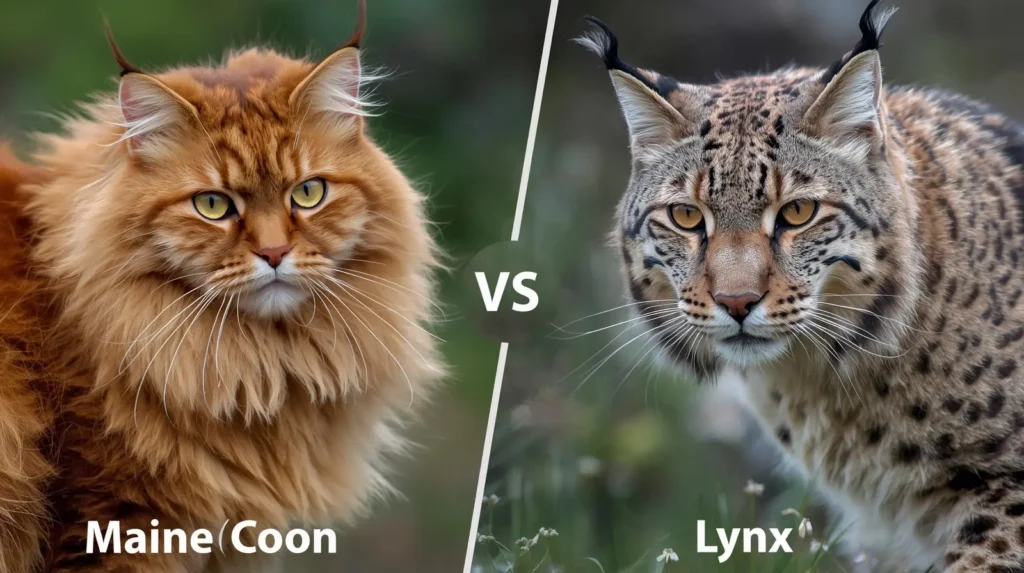
The maine coon vs lynx comparison fascinates cat enthusiasts worldwide, as these magnificent felines share striking similarities yet belong to entirely different worlds. While Maine Coons grace our homes as beloved companions, lynx roam wild forests as apex predators. Understanding the distinctions between these two remarkable cats helps appreciate their unique characteristics and evolutionary paths.
The maine coon and lynx debate often stems from their similar appearance, particularly their tufted ears, large paws, and impressive size. However, beneath these surface similarities lie fundamental differences that separate domesticated comfort from wild survival instincts.
Table of Contents
Physical Size and Weight Differences
Maine Coon Dimensions
Maine Coons are among the largest domesticated cat breeds, with males typically weighing 18-22 pounds and females ranging from 12-15 pounds, though some individuals can reach up to 25 pounds. Their impressive length often catches people’s attention, as record-holding Maine Coons like “Stewie” measured 48.5 inches from nose to tail.
The maine coon vs lynx size comparison reveals that Maine Coons achieve their impressive dimensions through selective breeding rather than wild necessity. Their rectangular body shape develops slowly, with full size typically reached between three to five years of age.
Lynx Physical Statistics
Wild lynx significantly outweigh Maine Coons, with males weighing 22-44 pounds and females ranging from 11-18 pounds. The maine coon vs lynx weight difference becomes more pronounced when examining specific species. Eurasian lynx represent the largest variety, weighing 40-66 pounds with lengths ranging from 32-51 inches.
| Feature | Maine Coon | Eurasian Lynx | Spanish Lynx |
|---|---|---|---|
| Male Weight | 18–25 lbs | 40–66 lbs | 28 lbs |
| Female Weight | 12–20 lbs | 40–50 lbs | 21 lbs |
| Length | 30–48 inches | 32–51 inches | 33–43 inches |
| Height | 10–16 inches | 24–30 inches | 20–24 inches |
Habitat and Living Environment
Maine Coon Domestic Life
The maine coon vs lynx lifestyle comparison highlights dramatic differences in living requirements. Maine Coons thrive in human households, adapting to indoor environments while maintaining their playful, gentle nature. These domestic giants require comfortable spaces, regular grooming, and social interaction with their human families.
Maine Coons excel as family pets due to their patient temperament and intelligence. The maine coon vs lynx behavioral analysis shows that domestication has softened their hunting instincts while preserving their curious, engaging personalities.
Lynx Wild Territories
Lynx inhabit cold climates across forests of Europe, Asia, and North America, requiring extensive territories to hunt larger prey. The maine coon vs lynx habitat comparison reveals that lynx need vast wilderness areas, unlike their domesticated counterparts who contentedly share human living spaces.
Wild lynx establish territories spanning several square miles, marking boundaries and hunting within defined ranges. The maine coon vs lynx territorial behavior differs completely, as Maine Coons adapt to shared spaces and multiple pets.
Behavioral Characteristics and Temperament
Maine Coon Personality Traits
The maine coon vs lynx personality comparison showcases remarkable differences in social behavior. Maine Coons demonstrate exceptional friendliness, often called “dog-like” for their loyalty and trainability. These gentle giants enjoy human interaction, playing games, and learning tricks.
Maine Coons communicate through unique chirping and trilling sounds, resembling lynx vocalizations but serving entirely different purposes. The maine coon vs lynx communication styles reflect their distinct evolutionary paths—domestication versus wild survival.
Lynx Solitary Nature
Lynx exhibit highly observant behavior and maintain friendships with only very close companions. The maine coon vs lynx social structure comparison reveals that lynx are naturally solitary, unlike Maine Coons who thrive on human and pet companionship.
Wild lynx communicate through scent marking, territorial calls, and subtle body language. The maine coon vs lynx interaction patterns demonstrate how domestication has fundamentally altered social behaviors and communication methods.
Diet and Hunting Instincts
Maine Coon Feeding Requirements
Despite their impressive size, Maine Coons don’t require specialized diets but need quality food in larger quantities to meet their energy requirements. The maine coon vs lynx dietary comparison shows that domestic Maine Coons rely on commercial cat foods and occasional treats.
Modern Maine Coons retain some hunting instincts but primarily channel these behaviors into play. The maine coon vs lynx predatory drive differs significantly, as domestication has reduced the necessity for survival hunting.
Lynx Predatory Behavior
Lynx are carnivorous predators that hunt larger prey, which influences their size and muscular development. The maine coon vs lynx hunting comparison reveals that wild lynx must capture rabbits, rodents, birds, and even small deer to survive.
The maine coon vs lynx predatory efficiency demonstrates how wild cats maintain peak physical condition through constant hunting challenges, unlike their pampered domestic relatives.
Physical Features and Appearance
Distinctive Ear Tufts and Paws
Both cats share prominent ear tufts and large paws, contributing to the maine coon vs lynx confusion among casual observers. However, lynx ear tufts are typically longer and more pronounced, serving as important sensory tools in wild environments.
The maine coon vs lynx paw comparison reveals that both species have oversized feet, but lynx paws function as natural snowshoes for traversing winter terrain, while Maine Coon paws primarily aid in climbing and playing.
Coat Patterns and Colors
Large Maine Coons can overlap in length with Eurasian lynx, although with much lighter builds and lower heights. The maine coon vs lynx build comparison shows that lynx possess more muscular, compact frames designed for hunting efficiency.
Maine Coons display various coat colors and patterns through selective breeding, while lynx typically exhibit tawny, spotted coats optimized for camouflage. The maine coon vs lynx appearance similarities often lead to mistaken identity, particularly in photographs.
Care and Maintenance Requirements
Maine Coon Grooming Needs
“Maine Coon cats have long, dense fur that requires regular brushing and grooming to prevent matting and tangles”, according to professional groomer insights. The maine coon vs lynx maintenance comparison highlights how domestic cats require human assistance for optimal health.
The maine coon vs lynx grooming difference is stark while Maine Coons need regular brushing, nail trimming, and veterinary care, lynx maintain themselves through natural behaviors and environmental conditions.
Lynx Self-Sufficiency
Wild lynx handle all maintenance independently, from grooming to exercise to dental health through natural prey consumption. The maine coon vs lynx self-care comparison demonstrates how domestication has created dependency relationships between cats and humans.
The maine coon vs lynx health management differs fundamentally, as wild lynx rely on natural selection while Maine Coons benefit from veterinary medicine and preventive care.
Legal and Ethical Considerations
Pet Ownership Regulations
The maine coon vs lynx legality question is straightforward—Maine Coons are readily available as pets, while lynx ownership faces strict regulations or complete prohibition in most areas. These laws protect both wild populations and public safety.
The maine coon vs lynx pet suitability comparison clearly favors Maine Coons, as they’ve evolved alongside humans for centuries. For those seeking lynx-like appearance without wild challenges, Mainecoon Guides provides excellent resources for selecting appropriate Maine Coon breeders.
Conservation Status
While Maine Coons face no conservation concerns, some lynx populations require protection due to habitat loss and human encroachment. The maine coon vs lynx conservation status highlights how domestication has secured one species’ future while the other faces environmental challenges.
Conclusion
The maine coon and lynx comparison reveals two magnificent felines that share ancestral connections but have evolved along dramatically different paths. While lynx represent wild majesty and survival expertise, Maine Coons embody successful domestication and companionship. Generally, the wild lynx has weight and size advantages over domesticated Maine Coons, but Maine Coons offer unmatched compatibility with human lifestyles.
Understanding the maine coon vs lynx differences helps appreciate both species’ unique qualities and evolutionary adaptations. Maine Coons provide all the visual appeal of their wild relatives while offering gentle, loving companionship that wild lynx simply cannot match.
Whether you’re fascinated by wild lynx prowess or charmed by Maine Coon personalities, both cats deserve respect and admiration for their remarkable characteristics. The maine coon and lynx debate ultimately celebrates feline diversity and the incredible range of adaptations within the cat family.
For potential cat owners weighing the maine coon vs lynx question, the choice is clear but have you considered which Maine Coon variety would best suit your family’s specific needs?