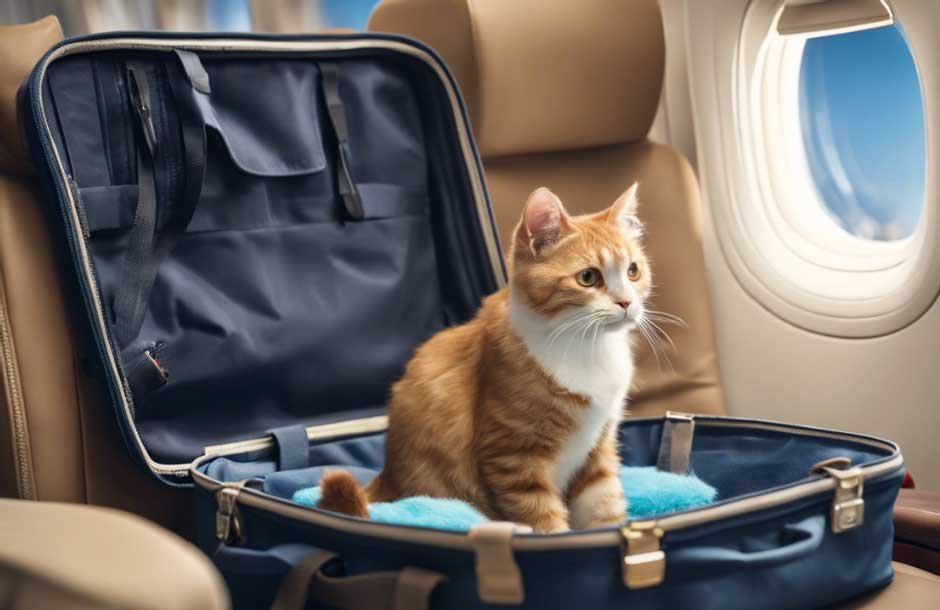
How to travel with a cat on plane safely comes down to one choice first: keep the cat in the cabin whenever the airline allows it. The rest is paperwork, carrier fit, practice, and making the travel day boring on purpose.
The mistake is treating the flight as the main event. For most cats, the stressful part starts days earlier, when the carrier appears, the routine changes, and a normally predictable home suddenly smells like packing tape and nervous energy.
Quick Answer: The Safest Way to Fly With a Cat
The safest routine is to book an in-cabin pet spot early, confirm carrier dimensions with the airline, visit your vet before travel, train the carrier at home, and keep the cat under the seat during the flight. For how to travel with a cat on plane without panic, preparation matters more than any airport-day trick.
Most airlines limit the number of pets in the cabin, so do not buy a ticket and assume your cat is automatically approved. Call or book the pet reservation as part of the same trip, then save the confirmation in your phone and in print.
| Decision | Safer default | Why it matters |
|---|---|---|
| Cabin or cargo | Cabin, if your cat and route qualify | You can monitor breathing, temperature, stress, and carrier position |
| Carrier type | Soft-sided airline-approved carrier | It usually fits more easily under the seat and flexes slightly |
| Medication | Only if your veterinarian prescribes it | Sedation and anti-anxiety medicine are not one-size-fits-all |
| Food timing | Light meal several hours before leaving | A full stomach can increase nausea, but fasting too hard can add stress |
| Route | Direct flight when possible | Fewer airport transitions means fewer chances for noise, delay, or escape |
If the airline says your cat must travel as cargo, pause and ask whether another airline, route, or travel date gives you a cabin option. Sometimes the humane answer is changing the itinerary, not toughing it out.
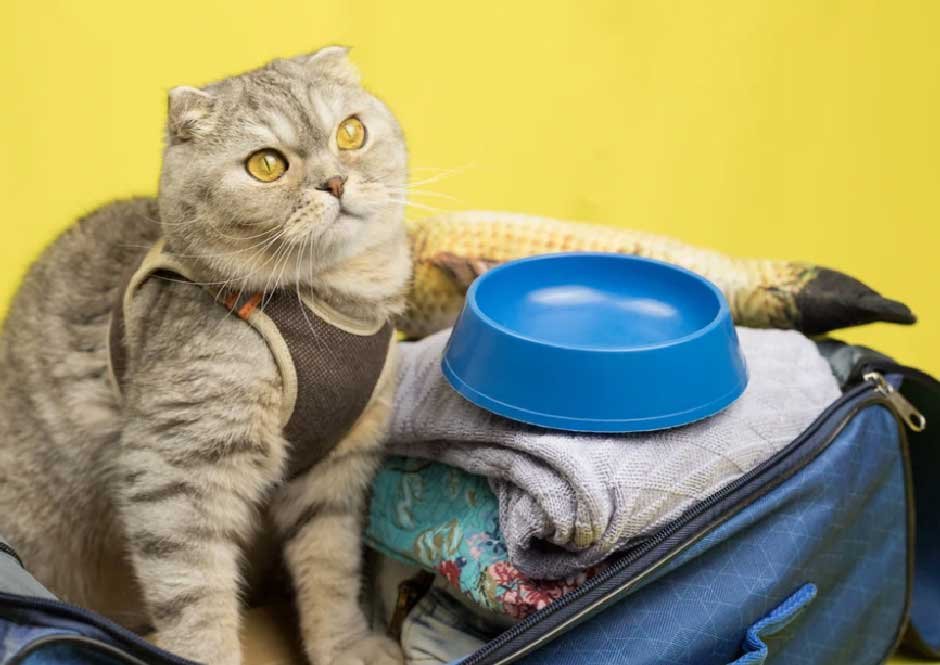
Before Booking: Confirm the Rules That Can Break the Trip
Before you pay, confirm pet reservations, carrier limits, destination paperwork, breed or age restrictions, and whether the airline counts the carrier as your carry-on item. Airline pet policies are operational rules, and operational rules change.
The Federal Aviation Administration tells travelers to check airline policies before flying with pets because carriers set their own rules for cabin travel, checked baggage, and cargo. That is not a small disclaimer; it is the part that decides whether your cat boards.
Reserve the Pet Space, Not Just Your Seat
Many flights allow only a small number of cabin pets. A pet-friendly airline can still say no if the cabin pet limit has already been reached.
Ask for three specific details: the pet fee, the exact carrier size allowed on your aircraft, and whether your cat plus carrier counts as a personal item or carry-on. Write down the answer, because the person at the check-in counter will not care that a travel blog said something different.
Check Route and Destination Rules
Domestic trips are usually simpler than international trips, but even domestic moves can involve health certificates, state requirements, or airline-specific forms. International travel can add vaccination timing, import permits, microchip rules, and official veterinary endorsement.
The Centers for Disease Control and Prevention advises pet owners to talk with a veterinarian before travel and check destination requirements before leaving. That matters for cats too, even when the public conversation is mostly about dogs.
Carrier Training Should Start Before the Suitcase Comes Out
A cat that already accepts the carrier has a much easier flight day. Start by making the carrier part of the room, then build toward short closed-door sessions, car rides, and calm rewards.
Put the carrier out one to three weeks ahead if you have the time. Leave the door open, add a familiar towel, and feed treats near the entrance before you ever close the zipper.
Small details count. The carrier smells different when it is new, the zipper sound is sharp, and the mesh presses against whiskers when a cat turns around.
- Place the carrier in a normal living area with bedding your cat already uses.
- Feed treats or a few meals near the carrier, then just inside the doorway.
- Close the door for a few seconds while your cat is calm, then reopen it before the cat panics.
- Practice carrying the closed carrier around the house.
- Add short car sessions if your cat tolerates them.
Do not wait until the morning of the flight to introduce the carrier. That turns the carrier into a trap, and cats are very good at remembering traps.
Talk to Your Vet About Stress, Medication, and Paperwork
A pre-flight vet conversation should cover fitness to fly, anxiety history, motion sickness, hydration risk, required documents, and whether medication is appropriate for your individual cat. Do not borrow another pet owner’s dose or guess from internet comments.
Ask your veterinarian whether your cat should have a health certificate, even if the airline website looks vague. The American Veterinary Medical Association explains that health certificates may be required by airlines, states, or destination countries, and they usually need to be issued within a specific travel window.
For anxious cats, vets may discuss anti-anxiety medication such as gabapentin, but the first dose should be tested at home before travel if your vet recommends it. A medication trial on the flight day is a bad time to discover your cat gets wobbly, nauseated, or oddly more agitated.
“*DO NOT* put him in the cargo hold… Talk to your vet, they should be able to get him some gabapentin…”
– r/CatAdvice, March 2026
That kind of owner advice is useful as a warning signal, not as medical instruction. The right next step is not “give gabapentin”; it is “ask the vet whether this cat needs a plan.”
What to Pack for a Cat Flight
Pack light but deliberately: documents, absorbent pads, wipes, a harness and leash, small food portions, collapsible dishes, medication if prescribed, and a familiar-smelling cloth. The best kit handles mess, delay, and escape risk without overloading the carrier.
| Item | Pack it where | Use case |
|---|---|---|
| Printed pet reservation and health documents | Your personal bag | Check-in desk, destination inspection, backup if phone service fails |
| Absorbent carrier pads | Carrier plus extras in bag | Urine, stress drool, water spill, or motion sickness |
| Harness and leash | On the cat before security | Extra control if the cat must leave the carrier at screening |
| Unscented wipes and small trash bags | Easy outer pocket | Quick cleanup without searching through luggage |
| Small food portion and treats | Sealed bag | Delay, layover, or post-arrival reset |
| Medication, if prescribed | Your personal bag | Timed dosing according to your vet’s instructions |
Skip heavy toys, big bowls, and anything scented. A cat that is already processing jet fuel smell, rolling bags, and overhead announcements does not need lavender spray in a tiny carrier.
Airport Security: Expect to Take the Cat Out Briefly
At many checkpoints, the carrier goes through X-ray while the pet is carried or walked through screening. Use a secure harness, ask for a private screening room if needed, and never let the cat loose in the security area.
The Transportation Security Administration allows small pets through the checkpoint, but the carrier is screened separately. In practice, that means the scariest few seconds may happen before boarding, not on the plane.
Before you reach the conveyor belt, put your phone away, zip every pocket, and make sure the harness is snug enough that your cat cannot reverse out of it. This is not the moment for one-handed multitasking.
When to Ask for Private Screening
Ask for private screening if your cat is reactive, very frightened, difficult to hold, or likely to bolt. It may take longer, but a closed room is easier to manage than a busy checkpoint line.
Say it plainly: “My cat is anxious. May we use a private screening room?” The request is normal, and agents have heard it before.
On the Plane: Keep the Carrier Boring and Stable
During the flight, the carrier should stay closed, under the seat, and as stable as possible. Your job is to reduce surprises: less handling, less peeking, less fussing, and a calm voice when the cat hears you.
Most cats do not want entertainment in the air. They want the ground to stop humming and the carrier to stop moving.
Slide the carrier under the seat with the mesh facing a direction that gives airflow and a little visual shelter. If your cat settles, leave them alone; repeated checking can restart the stress cycle.
- Do not open the carrier during the flight unless crew instructions or a genuine emergency require it.
- Do not feed a full meal in the air unless your vet gave a specific reason.
- Do not place the carrier in the overhead bin.
- Do not let strangers tap the mesh or talk into the carrier.
- Do not apologize for protecting your cat’s space.
A quiet cat is not always a relaxed cat, but quiet is still better than escalation. Watch breathing, posture, and whether the carrier is getting too warm.
Food, Water, and Litter on Travel Day
Most healthy adult cats do best with a small pre-travel meal, access to water before leaving, and a clean absorbent pad in the carrier. Litter plans depend on trip length, layovers, and your cat’s tolerance for unfamiliar spaces.
For a short domestic flight, many cats will not use a travel litter setup at all. For longer itineraries, pack a small disposable tray or a zip bag of familiar litter for a pet relief room, hotel bathroom, or car stop after landing.
Do not withhold water all day just to avoid an accident. A wet pad is annoying; dehydration is worse.
Cabin, Checked Baggage, or Cargo: Know the Difference
In-cabin travel keeps your cat with you, while checked baggage and cargo put the cat outside your direct control. Some routes leave no cabin option, but owners should understand the difference before accepting it.
| Travel method | Where the cat is | Best for | Main concern |
|---|---|---|---|
| In cabin | Under the seat in front of you | Most eligible pet cats | Carrier size, cabin pet limit, security handling |
| Checked baggage | Handled by airline staff outside the cabin | Limited cases where airline and route allow it | You cannot monitor the cat during the trip |
| Cargo | Shipped through the airline’s cargo process | Some international moves or cats too large for cabin rules | Weather embargoes, handling stress, paperwork complexity |
| Service animal category | Not usually applicable to pet cats | Qualified service animals under current rules | Emotional support animal policies changed on many airlines |
How to travel with a cat on plane gets more complicated when the cat cannot fit under the seat. A large Maine Coon, for example, may be calm enough to fly but too long for a carrier that meets a specific airline’s cabin dimensions.
Measure the cat lying down, not standing tall for a photo. Length and turning room matter more than a marketing label that says “airline approved.”
Extra Notes for Maine Coons and Large Cats
Large cats need earlier carrier testing because the limiting factor is often usable length, not the cat’s weight alone. A carrier can technically fit under a seat and still be miserable for a long-bodied cat.
For Maine Coons, ask the airline whether soft-sided carriers may flex under the seat and whether the cat must be able to stand, turn around, and lie naturally. Then test the exact carrier at home for more than a few seconds.
One useful test is boring but revealing: let the cat nap in the carrier with the top closed while you sit nearby. If the cat can only curl into a tight comma for five minutes, that is not a flight plan.
A Simple Flight-Day Timeline
A smooth flight day starts with fewer choices. Prepare documents the night before, keep breakfast light, arrive early, use private screening if needed, and give your cat a quiet reset after landing.
- Night before: Put documents, wipes, pads, medication, and the harness in one bag.
- Morning of travel: Offer a small meal if your vet has not advised otherwise.
- Before leaving home: Put the harness on first, then guide the cat into the carrier calmly.
- At check-in: Confirm the pet reservation and keep the carrier zipped.
- At security: Ask for private screening if you already know the checkpoint will be too much.
- At the gate: Sit away from speakers, dogs, and heavy foot traffic if possible.
- On board: Keep the carrier under the seat and avoid unnecessary handling.
- After landing: Set up a quiet room before opening the carrier fully.
That last step matters. The flight is over for you when the plane lands; for the cat, the unfamiliar room is the next problem to solve.
FAQ About Flying With a Cat
Can my cat sit on my lap during the flight?
No, pet cats usually must stay inside the approved carrier under the seat for the flight. Crew instructions and airline policy control this, and opening the carrier can create an escape risk.
Should I sedate my cat before flying?
Only give medication that your veterinarian prescribed for your cat and tested before the trip. Sedation can affect balance, breathing, temperature regulation, and stress response, so guessing is not safe.
How to travel with a cat on plane for the first time?
For a first flight, choose an in-cabin direct route, reserve the pet space early, train the carrier for at least a week, and talk with your vet before travel. Keep the airport day simple and avoid unnecessary handling.
Does my cat need a health certificate to fly?
Maybe; it depends on the airline, destination, and whether the trip is domestic or international. Ask the airline and your veterinarian before booking because certificate timing can be strict.
What if my cat meows on the plane?
A little meowing is not unusual, and most passengers barely notice once the aircraft noise rises. Speak softly, keep the carrier steady, and resist the urge to open it.
Is cargo ever okay for cats?
Cargo may be used for some relocations, but in-cabin travel is the safer default when your cat qualifies. If cargo is the only option, work with your vet, the airline, and destination rules well ahead of time.
The Final Check Before You Leave
The best cat flight is uneventful. Your paperwork is boring, your carrier fits, your cat has practiced, and nothing depends on improvising at the counter.
How to travel with a cat on plane is not about making a cat love flying. It is about keeping the experience controlled enough that your cat can get through it safely, then decompress somewhere quiet afterward.