You booked the flight. You paid the pet fee. Now the carrier sits by the door, and your cat is giving you a look that says, “I know something is wrong.” Flying with a cat for the first time is a special kind of stress — part logistics, part fear that your cat will yowl through the entire boarding process. It does not have to go badly.
Nearly all major US airlines allow cats in the cabin as carry-on pets for a fee of $95–$150 per leg. If you are wondering how to travel on a plane with a cat, the short answer is: plan weeks ahead, not the night before. This guide walks through every step — from booking to security screening, from pre-flight training to helping your cat settle back home after landing.
Airport Security With a Cat — What Actually Happens
This is the moment most first-timers dread the most. TSA requires that you remove your cat from the carrier and carry them through the metal detector while the carrier goes through the X-ray machine. The carrier goes through empty — no bedding, no toys, no food inside. You walk through holding your cat, sometimes in bare feet if you get pulled for a pat-down, with a line of travelers behind you watching.
A few things that help when figuring out how to travel on a plane with a cat through security: bring a leash and harness even if your cat has never used one — TSA can and will ask you to restrain the animal. Collapse the carrier flat onto the conveyor belt so it does not snag. And if your cat is the type to bolt the moment the zipper opens, tell the TSA officer before the screening starts that you need a private screening room. They will accommodate this at no extra charge, and it removes the single biggest risk of a lost cat in a terminal.
The contrast is hard to miss: all that stress on the ground takes maybe four minutes. Once you are through, the hard part is behind you before the plane even boards.
Pre-Flight Preparation: A Four-Week Timeline
Most people prepare the night before. That is the wrong approach. Cats need gradual exposure to the carrier, the car, and unfamiliar sounds. A structured timeline removes the panic from both ends of the leash.
Week 4: Carrier Familiarization
Put the carrier out in a common room, door open, with a soft blanket inside. Drop treats near the entrance, then closer, then inside. Do not close the door yet. Let the cat explore at their own pace. Once they walk in and out freely, close the door for 30 seconds, open, treat. Gradually extend the closed-door time to 5 minutes, then 10.
A common mistake is assuming a cat will tolerate a carrier they have never seen before simply because it is travel day. They will not. On paper this sounds simple, but in practice many owners skip this step and pay for it at the gate.
Weeks 2–3: Car Rides and Sound Desensitization
Take short car rides with the carrier secured by a seatbelt. Start with 5 minutes around the block, then 15, then 30. Play airport sounds on YouTube at low volume during these rides, boarding announcements, jet engines, the rumble of takeoff. Gradually increase the volume over the week.
At least that has been my experience with nervous cats: the sound is what spooks them more than the motion. By week three, most cats curl up and sleep during the car ride. If yours does not, extend the car training another week before the flight.
Week 1: Vet Visit and Health Certificate
Most airlines require a health certificate issued within 10 days of travel, this is one of the most important requirements when you learn how to travel on a plane with a cat legally. Schedule the vet appointment for this exact window. The exam checks core vaccinations (rabies, FVRCP), overall health, and temperament for flying. Cost runs $50–$150 depending on the clinic.
Ask the vet specifically: is this cat safe to fly in cabin? Brachycephalic breeds like Persians and Himalayans face extra scrutiny on some airlines, they are more prone to breathing difficulty at altitude. Check breed-specific restrictions before booking.
Day Before: Final Prep
Line the carrier with an absorbent pad, not a towel. Towels bunch up and trap odor, and the smell of a previous accident will stress the cat further. Freeze a small amount of water in a travel bowl so it melts during the flight. Pack a small baggie of their usual food and a ziplock of used litter. The familiar scent helps them settle in a strange environment.
Choosing an Airline-Approved Cat Carrier
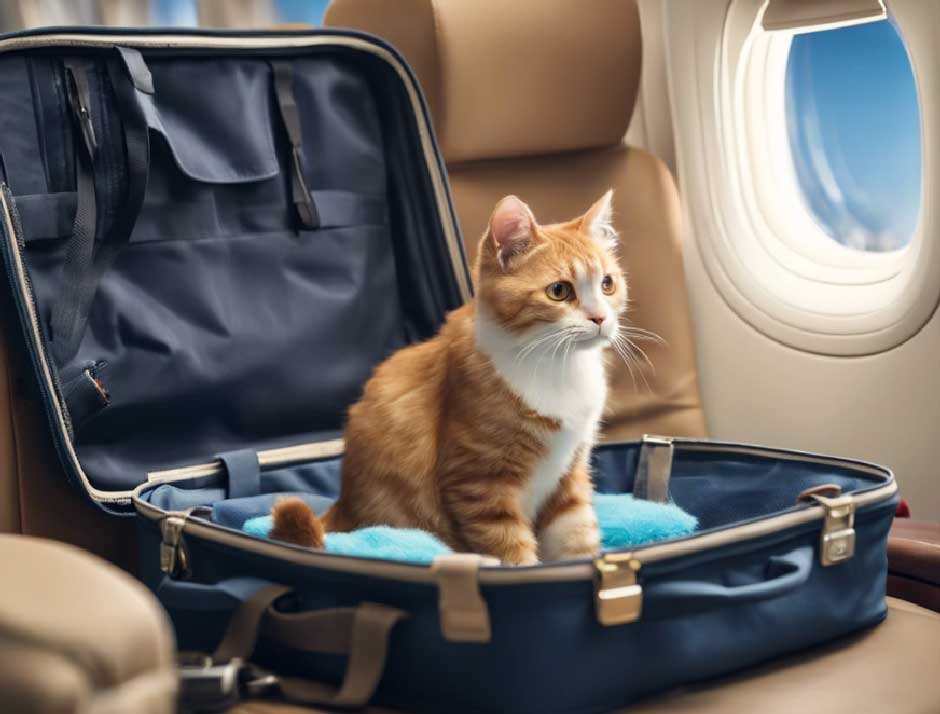
Not every carrier flies. Airlines publish specific dimension limits for in-cabin pet carriers, and gate agents do measure. A soft-sided carrier is almost always easier to fit because the sides give under the seat, hard-sided carriers leave zero margin for error.
The standard maximum under-seat dimension across US airlines is roughly 18″ x 11″ x 9″. Some airlines are more generous. Some are tighter.
| Airline | Max Carrier Dimensions | Pet Fee (per leg) | In-Cabin Limit |
|---|---|---|---|
| Delta | 18″ x 11″ x 11″ | $95 | 2 pets |
| American Airlines | 19″ x 13″ x 9″ | $150 | 2 pets |
| United | 18″ x 11″ x 11″ | $125 | 2 pets |
| Southwest | 18.5″ x 8.5″ x 13.5″ | $95 | 2 pets |
| JetBlue | 17″ x 12.5″ x 10.5″ | $125 | 1 per person |
| Alaska Airlines | 17″ x 11″ x 7.5″ | $100 | 2 pets |
Eighteen inches by eleven inches, smaller than most airplane tray tables. That is the space your cat will spend the flight in. Choose a carrier with mesh panels on at least three sides for airflow. An expandable side panel is a bonus: once the flight reaches cruising altitude, some airlines allow you to unzip the expansion for extra legroom.
Oddly enough, the carrier is the one piece of gear you should never buy used for flying, you cannot verify it meets airline dimensions until you measure it yourself, and the measurement tolerance is thin enough that a half-inch of sagging fabric can get you denied at the gate.
Sedating Your Cat for Air Travel, A Word of Caution
Many owners ask their vet for a sedative. The official answer from the American Association of Feline Practitioners is clear: routine sedation is not recommended for air travel in cats. Sedatives interfere with the cat’s ability to regulate body temperature and balance, both of which are already stressed at cabin altitude. Some sedatives can cause respiratory depression in a pressurized cabin.
That does not mean you walk in empty-handed. Non-sedative calming aids are widely used and considerably safer:
- Feliway spray, synthetic feline facial pheromone. Spray the carrier interior 15 minutes before loading. Do not spray the cat directly.
- Calming chews, brands like NaturVet and VetriScience use L-theanine, colostrum, and thiamine. Test one dose at home before travel day.
- Carrier cover, a lightweight cloth draped over three sides blocks visual stimulation. Leave the front open for airflow.
- Familiar scent item, a t-shirt you slept in, placed inside the carrier. Your smell is an anxiolytic for a bonded cat.
One Redditor in r/CatAdvice described the exact moment the calm-down clicked for them: “I put my worn hoodie in the carrier and she stopped crying within 5 minutes. I sat in my seat and cried instead.”
What Real Cat Owners Say About Flying With Cats
Between the official airline rules and the vet checklist, there is a layer of practical knowledge that only comes from people who have done it and made mistakes.
“I’m flying with a cat and I want the cat next to me or under the seat, NOT in the overhead bin. Has anyone flown with cats and what’s the best way to do it?”
— r/CatAdvice, 181 upvotes, 179 comments (2024), source
“Travelling with cats in cabin please learn from my mistakes.”
— r/travel, 36 comments (2025), source
“Book your cat when you book your flight, there is a fee each way. Make sure you have an airline approved carrier. Sherpa bags are excellent.”
— r/americanairlines, 2 years ago, source
Sound familiar? Every one of these posts has dozens of replies sharing the same core tips, book early, train the carrier, skip the sedation. The community consensus is remarkably consistent.
After the Flight: Helping Your Cat Settle
Landing is not the end. Cats process travel stress differently than humans. They may hide for the first 12–24 hours in a new location. They may refuse food. They may cry at the door.
Set up a small safe room before you leave, a bathroom or spare bedroom with food, water, litter box, and the same blanket from the carrier. Let the cat decompress in this room without the full run of the house or hotel. Check every few hours, but do not force interaction.
By the second evening, the carrier sits open on the floor with the blanket still inside. The cat walks past it a few times, sniffs it, then ignores it. A few hours later it is curled up on the same blanket in the same carrier, asleep. That is the moment you know the travel stress has passed.
If the hiding lasts longer than 72 hours or the cat stops eating entirely, call your vet. Even a well-prepared cat can experience genuine travel anxiety that needs medical support.
Frequently Asked Questions
Can I take my cat out of the carrier on the plane?
No. The carrier must remain closed and stowed under the seat for taxi, takeoff, cruise, and landing. Removing the cat mid-flight violates FAA and airline policy on nearly all carriers.
Does my cat need a health certificate to fly?
Most US airlines require a Certificate of Veterinary Inspection issued within 10 days of travel. Some accept certificates up to 30 days old for domestic routes. International flights require additional export paperwork and longer lead times.
How much does it cost to fly with a cat?
The pet fee ranges from $95 to $150 per leg across major US airlines. Delta and Southwest charge $95; American Airlines charges $150. This covers the carrier as a carry-on but does not guarantee a specific seat or row.
Can I fly with two cats on the same flight?
Most airlines allow one cat per passenger in the cabin, with a maximum of two cats total per flight. Each cat needs a separate carrier, and each carrier must fit under a seat. Two people traveling together can each carry one cat.
Is it safe to fly with an anxious cat?
Flying is generally safe for healthy cats. Anxious cats should never be sedated without explicit veterinary direction. Non-sedative calming aids, a covered carrier, and familiar scents reduce stress significantly. Cats with heart conditions or respiratory issues need written vet clearance before booking.
What happens at TSA with a cat?
You remove the cat from the carrier, send the empty carrier through the X-ray belt, and carry the cat through the metal detector. You can request a private screening room at no cost. The carrier must be completely empty, no bedding, no toys, no food inside.
Should I feed my cat before a flight?
Feed a light meal 3–4 hours before departure. Skip food in the 2 hours leading up to the flight to reduce motion sickness and in-carrier accidents. Offer small amounts of water throughout the airport wait using a travel bottle.
Can my cat come out during layovers?
Yes, inside pet relief areas. Many major US airports now have designated animal relief stations inside the secure zone. Outside these areas, most airports require cats to remain inside their carrier.
Conclusion
A cat curled up in a carrier under the seat, quiet for the whole flight, that is the outcome preparation buys. Not luck. Not a perfect cat. Just four weeks of gradual training, the right carrier, and a vet visit timed to the travel window.
The plane ride itself is the easy part. Everything you do in the month before it determines whether it goes smoothly.