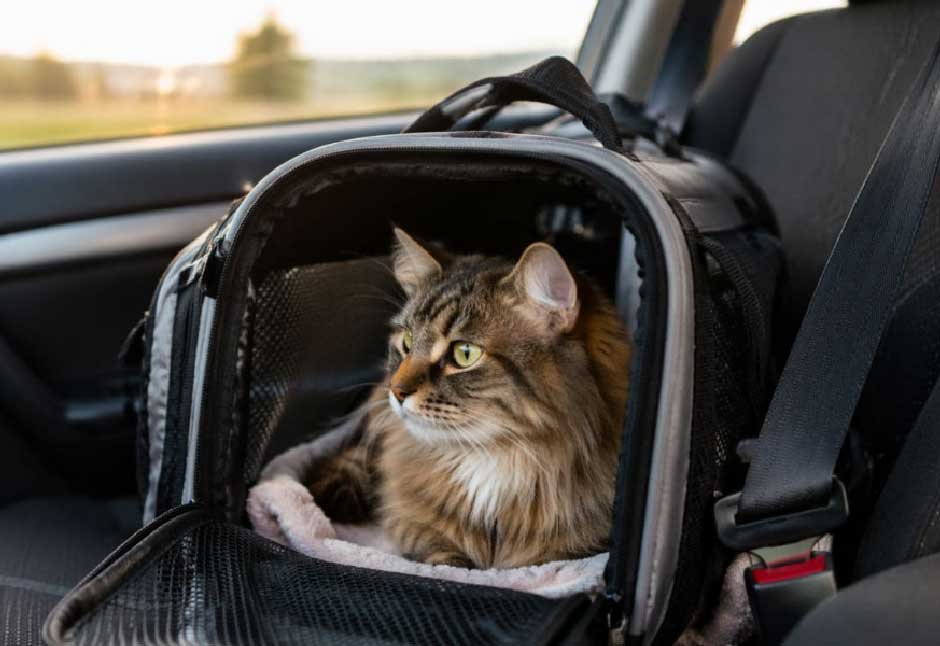
The carrier comes out, and the cat disappears. You find it under the bed, coax it in with treats and a gentle voice, set the carrier on the back seat, and before you’ve left the driveway, the yowling starts. Most cat owners have lived this exact sequence. Knowing how to calm a cat in a car isn’t just about making the trip quieter; it’s about reducing a form of genuine distress that, left unmanaged, compounds into a lasting fear response that makes every future trip worse.
Why Cats Hate Car Rides
Cats are territorial animals hardwired to feel safe only in familiar spaces. A moving vehicle strips away every sensory anchor they rely on: known smells, stable ground, and visual familiarity. The engine vibration, road noise, unfamiliar sights, and exhaust smell combine into a full-spectrum disruption that the cat can neither control nor escape from. This is the baseline condition for every car ride, even before any carrier anxiety is layered on top.
There’s also a strong learned-association problem. For most cats, the carrier appears exclusively before something unpleasant — a vet visit, a boarding stay, a move. By the time the carrier comes out, the cat already anticipates the worst. The carrier isn’t neutral; it’s a trigger. This is precisely why effective calming strategies begin weeks before the actual trip, not in the last frantic minutes before departure.
According to the American Association of Feline Practitioners (AAFP), carrier training is the single most effective preparation for stress-free cat transport, and it requires consistent, low-stakes exposure over time. Cats acclimated to the carrier as a resting space show measurably lower cortisol responses during transport compared to cats that encounter the carrier only at departure time. The distinction in outcome between these two groups is not subtle.
Cats evolved to never need to go anywhere fast. Modern life keeps disagreeing.
How to Prepare the Carrier (Start Two Weeks Out)
Carrier preparation should begin at least two weeks before any planned trip. Leave the carrier open in a room your cat frequents, place a worn t-shirt or familiar blanket inside, and drop occasional treats near and inside the opening. The goal is for the carrier to become boring — a piece of furniture, not a threat.
Choose a hard-sided carrier with top and front access. Top-loading allows you to gently lower the cat in rather than pushing them through a front door, which reduces resistance significantly. The carrier should be large enough for the cat to stand and turn around, but not so large that the cat slides during cornering.
- Hard-sided carriers hold their shape in a collision and provide more stability than soft-sided alternatives
- Familiar scent inside the carrier — a worn t-shirt or the cat’s own bedding — reduces the stress response during transit more effectively than any pheromone product used alone
- Spray Feliway Classic on the carrier interior 30 minutes before placing the cat inside; the propellant needs to dissipate and the pheromone needs to dry before the cat enters
- Cover three sides of the carrier with a light blanket once loaded into the car, reducing visual stimulation while maintaining airflow through the front
If your cat has never been acclimated to a carrier, start the process earlier and move in smaller steps. Feed regular meals inside the open carrier for a week, then with the door closed but unlatched, then with the door closed and latched for short sessions with a treat inside. Progress only when the cat enters willingly, not on a human schedule.
The Day Before and Morning of the Trip
The 12 hours before travel set the baseline for the entire ride. Withhold food for three to four hours before departure to reduce nausea risk, motion sickness in cats is driven by the same inner-ear mechanism that affects people, and an empty stomach makes vomiting significantly less likely. Water is fine until you leave.
The night before the trip, spray Feliway Classic on the carrier bedding and let it dry completely. Spraying directly into the carrier with the cat inside is counterproductive: the propellant temporarily triggers the opposite response. Overnight drying is ideal; 30 minutes is the bare minimum.
On the morning of the trip, avoid the high-energy chase sequence that so many owners accidentally create by leaving the carrier preparation too late. If the carrier has been sitting open for two weeks, your cat should enter without a struggle. If they hesitate, drop a high-value treat just inside the opening and wait. Forcing a cat in at the last minute, under time pressure, with elevated human stress, spikes their cortisol before the car has moved an inch.
Keep your own energy calm. Cats read human anxiety with startling accuracy. A 2021 study published in the Journal of Feline Medicine and Surgery found that owner behavior during carrier loading was a significant predictor of cat stress scores measured at the veterinary clinic, before any clinical procedures began. Your composure is not a nicety; it’s part of the protocol.
7 Ways to Keep Your Cat Calm During the Ride
Once you’re moving, your options shift to management rather than prevention. A calm cat in a car is usually a cat whose pre-trip preparation was done properly, but these in-ride adjustments still make a measurable difference, particularly on longer trips.
| Technique | When It Helps Most | Key Note |
|---|---|---|
| Cover the carrier (3 sides) | Any trip | Dark spaces feel safer; maintain airflow through the front |
| Low-volume ambient or classical music | Anxious vocalizers | Avoid sudden volume changes; silence is equally valid |
| Maintain 70–75°F (21–24°C) in the car | Summer and winter trips | Overheated cats pant, which amplifies anxiety signals |
| Smooth driving, gradual acceleration, early braking | Motion-sick cats | Sudden stops are a primary nausea trigger |
| Secure the carrier so it doesn’t slide | Any trip | Physical instability on top of sensory overload is cumulative |
| Speak in a low, even tone occasionally | Cats bonded closely to owner’s voice | Avoid high-pitched reassurance, it signals alarm, not safety |
| Stop every 2 hours on long trips | Trips over 3 hours | Offer water in a flat dish inside the secured carrier; never open the carrier in an unsecured location |
The most common in-ride mistake is opening the carrier to comfort a distressed cat. This releases a stress-activated animal into a small metal space with no real escape, which escalates the fear response rather than reducing it. Keep the carrier closed unless you are stopped in a secured, cat-safe space with no open doors or windows.
If the yowling is continuous and difficult to tune out while driving, try placing the carrier in the footwell behind the front seat rather than on the seat. The lower position, with three enclosed sides, creates more of a den effect for some cats. For others, the elevated position on the back seat lets them see out, and they prefer orientation to enclosure. Observe which setting produces quieter behavior and adjust accordingly.
Calming Products: What Works and What to Skip
Several calming aids exist for cats during car travel, with significantly different evidence profiles. Pheromone products and prescription medications have the strongest track records. Many over-the-counter supplements occupy a middle ground. Some products marketed for anxious cats have no feline-specific evidence at all, and a few are actively harmful.
| Product Type | Active Component | Evidence Level | Timing Before Travel | Prescription Required? |
|---|---|---|---|---|
| Feliway Classic spray (pheromone) | Synthetic F3 facial pheromone | Strong, multiple peer-reviewed studies | 30 min before carrier placement | No |
| L-theanine treats (e.g., Composure, Zylkene) | L-theanine or alpha-casozepine | Moderate | 60–90 min before travel | No |
| Gabapentin | Gabapentin (anticonvulsant/anxiolytic) | Strong for acute travel anxiety | 90–120 min before travel | Yes |
| Cerenia (maropitant) | Maropitant citrate | Strong, FDA-approved for cats | 2 hours before travel | Yes |
| CBD treats | Cannabidiol | Weak, limited feline studies available | Varies by product | No |
| Essential oils (lavender, tea tree, etc.) | Various phenolic compounds | None, toxic to cats | Do not use | No |
Gabapentin has become the first-line pharmacological option for veterinary travel anxiety. A typical dose of 50–100 mg given 90–120 minutes before travel produces sedation and reduces fear response without the cardiovascular risks associated with older sedatives like acepromazine. If your cat’s travel anxiety is severe or travel is unavoidable and infrequent, discuss gabapentin with your vet at least two weeks ahead, most vets prefer a trial run at home first to gauge individual response.
Essential oils including lavender, eucalyptus, tea tree, and peppermint are toxic to cats regardless of dilution. Cats lack the hepatic glucuronyl transferase enzymes needed to break down certain phenolic compounds, which means even diffused exposure in a small car interior can cause liver damage, tremors, or respiratory distress. Feliway pheromone products have no systemic effect and are the only scent-based intervention with a feline safety record.
When Your Cat Gets Car Sick
Motion sickness and anxiety are distinct conditions that share symptoms and often occur together. An anxious cat yowls, hides its face, may urinate from fear, and shows full-body tension. A motion-sick cat drools heavily, lip-licks repeatedly, swallows compulsively, and typically vomits within the first 20–30 minutes of travel. When both are present, anxiety management alone will not resolve the vomiting.
The mechanism is vestibular: the inner ear detects motion while the visual system, looking at a static carrier interior, registers stillness. The mismatch triggers the brainstem’s nausea center, the same mechanism behind seasickness in people. Positioning the carrier so the cat faces forward, with a view through the windshield if the carrier design allows, reduces this visual-vestibular conflict for some cats.
Young cats under one year often outgrow motion sickness as their vestibular systems mature with travel exposure. If vomiting starts after years of problem-free travel, consider an inner-ear or vestibular condition as a possible cause rather than attributing it to anxiety. Your vet can assess this distinction. Cerenia (maropitant citrate), FDA-approved for use in cats, works by blocking the vomiting trigger in the brainstem and is effective for motion sickness even when anxiety is absent.
Maine Coon Cats and Car Travel: What’s Different
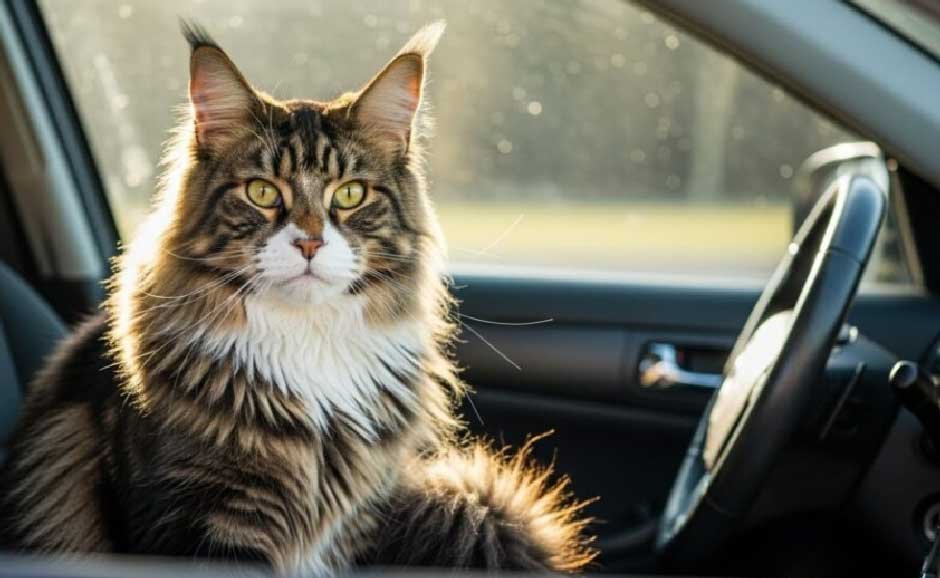
Maine Coons are often described as the most adaptable of domestic cat breeds, larger than average, socially oriented, and generally more tolerant of novelty than breeds with higher territorial drive. Many Maine Coon owners report that their cats handle car rides with less drama than expected, particularly when acclimated from kittenhood. That tolerance, though, doesn’t eliminate the need for preparation, it just shifts the specifics.
Carrier sizing is the most immediate consideration. Adult male Maine Coons commonly reach 15–18 pounds, with some individuals exceeding 20 pounds. The AAFP recommends a carrier at minimum 1.5 times the cat’s nose-to-tail-base length. For most adult Maine Coons, this means a large-dog-sized carrier or a convertible soft/hard hybrid that expands to accommodate the full body length. A cramped carrier removes any chance of the cat finding a comfortable resting position, and discomfort compounds anxiety reliably.
Maine Coons also tend to be vocal in ways that can alarm owners unfamiliar with the breed. The trill-and-chirp commentary some Maine Coons produce during car travel sounds distressing from outside the carrier but often represents curiosity or communication rather than fear. Distinguishing distress vocalization (high-pitched, repetitive yowling with visible body tension, panting, or elimination outside the litter) from conversational travel narration (varied pitch, intermittent, with normal body posture between vocalizations) is worth practicing before reading a calm trip as a problem.
Frequently Asked Questions
How long does it take to train a cat to be calm in the car?
Most cats show meaningful improvement within four to six weeks of consistent carrier acclimation paired with two or three short, deliberately positive car rides. Severely anxious cats, or cats with deeply conditioned negative associations, may need three to six months of systematic desensitization. The pace is set by the cat’s response, not by a training schedule.
Should I give my cat water during a long car ride?
Yes, for trips exceeding two hours. Offer water in a flat dish inside the stationary, secured carrier at rest stops with the engine off. Avoid offering water while the car is moving, the instability makes most cats reluctant to drink and spillage creates wet bedding, which increases discomfort. A lickable water-delivery tube or drip bottle attached to the carrier door works for cats already familiar with this format.
Can I use essential oils to calm my cat in the car?
No. Lavender, tea tree, eucalyptus, peppermint, and most other essential oils are toxic to cats. Cats lack the liver enzymes (glucuronyl transferase) required to metabolize phenolic compounds, meaning even diffused exposure in a closed car can cause liver damage, neurological symptoms, or respiratory distress. Use Feliway pheromone spray on the carrier bedding instead, it has no systemic effect and is specifically designed for feline use.
Is Feliway actually effective for cats in cars?
For many cats, yes, particularly when combined with carrier acclimation. A 2020 peer-reviewed study found synthetic feline facial pheromones reduced behavioral stress indicators during transport in a statistically significant proportion of test subjects. Cats with severe or deeply conditioned anxiety often need pheromones combined with behavioral preparation and, in some cases, medication. Feliway performs best as one layer of a system, not a standalone solution applied at the last moment.
What if my cat has never been calm in a car, no matter what I try?
Talk to your veterinarian about gabapentin. For cats with severe or treatment-resistant travel anxiety, prescription medication is the most humane option when travel is unavoidable. A single appropriately dosed gabapentin given 90–120 minutes before departure prevents acute distress more reliably than any combination of supplements. For cats that travel frequently, a veterinary behaviorist can design a systematic desensitization protocol tailored to the individual cat’s specific triggers.
How often should I take my cat in the car just for practice?
Once every one to two weeks during the acclimation phase, ideally starting with trips under five minutes that end somewhere neutral, not the vet. Drive around the block, return home, and give a high-value treat immediately after the cat exits the carrier. The goal is building a data set of car rides that end without anything unpleasant. After six to eight positive short trips, begin gradually increasing duration.
The Goal Is Boring, Not Happy
No technique will make most cats enjoy car rides. That’s not the right target. When people ask how to calm a cat in a car, they’re usually hoping for a quick fix that transforms a panicking animal into a serene passenger. The realistic goal is narrower and more achievable: a cat that tolerates travel without acute distress, can reach a vet safely, and doesn’t treat every carrier sighting as evidence of catastrophe.
The real work happens before you start the engine. Everything during the ride is maintenance. Get the preparation right, and the ride takes care of itself.