
You get a dog to stop barking by finding the trigger, blocking rehearsals, rewarding quiet behavior, and teaching a replacement action before the barking has already taken over.
The hard part is not the sound. It is the habit loop behind it: bark, human reacts, something changes. Once that loop works for a dog, even yelling can become part of the reward.
Start With the Reason, Not the Volume
Excessive barking improves faster when you treat it as information first and noise second. The same bark may mean alarm, fear, boredom, frustration, greeting, attention seeking, or distress when left alone.
The American Society for the Prevention of Cruelty to Animals explains that dogs bark for different functions, and the treatment depends on the motivation behind the barking. That is why a single cue like quiet often fails when the dog is scared, under-exercised, or practicing at the front window all day.
For two days, write down what happened right before the barking, where your dog was, who was present, and what made the barking stop. A pattern usually shows up quickly.
| Barking pattern | Likely cause | First move |
|---|---|---|
| Runs to windows, stiff body, barks at passersby | Alarm or territorial barking | Block the view and reward checking in |
| Barks at you while you cook, work, or sit down | Attention or demand barking | Reward a quiet sit or down before the bark starts |
| Barks, howls, or panics when alone | Possible separation-related distress | Stop long absences and ask for behavior help |
| Barks at small sounds, night noises, or neighbors | Noise sensitivity or vigilance | Use sound masking and controlled desensitization |
| Barks during play, greetings, or leash frustration | Excitement or poor impulse control | Pause movement, reinforce calm, restart when quiet |
Do this before buying a gadget. A bark collar may silence one symptom while leaving fear, boredom, or panic untouched.
Stop Accidentally Paying the Bark
A dog repeats barking when barking reliably gets attention, movement, food, access, distance, or excitement. The fix starts by changing what happens immediately after the noise and rewarding a calmer behavior instead.
Many owners do not realize how often they pay the bark. The dog barks at the back door and gets let out. He barks while dinner is prepared and the bowl appears. He barks at the window and the person outside walks away.
Some of that is unavoidable. Mail carriers do leave. Squirrels do vanish. Still, you can control the household version of the pattern.
- If your dog barks for dinner, scatter a few pieces of kibble before preparation starts, then feed only during quiet moments.
- If your dog barks for attention, wait for one second of silence, mark it with yes, then ask for sit or down.
- If your dog barks at the window, move him away from the rehearsal spot before the busy time of day.
- If your dog barks during work calls, set up the chew, crate, gate, or room before the meeting begins.
Timing matters. Once the dog is already shouting at full volume, your options get smaller and your patience gets thinner.
“i love my dog, he’s my best friend, but the barking is getting worse. it started with the mailman, then people walking by, now it’s every little noise.”
– r/OpenDogTraining, July 2025
That kind of escalation is common because the dog has had hundreds of chances to practice. You are not trying to win a shouting match. You are trying to make quiet behavior easier to find.
Teach Quiet When Your Dog Can Still Think
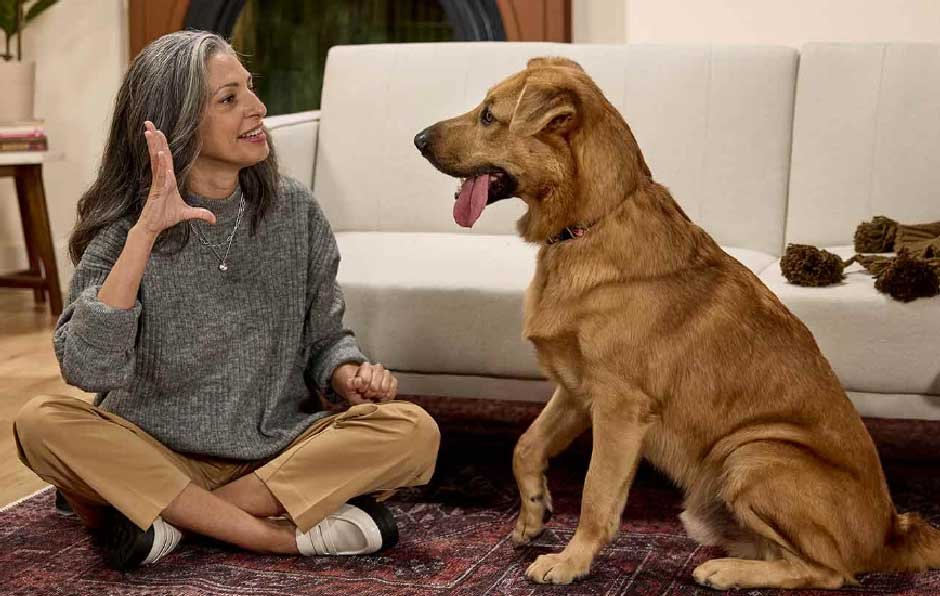
The quiet cue works best when it is taught during mild barking, not during a meltdown. Say the cue once, feed during silence, and slowly stretch the quiet interval before using it around harder triggers.
The ASPCA describes a treat-stream method: calmly say quiet, then feed tiny treats when the dog stops barking, gradually increasing the pause before the reward. The useful detail is the gradual stretch from two seconds to five, ten, and longer.
Here is a clean version you can practice with low-intensity triggers:
- Set up a mild trigger your dog notices but does not explode over, such as a family member walking outside at a distance.
- When your dog barks once or twice, say quiet in a normal voice.
- The instant your dog pauses, mark yes and feed a small treat.
- After several easy wins, wait two seconds before marking and feeding.
- Build to five, ten, and twenty seconds over many sessions.
- After the reward, redirect your dog to a mat, bed, hand target, or simple sit.
Do not chant quiet five times. That teaches your dog the cue is background noise.
Also, do not start with the doorbell if the doorbell makes your dog lose his mind. Start with the soft version: a phone recording at low volume, a quiet knock on an interior wall, or a person walking far from the window.
Use a Replacement Behavior
Quiet alone leaves a blank space, especially when the trigger is still present. A replacement behavior gives the dog something specific to do: go to a mat, look at you, touch your hand, sit, or find tossed food.
This is where many plans fall apart. The owner teaches silence, then the dog has nothing to do except stare at the same trigger and reload.
Pick one replacement and make it boringly consistent.
| Trigger | Replacement behavior | Why it helps |
|---|---|---|
| Doorbell or knocking | Go to mat | Moves the dog away from the door and gives guests space |
| People outside | Look at me | Turns the trigger into a check-in cue |
| Demand barking | Lie down | Gives the dog a polite way to ask |
| Leash barking | Hand target and turn | Changes direction before the dog crosses threshold |
| Night noises | Settle on bed | Pairs sound with predictable calm routine |
In practice, I like mat work for door and window barkers because the picture is obvious to the dog. Feet on the mat pays. Charging the glass does not.
Manage the Window, Door, and Yard
Window and yard barking need management as much as training because those triggers repeat all day. If the dog can rehearse the behavior for hours, ten minutes of evening practice will not compete.
Start with the unglamorous stuff: close blinds, use frosted window film, move the couch away from the front window, or gate the room during delivery hours. For yard barking, bring the dog inside before the neighbor’s usual walk time or stay outside with treats and a leash.
Then practice when you are ready. Let the dog notice the passerby at a distance, mark the glance, feed, and call him away. If he cannot eat, he is probably too close to the trigger.
A common mistake is assuming the dog needs more exposure. Actually, he needs easier exposure. The sight of a person at fifty feet may be trainable. The sight of a jogger three feet from the fence may be too much today.
Handle Attention and Demand Barking
Attention barking improves when the dog learns that quiet behavior starts the conversation and barking makes nothing useful happen. Ignoring can help, but only if you also reward the behavior you want instead.
If your dog barks at you while you work, cook, or relax, do not scold, laugh, toss the toy, or give the treat during the bark. Wait for a tiny pause. Mark it. Ask for the replacement behavior. Then reward.
For predictable barking, get ahead of it:
- Before cooking, scatter part of dinner in a snuffle mat.
- Before a video call, give a safe stuffed food toy or chew in a gated space.
- Before sitting on the couch, cue mat and reward settling for the first few minutes.
- Before guests arrive, leash the dog indoors and practice calm greetings away from the door.
Honestly, this is less glamorous than most training videos make it look. It is a lot of rewarding the three quiet seconds before the problem starts.
Do Not Punish Fear Barking
Fear barking needs distance, calmer setups, and counterconditioning before obedience cues will mean much. Punishing a scared dog may suppress noise briefly, but it can make the trigger feel even more threatening.
The American Veterinary Society of Animal Behavior states in its humane dog training position materials that aversive methods can harm welfare and the dog-human relationship. For a barking problem, that warning matters because the sound is often only the visible part of the emotional state.
Signs the barking may be fear-based include tucked tail, whale eye, stiff posture, retreating, lunging to create distance, or refusing food. If you see those signs, stop trying to make the dog face the trigger head-on.
Work farther away. Feed before the bark. Leave while your dog can still respond to you.
When Barking Happens When Left Alone
Barking only when the dog is alone may point to separation-related distress, especially if it starts soon after departure. Pacing, destruction near exits, drooling, or escape attempts make that concern stronger.
This is different from a bored dog barking once at hallway noise. Separation-related barking often starts soon after departure and may continue in waves. A camera helps because you need to know what happens after you leave.
If your dog panics when alone, stop testing long absences while you build a plan. Arrange daycare, a sitter, a neighbor visit, remote work blocks, or shorter departures when possible.
Then talk with a certified trainer, veterinary behaviorist, or your veterinarian. This is one place where powering through can make the dog worse.
Sound Masking Can Help Noise-Sensitive Dogs
For dogs who bark at small sounds, masking noise can reduce the number of triggers reaching them and create room for training. It does not train the behavior by itself, but it lowers the daily load.
A fan, white-noise machine, radio, or soft music can take the sharp edge off hallway sounds, delivery trucks, and neighbor activity. Place it between the dog and the noise source, not across the room where it barely changes anything.
“I use a sound machine to drown out some of the outside noises and that helps quite a bit. My pup still hears some noises and huffs and sometimes barks but its much better when the sound machine is on vs off.”
– r/reactivedogs, March 2026
Pair sound masking with training. When your dog hears a muffled noise and looks up, mark the glance and feed before the bark. That tiny pause is the opening.
What About Bark Collars and Ultrasonic Devices?
Bark collars and ultrasonic devices may interrupt barking, but they do not teach the dog what to do instead or why the trigger is safe. They are a poor first choice when fear, anxiety, or frustration is involved.
The tempting promise is speed. The problem is fallout. A dog may connect the unpleasant sensation with the mail carrier, a child outside, another dog, or being alone, rather than with barking as a behavior.
If a device seems to work, ask one question: is the dog calmer, or only quieter? Quieter is not enough when the underlying emotion is still climbing.
For most household barking, management plus reward-based training is slower in the first week and better by week three. It gives you a dog who knows how to settle, not just a dog who has been startled into silence.
A Seven-Day Barking Reset Plan
A short reset works when it combines prevention, quiet rewards, and one replacement behavior in the same daily routine. The goal for the first week is fewer rehearsals, not perfect silence.
Use this plan for alarm, attention, and mild noise barking. For severe fear, aggression, or separation distress, use it only as management while you get professional help.
- Day 1: Track every barking episode. Write trigger, location, time, intensity, and what ended it.
- Day 2: Block the biggest rehearsal point: window, fence, hallway door, meal prep, or work-call setup.
- Day 3: Pick one replacement behavior and reward it ten times when no trigger is present.
- Day 4: Practice quiet with an easy trigger. Stop after five successful repetitions.
- Day 5: Add the replacement after quiet: quiet, yes, treat, mat or hand target.
- Day 6: Practice during a predictable real-life trigger, but make it easier with distance or visual blocking.
- Day 7: Review your log. Keep what reduced barking and remove anything that only created more excitement.
Short sessions win here. Five clean minutes beat thirty chaotic ones.
When to Get Professional Help
Get help when barking is paired with panic, aggression, escape attempts, injury risk, or no improvement after several weeks of consistent training. Some cases need a behavior plan, medication discussion, or medical check, not more internet tips.
Look for a credentialed professional who uses reward-based methods and can explain the plan without relying on fear, pain, or intimidation. The ASPCA barking resource suggests seeking qualified behavior help when standard quiet training does not work after repeated attempts.
Call your veterinarian if the barking is new, sudden, or paired with confusion, hearing changes, pain, restlessness, or nighttime waking. A training plan cannot fix a medical problem.
FAQ
How do you get a dog to stop barking fast?
Interrupt the rehearsal, move the dog away from the trigger, and reward the first quiet second. Fast control usually comes from distance and prevention, not a louder command.
Should I ignore my dog when he barks?
Ignore attention barking only if the dog is safe and you reward quiet behavior afterward. Do not ignore fear barking, separation distress, or barking that is escalating toward aggression.
Does yelling stop barking?
Yelling often makes barking worse because it adds noise, attention, and excitement. Some dogs read it as the human joining the alarm.
How long does it take to reduce barking?
Mild barking may improve within one to three weeks of consistent prevention and reward-based practice. Long-rehearsed, fearful, or separation-related barking usually takes longer.
Can a dog be trained to never bark?
No healthy plan should aim for zero barking. Barking is normal communication; the realistic goal is less frequent, shorter, and easier-to-interrupt barking.
What command stops a dog from barking?
Quiet can work if it is taught with rewards during easy practice sessions. It should be paired with a replacement behavior such as mat, sit, look, or hand target.
Final Takeaway
The best answer to how do you get a dog to stop barking is boring but reliable: identify the trigger, prevent daily rehearsals, reward silence early, and give the dog another job.
Start before the bark. That one shift changes almost everything.