
Puppy owners know the feeling. Your Maltipoo skips breakfast, your Cavapoo suddenly refuses to put weight on a back leg, or your Cockapoo grabs something questionable from the sidewalk halfway through a walk.
These situations rarely come with an obvious next step. The decision to wait, call your veterinarian or head straight to a clinic often needs to be made within minutes.
Puppies can be especially difficult to assess because they may remain playful or food-motivated even when something is wrong. Their small size and developing immune systems can also mean that dehydration, low blood sugar and certain illnesses progress more quickly than they would in a healthy adult dog.
Understanding where urgent veterinary care ends and emergency care begins can make that decision less stressful and help your puppy receive the right level of care sooner.
Urgent Care Vet vs Emergency Vet: What Is the Difference?
Urgent care and emergency veterinary clinics may sound interchangeable, but they are generally designed to handle different levels of illness and injury.
Veterinary urgent care is usually appropriate for puppies who are sick, injured or uncomfortable but remain stable enough to travel safely and wait briefly for treatment. Symptoms such as persistent vomiting, a sudden limp or a painful ear infection may not require a middle-of-the-night emergency visit, but they also should not go untreated for several days.
Many urgent care veterinary clinics offer same-day appointments, extended hours or drop-off services for illnesses and injuries that need prompt attention.
Some newer veterinary practices combine routine primary care with same-day urgent visits. This model can be helpful for puppy owners who need vaccinations, wellness appointments and occasional sick visits through the same clinic.
Sploot Veterinary Care’s recommended Denver animal hospital locations are one example, offering extended daily hours and same-day sick visits alongside routine wellness exams, vaccinations and other veterinary services.
Emergency veterinary hospitals, by contrast, are equipped to stabilize animals whose conditions may become life-threatening within minutes or hours.
Breathing difficulties, suspected poisoning, uncontrolled bleeding, collapse and serious trauma should generally be treated as emergencies. Emergency hospitals may also provide oxygen support, advanced diagnostics, surgery and continuous overnight monitoring that primary and urgent care clinics do not offer around the clock.
Neither urgent care nor emergency care replaces your puppy’s regular veterinarian for routine wellness visits. However, understanding the purpose of each option can help you act more quickly when your puppy becomes sick or injured.
Signs Your Puppy May Need Urgent Care
Every puppy is different, and a veterinarian is best placed to assess an individual animal. However, certain symptoms often fall into the same-day urgent-care category rather than requiring immediate emergency treatment.
These may include:
- Vomiting or diarrhea that has occurred once or twice while your puppy remains alert and continues drinking
- A limp that began after playing but is not accompanied by severe swelling, bleeding or constant crying
- Mild ear irritation, scratching or head shaking
- Small cuts or scrapes that are not bleeding heavily
- A minor skin rash, hot spot or insect bite
- Reduced appetite for one meal without a major change in energy
- Mild coughing, sneezing or eye discharge without breathing difficulties
- A broken nail or minor paw injury
Although these symptoms may not be immediately life-threatening, puppies can deteriorate quickly. Contacting a veterinary clinic early can help prevent a manageable condition from becoming more serious.
A clinic may also advise you over the phone whether your puppy should be seen through urgent care or taken directly to an emergency hospital.
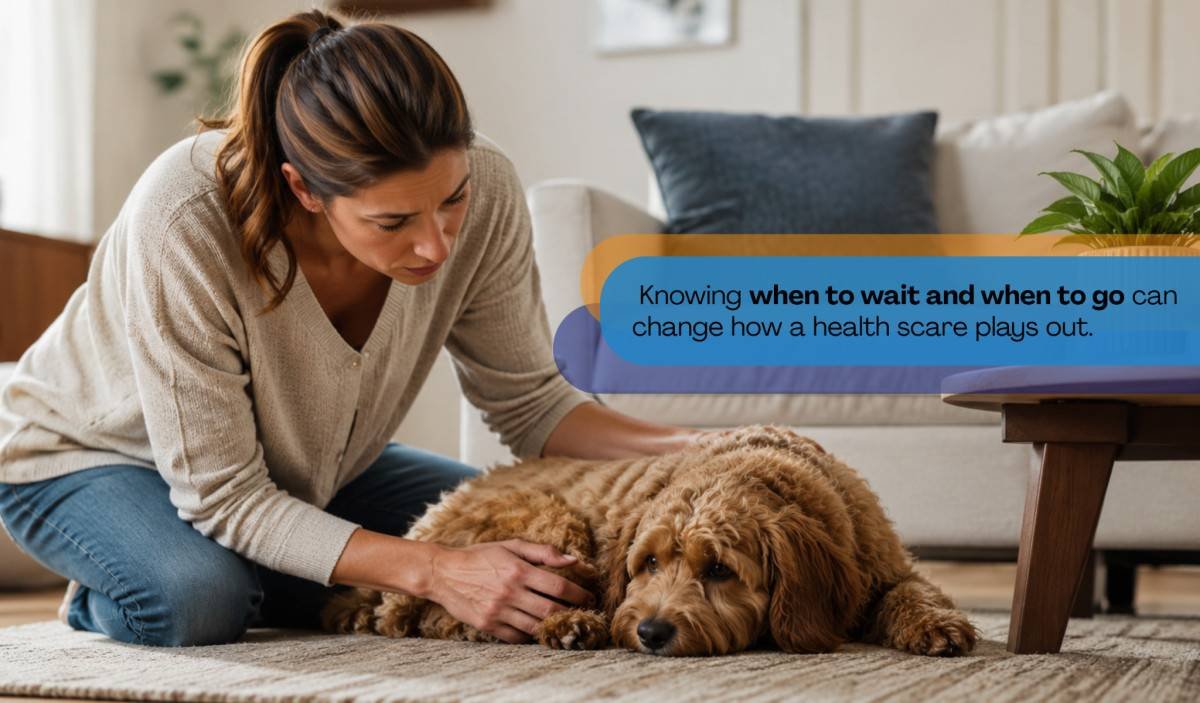
Signs Your Puppy Needs an Emergency Vet Immediately
Some symptoms are time-sensitive and should not wait for an urgent care appointment.
Seek emergency veterinary care if your puppy experiences:
- Labored, rapid or noisy breathing
- Blue, grey or very pale gums
- Sudden collapse or an inability to stand
- Seizures or repeated episodes of severe disorientation
- Uncontrolled bleeding
- A serious fall, vehicle accident or other major trauma
- Repeated vomiting with a swollen, hard or painful abdomen
- Persistent vomiting or diarrhea accompanied by weakness or lethargy
- An inability to urinate
- Severe pain, continuous crying or extreme restlessness
- Known or suspected ingestion of a toxic substance
- Choking or difficulty swallowing
- Loss of consciousness
Suspected toxin ingestion should always be treated seriously, even when a puppy appears normal. Substances such as xylitol, chocolate, grapes, raisins, human medications, cleaning products and certain plants can cause rapid and severe reactions.
Our guide to xylitol poisoning in dogs explains why ingredients that are safe for people can be extremely dangerous for puppies and why contacting a veterinarian immediately is more important than waiting for symptoms to appear.
Do not induce vomiting unless a veterinarian or pet poison specialist specifically instructs you to do so. Vomiting can make certain types of poisoning or foreign-object ingestion more dangerous.
Why Puppies Can Deteriorate Quickly
The line between urgent and emergency care can be less clear in puppies because of their small size and stage of development.
Young puppies can become dehydrated quickly after repeated vomiting or diarrhea. Toy and small-breed puppies may also be vulnerable to low blood sugar, particularly if they have not eaten, have been unusually active or are already unwell.
Warning signs of low blood sugar can include:
- Weakness
- Shaking
- Unsteady walking
- Extreme sleepiness
- Disorientation
- Collapse or seizures
A puppy that misses one meal but remains bright and active may only need monitoring and veterinary advice. A puppy that refuses food and becomes weak, shaky or difficult to wake should be assessed immediately.
Puppies are also more vulnerable to infectious illnesses before completing their vaccination series. Vomiting, diarrhea, reduced appetite and lethargy can sometimes indicate serious diseases such as parvovirus, particularly in young or incompletely vaccinated puppies.
Any puppy with repeated vomiting, bloody diarrhea or marked lethargy should receive prompt veterinary attention.
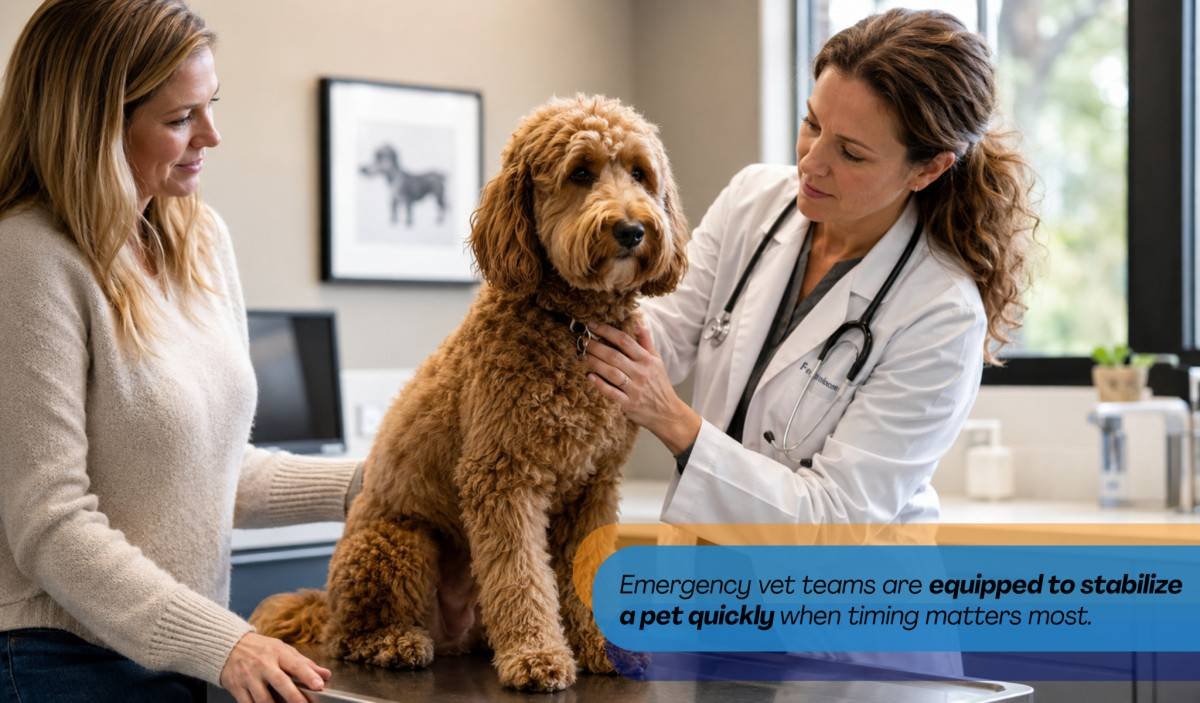
How Doodle Puppy Traits Can Complicate the Decision
Maltipoos, Cavapoos, Cockapoos and other small doodle mixes bring a few additional considerations.
Their curly or wavy coats can hide swelling, wounds, skin irritation and changes in body condition. Owners may not notice a lump, bite or painful area until the puppy is groomed or handled closely.
Small doodle puppies can also become dehydrated or hypoglycemic more quickly than larger dogs. For this reason, a wait-and-see approach may need a shorter timeframe when a young doodle stops eating, repeatedly vomits or becomes unusually tired.
Routine grooming gives owners an opportunity to check for:
- Hidden cuts or puncture wounds
- Swelling beneath the coat
- Red or inflamed skin
- Ticks or insect bites
- Ear irritation
- Pain when a leg, paw or part of the body is touched
Our overview of managing small dog health conditions explains how body size and coat type can affect the way early warning signs appear.
Breed ancestry may also influence long-term health risks. Cavapoos, for example, have Cavalier King Charles Spaniel ancestry, which may increase their susceptibility to certain heart and eye conditions.
This does not mean every cough, skipped meal or limp is an emergency. It does mean that owners should discuss inherited health risks with their veterinarian and pay attention to symptoms that persist, worsen or appear alongside breathing problems, weakness or collapse.
What a Combined Primary and Urgent Care Clinic Can Handle
A clinic that offers both primary and urgent veterinary care can help when your puppy has a problem that cannot wait several days but does not appear immediately life-threatening.
Examples might include:
- A sudden limp
- An ear infection
- Persistent itching
- A minor wound
- Vomiting without collapse or severe weakness
- Diarrhea in an otherwise alert puppy
- Reduced appetite
- Eye redness or discharge
- A possible urinary infection
Access to same-day scheduling, in-house testing and veterinary staff who can assess the severity of symptoms can shorten the gap between noticing a problem and receiving a treatment plan.
Depending on the clinic, in-house services may include blood tests, X-rays, ultrasound, wound care, medication and fluid therapy.
However, combined primary and urgent care clinics are not usually substitutes for 24-hour emergency hospitals. Many operate during extended daytime and evening hours but do not provide overnight hospitalization.
If your puppy requires surgery, oxygen support, intensive monitoring or specialist treatment, the urgent care clinic may stabilize the animal and coordinate a transfer to an emergency or specialty hospital.
What to Do When You Are Unsure
It is not always possible to determine the seriousness of a symptom at home. When you are uncertain, call a veterinary clinic and describe exactly what is happening.
Be prepared to share:
- Your puppy’s age, breed and weight
- When the symptoms began
- Whether the symptoms are improving or worsening
- How many times your puppy has vomited or had diarrhea
- Whether your puppy is eating and drinking
- Gum colour
- Breathing rate and effort
- Any known injury or possible toxin exposure
- Current medications and vaccination status
The clinic may ask you to send a photo or video of your puppy’s breathing, walking or behaviour. A short recording can help veterinary staff understand the severity of symptoms, although it cannot replace an examination.
When in doubt, it is generally safer to call. Veterinary staff can help determine whether your puppy needs monitoring, a same-day appointment or immediate emergency treatment.

Create an Emergency Plan Before You Need It
The best time to decide where you would take your puppy is before an urgent situation occurs.
A few preparations can make a stressful situation easier:
- Save the numbers for your regular veterinarian, nearest urgent care clinic and closest 24-hour emergency hospital.
- Share those details with family members, dog walkers and pet sitters.
- Keep your puppy’s weight, medications, allergies and vaccination history in an accessible note.
- Store your puppy’s carrier, leash and medical records where they can be reached quickly.
- Ask your regular veterinarian what after-hours services they provide.
- Learn which local clinics accept walk-ins and which require a phone call before arrival.
- Review how your pet insurance policy handles urgent and emergency visits.
It is also helpful to know the quickest route to the emergency hospital and whether it offers overnight care, surgery and specialist services.
Calling ahead, when possible, gives the clinic time to prepare and allows staff to tell you whether your puppy should be transported differently based on the suspected condition.
The Takeaway for Puppy Parents
Puppy owners are not expected to diagnose every limp, upset stomach or unusual behaviour at home. The goal is to notice when something has changed and understand which type of veterinary care is most appropriate.
Urgent care is generally suited to puppies who need prompt treatment but remain stable.
Emergency veterinary hospitals are designed for symptoms that may be life-threatening or could worsen rapidly without immediate intervention.
Because puppies can deteriorate faster than adult dogs, persistent vomiting, severe diarrhea, weakness, breathing difficulties, suspected poisoning and major changes in behaviour should always be taken seriously.
When you are unsure, contact a veterinarian. A quick phone call can help you decide whether to monitor your puppy, arrange a same-day visit or head directly to an emergency hospital.