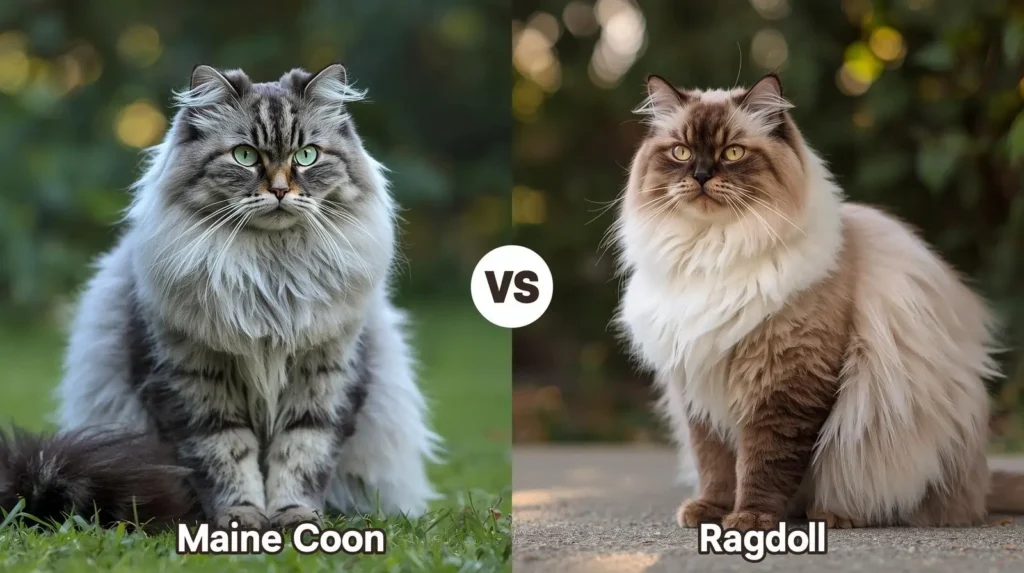
Choosing between two magnificent feline breeds can feel like picking your favorite child. When I first walked into a cat show five years ago, I stood mesmerized between a towering Maine Coon and a floppy Ragdoll, both demanding my attention with their gentle purrs. That moment sparked my journey into understanding these beloved breeds a journey I’m excited to share with you.
The Maine Coon vs Ragdoll debate captivates cat enthusiasts worldwide for good reason. According to FIFe statistics for 2024, the Maine Coon ranked first as the most popular cat breed, comprising 24.7% of total registered kittens. Meanwhile, the Cat Fanciers’ Association crowned the Ragdoll as a top favorite for 2025, celebrated for its mesmerizing coat and affectionate temperament. Both breeds represent the pinnacle of large, affectionate cats, yet they possess distinct characteristics that might make one perfect for your home.
Understanding the Maine Coon vs Ragdoll Origins
The Maine Coon’s American Heritage
The Maine Coon is a large domesticated cat breed that originated in the U.S. state of Maine, where it is the official state cat. This natural breed evolved through centuries of harsh northeastern winters, developing its signature thick, water-repellent coat and snowshoe-like paws. The breed’s popularity in cat shows peaked in the late 19th century but faced threats when long-haired breeds from overseas were introduced in the early 20th century.
The 1950s saw the formation of the Central Maine Cat Club, which proved pivotal for the Maine Coon’s resurgence, with the breed achieving championship status in 1976. Today, this resilient breed stands as a testament to dedicated preservation breeding.
The Ragdoll’s Californian Creation
Unlike the naturally evolved Maine Coon, the Ragdoll cat was intentionally bred in the 1960s by Ann Baker in Riverside, California. Baker wanted to create a breed with an exceptionally calm temperament, long fur, and striking blue eyes, starting with a white domestic long-haired cat named Josephine. The breed’s name perfectly captures their endearing tendency to go completely limp when picked up like a child’s ragdoll toy.
Maine Coon vs Ragdoll Size Comparison
| Characteristic | Maine Coon | Ragdoll |
|---|---|---|
| Male Weight | 15-25 pounds | 15-20 pounds |
| Female Weight | 10-15 pounds | 10-15 pounds |
| Height | 10-16 inches | 9-11 inches |
| Length | 35-40 inches | 35-40 inches |
| Maturity Age | 4 years | 4 years |
When comparing Maine Coon vs Ragdoll dimensions, Maine Coon males typically weigh 15-25 pounds while Ragdoll males weigh 15-20 pounds, making Maine Coon males the ones with the most significant potential in weight. Maine Coons are usually 10-16 inches tall while Ragdolls are 9-11 inches tall, though both breeds measure about 35-40 inches in length.
The Maine Coon holds the record for the longest domestic cat in the world, with Stewie measuring 48.5 inches. From personal experience, carrying my friend’s 22-pound Maine Coon felt like lifting a small dog, while their Ragdoll, though equally long, felt noticeably lighter and more manageable.
Physical Appearance: Maine Coon vs Ragdoll Features
Eye Color and Shape Distinctions
One of the central differences between the two breeds is that all Ragdoll cats have bright blue eyes, one of their best-known and most appreciated features. Maine Coons present a wider palette of eye colors including copper, gold, and green, while Maine Coon cats have rounded eyes and Ragdolls have oval-shaped eyes.
Facial Structure Differences
Ragdolls have chubby cheeks making them look more adorable, while Maine Coons have high cheekbones which add to their regal appearance. Ragdolls have rounded noses while Maine Coons have square-shaped noses, and Maine Coons have long, pointy ears which always stand out.
Coat Characteristics
The Maine Coon vs Ragdoll coat comparison reveals fascinating differences. Ragdolls have long coats with lush soft fur but no undercoat, while Maine Coons have long hair with a thick undercoat and light overcoat. As a result, Ragdoll cat fur feels similar to rabbit fur with amazingly plushy texture.
Maine Coon fur is water resistant, allowing them to swim or walk through snow without moisture reaching their skin, while Ragdolls also have waterproof fur but it is far less efficient. I’ve witnessed this firsthand when my Maine Coon confidently strolled through spring rain while staying remarkably dry.
Temperament: Maine Coon vs Ragdoll Personalities
Maine Coon Behavior Traits
Maine Coons are playful, curious, and very social, being adaptable and laid-back cats that are happy to take things as they come. Most are simple to train and can learn to walk on leashes, though they may make chirping sounds when hungry. These gentle giants embody dog-like characteristics, often following their owners from room to room and greeting guests with enthusiastic curiosity.
Ragdoll Temperament Characteristics
Ragdoll cats are extraordinarily sweet kitties that thrive when surrounded by loving companions, being mellow yet curious and excellent pets for active families. Unlike Maine Coons, Ragdolls prefer to keep all four feet nicely on the floor and aren’t known for being adventurous climbers.
The Maine Coon vs Ragdoll personality comparison often comes down to activity levels. While both breeds are affectionate, Maine Coons display more playful energy and climbing instincts, whereas Ragdolls prefer calmer, ground-level activities.
Health and Lifespan: Maine Coon vs Ragdoll
Maine Coons typically live for 12 to 15 years, while Ragdoll cats can often make it well into their 20s. This significant lifespan difference represents a crucial consideration in the Maine Coon vs Ragdoll decision-making process.
Both breeds require attention to genetic health conditions. Responsible breeders screen for hypertrophic cardiomyopathy (HCM), hip dysplasia, and other breed-specific conditions. Always request health test results before committing to a kitten.
Exercise and Activity Needs
Maine Coon Exercise Requirements
Maine Coons are serious climbers who love surveying their territory from elevated positions. They require vertical space, cat trees, and plenty of interactive playtime. Their water-loving nature means some enjoy splash sessions in sinks or bathtubs a trait rarely seen in other breeds.
Ragdoll Activity Preferences
Ragdolls require about 20 to 45 minutes of daily exercise but are perfectly happy just relaxing on the couch, and some require motivation to get moving. When examining Maine Coon vs Ragdoll exercise needs, Ragdolls definitely win the “couch potato” category.
Grooming Requirements: Maine Coon vs Ragdoll
Both breeds demand regular grooming due to their long coats, but subtle differences exist. Maine Coons’ double coat with dense undercoat requires thorough brushing several times weekly to prevent matting, especially during seasonal shedding. Their water-resistant outer coat can sometimes trap debris from outdoor adventures.
Ragdolls’ single-layer coat tangles less frequently but still needs consistent brushing. Their silky texture actually makes grooming slightly easier than Maine Coons. Both breeds benefit from nail trimming, ear cleaning, and dental care routines.
Cost Considerations: Maine Coon vs Ragdoll
Initial purchase prices for both breeds range similarly, typically $1,500-$3,000 from reputable breeders. However, in the U.S., pet-quality Maine Coon kittens usually cost $2,800-$4,500, with rare colors and kittens from breeders who do full health testing often at the higher end.
Monthly expenses include:
- Food: $40-$80 (large breeds eat more)
- Litter: $20-$30
- Grooming supplies: $15-$25
- Veterinary care: $50-$100 (routine)
- Insurance: $30-$60
The Maine Coon vs Ragdoll cost comparison reveals similar ownership expenses, though Maine Coons may eat slightly more due to their larger size potential.
Living Environment Suitability
Best Homes for Maine Coons
Maine Coons thrive in spacious homes with vertical climbing opportunities. They adapt well to indoor-outdoor lifestyles (with proper supervision) and enjoy homes with cat-safe outdoor enclosures. Their athletic nature means they appreciate large living spaces.
Ideal Settings for Ragdolls
Because they’re friendly to strangers, Ragdolls are safer as indoor pets. They excel in apartments or smaller homes, requiring less vertical space than Maine Coons. Their calm demeanor makes them perfect for quieter households.
Family Compatibility: Maine Coon vs Ragdoll
Both breeds make excellent family pets, but with nuances. Maine Coons’ playful energy suits active families with children who enjoy interactive play. Their sturdy build tolerates enthusiastic child interactions well.
Ragdolls’ gentle, patient nature makes them ideal for families seeking calmer companions. Their tendency to go limp when held makes them wonderfully tolerant of children’s affection. However, supervision remains essential for young children with any cat breed.
The Lap Cat Expectation, and Where It Goes Wrong
The Ragdoll’s reputation for going limp in your arms is the single biggest reason people choose the breed, and it is also the most common disappointment. Ragdolls are consistently people-oriented, but being people-oriented and being a lap cat are different things, and the breed guarantee people think they are buying does not exist.
Owner threads about this run into the hundreds of comments, and the answer that keeps surfacing is the same.
“Not all Ragdolls (or even all cats in general) are cuddly. Some just prefer to be near you and not on you. This can be totally normal.”
– r/ragdolls, July 2026 (257 upvotes)
Near you rather than on you describes a large share of Ragdolls, and it describes most Maine Coons by default. A Maine Coon follows you between rooms, supervises from an arm’s length, and chirps at you while you work. Anyone buying a Maine Coon expecting a cat that melts into their lap for an hour is making the same mistake in the other direction.
The Teenage Dip Nobody Warns You About
Both breeds get less affectionate somewhere between six months and two years, then come back. Owners who measure their cat against the kitten they had at four months routinely conclude the bond is broken when the cat is simply adolescent.
“A lot of cats, including ragdolls, are less cuddly during the “teenage phase”. Mine was super cuddly as a kitten, less so from 6 months to about 18-24 months, and then got really cuddly again!”
– r/ragdolls, July 2026 (56 upvotes)
Maine Coons run the same pattern on a longer clock, because they mature toward four years rather than two. A standoffish eighteen-month-old of either breed is a poor basis for judging the cat you will have at three.
Choosing on Temperament Without Being Disappointed
If you specifically want a cat who sits on you, meet the actual kitten and its parents rather than trusting the breed label, because individual variation inside both breeds is wider than the average difference between them. Ask the breeder which kittens in the litter seek out laps, and watch what the queen does when you sit down.
If you want a cat who is around you constantly without needing physical contact, the Maine Coon is the safer bet and the one less likely to disappoint. Ragdolls are the better bet for being carried and handled, which is a genuinely different trait from cuddling and the one their name actually refers to.
Neither breed rewards buying on reputation alone. Both reward meeting the cat.
Which Breed Fits Your Lifestyle?
Choose a Maine Coon if you:
- Want an active, playful companion
- Have space for climbing structures
- Enjoy outdoor cat supervision
- Prefer varied eye colors
- Don’t mind vocal cats
Choose a Ragdoll if you:
- Desire a calm, lap-loving cat
- Live in apartments or smaller spaces
- Want indoor-only cats
- Love striking blue eyes
- Prefer quieter companions
Personal Insights on Maine Coon vs Ragdoll
After years of interacting with both breeds through friends and cat shows, I’ve noticed Maine Coons often develop stronger bonds through play, while Ragdolls bond through cuddling. Neither approach is better just different. The Maine Coon vs Ragdoll choice ultimately reflects whether you want an adventurous companion or a gentle, relaxed friend.
One breeder friend shared that Maine Coons “parent-approved” her work-from-home setup by constantly checking her laptop, while her Ragdoll simply napped beside the desk. Both provided companionship, but expressed it differently.
Conclusion
The Maine Coon vs Ragdoll decision isn’t about which breed is superior both are magnificent. The Maine Coon Cat was crowned the top pedigreed cat breed for 2025, adored for its gentle and sociable nature, while Ragdolls continue captivating hearts with their stunning blue eyes and affectionate personalities.
Consider your lifestyle, living space, activity preferences, and what you seek in a feline companion. Visit reputable breeders, interact with both breeds, and trust your instincts. Whether you choose a majestic Maine Coon or a loving Ragdoll, you’re welcoming a gentle giant into your home.
For more comprehensive cat care guidance, explore our MaineCoon Guides for expert insights.
Frequently Asked Questions
Are Maine Coons or Ragdolls better with children?
Both breeds excel with children when properly socialized. Maine Coons’ playful nature suits active kids, while Ragdolls’ patient temperament works well with gentler children. Always supervise interactions between young children and cats regardless of breed.
Do Maine Coons or Ragdolls shed more?
Both breeds shed considerably due to their long coats. Maine Coons may shed slightly more during seasonal changes due to their dense double coat, while Ragdolls shed consistently year-round. Regular brushing minimizes shedding for both breeds.
Which breed is easier to train: Maine Coon or Ragdoll?
Maine Coons typically train easier due to their high intelligence and food motivation. They readily learn tricks, leash walking, and commands. Ragdolls are trainable but may require more patience and gentler methods. Have you considered which training style matches your approach?
Can Maine Coons and Ragdolls live together?
Absolutely! Both breeds are known for their social, gentle natures. With proper introduction protocols, Maine Coons and Ragdolls often become best friends, combining the Maine Coon’s playfulness with the Ragdoll’s calm companionship. Would their contrasting personalities create the perfect feline household balance?
Which costs more annually: Maine Coon or Ragdoll?
Annual costs remain similar for both breeds, typically $1,000-$2,000 including food, litter, veterinary care, and grooming. Maine Coons may incur slightly higher food costs due to potential larger size. Insurance and emergency veterinary expenses can significantly impact annual budgets. Have you budgeted for unexpected health expenses?