Your pup may be getting checked for inflammatory bowel disease (IBD), or may already have a diagnosis. Either way, the plan your veterinarian lays out usually depends on a lot of consistency: the same food, the same routine, careful notes on what changes. That takes effort in any home. With a Maine Coon in the house, there’s also a cat bowl, a litter box and a second set of habits to work around.
None of it makes IBD harder to understand. It just adds a few practical steps so the cat’s things don’t get in the way of your pup’s care.
What IBD Is, in Plain Terms
Cornell University’s Riney Canine Health Center describes IBD as a chronic inflammatory condition of the gastrointestinal tract. In veterinary medicine, gastrointestinal signs lasting more than three weeks are generally considered chronic, but those signs can have several possible causes, and IBD is only one of them. It tends to show up in middle-aged dogs, and males and females are affected equally.
The exact cause isn’t known. Cornell points to a likely mix of three factors:
- genetic predisposition
- an abnormal immune response to parts of the diet
- changes in the gut’s bacterial population
The signs can come and go, which is part of what makes IBD frustrating. Cornell lists:
- weight loss
- vomiting
- diarrhea
- flatulence
- a decreased or increased appetite
Those signs overlap with many other conditions, so only a veterinarian can diagnose IBD. What dog parents can do is notice patterns and bring good information to the appointment.
Why the Diagnosis Takes Time
IBD is often a diagnosis of exclusion. Your vet has to rule out other causes of the same signs before settling on IBD, which is why the workup can feel long.
Cornell describes a range of tests:
- routine bloodwork and urinalysis
- a GI panel that checks vitamin B12 and folate and screens the pancreas
- fecal testing for parasites
- abdominal X-rays and ultrasound
Depending on the findings and how your pup responds to initial management, your veterinarian may also recommend intestinal biopsies. These are collected through endoscopy or surgery and help establish a diagnosis.
That parasite step is where a cat-and-dog home deserves a mention. Cat stool can carry intestinal parasites, and many dogs raid a litter box if they get the chance. If your pup has had access to the box, tell your vet. It’s useful context while they work through what to rule out.
Diet Trials and the Cat’s Bowl
Diet changes are often one of the first tools a vet reaches for. Cornell lists four kinds of diet among the options:
- easily digestible GI diets
- novel protein diets
- hydrolyzed diets
- home-prepared diets
A diet trial works by feeding one specific food and watching how your pup responds. Your vet sets the rules, and those rules tend to be strict. Cornell’s guidance on a home-prepared trial, for example, says to leave out other commercial snacks during the trial period. Every extra bite is something the trial wasn’t designed to test. Don’t introduce any treats, chews or supplements during a diet trial unless your veterinarian has approved them, including ones your pup has had before.
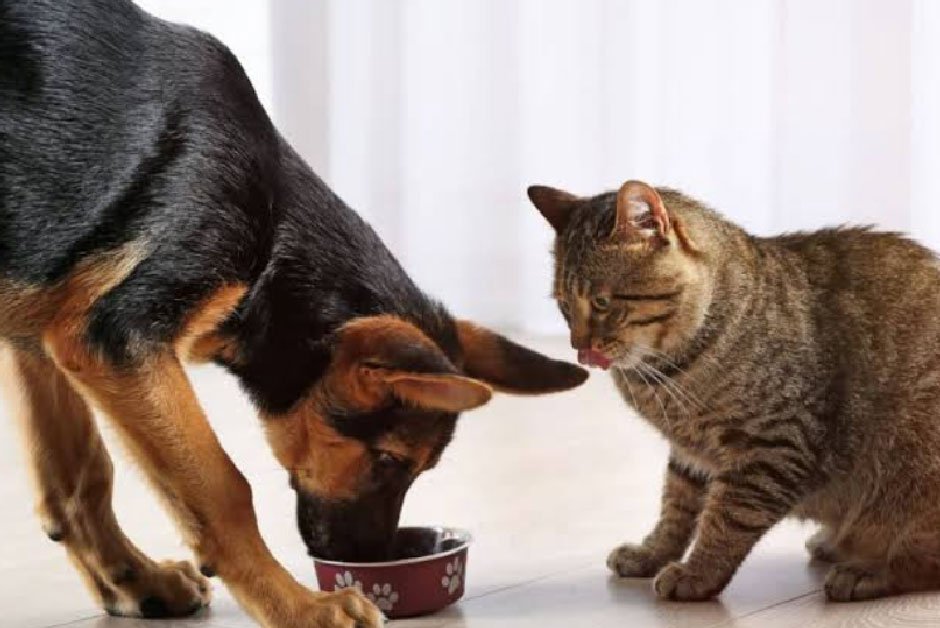
This is where the Maine Coon’s bowl becomes a real issue. Cats are obligate carnivores, and cat food and dog food are formulated differently. Cat food carries a lot more meat-based protein, and many dogs find it hard to resist. A pup that keeps sneaking cat food during a diet trial is eating ingredients the trial doesn’t account for, which can make the results harder to read.
If you’d like a deeper look at causes, the diagnostic workup and management options, this overview of inflammatory bowel disease in dogs covers the condition in more detail.
To keep the cat’s food out of the picture:
- Feed the cat up high. A counter, a sturdy shelf or a wide cat tree platform all work. A large cat needs a surface that’s stable and roomy, not a narrow ledge.
- Use a separate area. If possible, offer the cat meals there and remove leftovers afterward.
- Plan for all-day feeders. If the cat needs access to food throughout the day, use a feeding setup your pup cannot reach.
- Seal the bag. Store cat food in a closed container on a high shelf or in a cupboard the dog can’t open.
Cat doors need a quick check too. A Maine Coon needs a generous opening, and a small or medium dog may fit through the same gap. Measure both animals before you buy one.
Keep the Litter Box Off-Limits
If a dog eats from the litter box, they may swallow fecal material and some litter along with it. Depending on the type and amount of litter, that can lead to digestive trouble of its own, which a dog with a sensitive gut doesn’t need.
The challenge with a Maine Coon is keeping the box dog-proof while still comfortable for a large cat:
- Scoop at least once a day, more often if your pup keeps checking the box.
- Choose a box with enough room for a big cat to turn around and dig. A cramped covered box may keep the dog out but put the cat off using it.
- Place the box in a room behind a gate or a pass-through door sized for the cat, and test it with the cat before relying on it.
- Try a top-entry box only if your cat is comfortable climbing in and out of it.
Keep a Simple Symptom Log
Because IBD signs can be intermittent, a written log often tells your vet more than memory does. A notes app or a notebook on the counter works fine. Track:
- stool quality and how often your pup goes
- any vomiting, and roughly when it happened
- appetite, including meals skipped or finished unusually fast
- body weight, checked every couple of weeks or as your vet suggests
- anything eaten outside the plan, cat food included
In a home with a cat, it isn’t always obvious who vomited. If you find something on the floor and can’t tell, write that down too. An honest “unknown” is more useful than a guess.
Treatment Plans and Household Routines
Management depends on the dog and on how severe the inflammation is. Cornell describes a range of options:
- deworming
- diet trials
- probiotics, which may support gastrointestinal management in some cases, though suitability varies by product and by dog
- vitamin B12 when levels are low
- antibiotics in selected cases, when the veterinarian determines they’re appropriate
- medications that protect the stomach or settle nausea
- immunosuppressive drugs such as prednisone for more severe cases
Some dogs need therapy for months or longer.
The outlook varies too. Per Cornell, dogs with mild to moderate IBD that respond to diet, with or without antibiotics, have a good prognosis. Dogs with more severe disease may need longer-term medication.
A shared home adds a few routine habits worth building:
- Store medications securely. Keep your pup’s pills, and any supplements your vet recommends, in a closed cupboard out of reach of a curious cat who can climb.
- Give meds at set times. A consistent schedule is easier to keep when both pets have their own feeding times.
- Keep both pets’ plans separate. Don’t share foods, chews or supplements between the dog and the cat unless your vet says it’s fine.
- Protect quiet space. Give your pup a bed or crate in a corner the cat doesn’t use as a hallway, and give the cat high perches and a room of its own. Each animal can rest without being on alert.
When to Call the Vet
Call the vet about any of these, whether or not your pup has a diagnosis yet:
- ongoing diarrhea or vomiting
- weight loss you can’t explain
- a change in appetite that sticks around
If your pup eats a large amount of cat food, contact your veterinarian for advice, especially while your pup is being evaluated or managed for a gastrointestinal condition. Any of the following warrants prompt veterinary attention, and the AKC lists them among the signs of pancreatitis:
- repeated vomiting
- abdominal pain
- unusual lethargy
- a swollen abdomen
And at every checkup, mention the cat. It can change which foods and plans make sense for your pup.
A Quick Takeaway
You can start on most of this today:
- Move the cat’s food somewhere stable that the dog can’t reach, especially during a diet trial.
- Scoop the litter box daily and check that the dog can’t get to it, while the cat still can.
- Tell your vet if your pup has had access to the litter box or the cat’s bowl.
- Start a symptom log covering stool, vomiting, appetite, weight and anything eaten off-plan.
- Keep medications secured and both pets’ foods and supplements separate.
IBD can take patience to sort out. A few changes to how the house is set up can make your vet’s plan easier to follow, and they keep the Maine Coon comfortable too.