I still remember the exact moment I realized my Golden Retriever, Max, had a serious oral health problem. Max was three years old—happy, athletic, and full of energy—but his breath had gradually shifted from typical “doggy breath” into something undeniably foul. I foolishly assumed that giving him daily kibble and the occasional marrow bone was enough to keep his mouth clean. It wasn’t until our annual veterinary checkup that the vet lifted his lips and pointed out thick, yellow calculus along his back upper molars and inflamed, red gums.
Hearing that Max was already showing signs of Stage 2 periodontal disease was a massive wake-up call. I was faced with a choice: commit to a daily oral hygiene routine at home or subject Max to frequent professional cleanings under anesthesia and astronomical veterinary bills down the road.
According to guidelines published by the American Animal Hospital Association (AAHA), over 80% of dogs develop some form of periodontal disease by three years of age. If you are struggling with bad breath or an uncooperative pup, you are not alone. Brushing your dog’s teeth does not have to be a daily battle—it can become a stress-free bonding ritual when approached step-by-step.
The Science Behind Canine Oral Health: Why Prevention Cannot Wait
Plaque to Tartar in 48 Hours
Every time your dog eats, microscopic food particles, saliva, and naturally occurring oral bacteria combine to form a soft, sticky film known as plaque. Within 24 to 48 hours, if this plaque is not mechanically removed by brushing, it reacts with calcium and minerals in your dog’s saliva, mineralizing into rock-hard tartar (calculus). Once tartar forms, home brushing alone cannot remove it—it requires professional scaling under anesthesia.
Beyond Bad Breath: Systemic Health Risks
Dental neglect extends far beyond unpleasant breath. Untreated periodontal disease causes the gums to recede, exposing sensitive tooth roots and creating pockets where anaerobic bacteria thrive. Over time, bacteria enter the bloodstream through inflamed gum tissue, potentially traveling to vital organs like the heart, liver, and kidneys.
Furthermore, severe infection can compromise the surrounding jawbone. If left unmanaged, chronic dental neglect can lead to painful endodontic infections and conditions like a dog tooth abscess, which often requires surgical tooth extraction or intensive antibiotic therapy to resolve.
The Essential Dog Dental Kit: Choosing the Right Tools
Before starting your dog’s toothbrushing journey, having the right equipment is critical for both safety and effectiveness.
| Product Category | Recommended Type | Key Features & Benefits |
| Toothpaste | Enzymatic Dog Toothpaste | Formulated with natural enzymes (like glucose oxidase) that break down plaque without foaming or rinsing. Safe to swallow. Flavored with poultry, peanut butter, or beef. |
| Starter Brush | Silicone Finger Brush | Slips over your index finger. Offers maximum tactile control and soft bristles. Ideal for puppies, small breeds, and beginners. |
| Advanced Brush | Dual-Headed Angled Brush | Features long handles and two angled head sizes. Easily reaches back molars and upper premolars in medium-to-large dogs. |
CRITICAL SAFETY WARNING:
Never use human toothpaste, baking soda, or salt on your dog. Human toothpaste contains foaming agents (like Sodium Lauryl Sulfate), high fluoride levels, and artificial sweeteners like Xylitol, which is extremely toxic to dogs and can cause fatal hypoglycemia and acute liver failure even in tiny amounts.
Step-by-Step Guide: How to Brush Your Dog’s Teeth Without Stress
The secret to successful toothbrushing is gradual desensitization. Do not rush all four steps into a single day; progress through them over 1 to 2 weeks based on your dog’s comfort level.
Step 1: Taste Testing & Positive Association (Days 1–3)
Place a small dab of flavored enzymatic toothpaste on the tip of your finger. Allow your dog to sniff and lick it off naturally. Do not attempt to touch their mouth or introduce a brush yet. Enthusiastically praise them when they lick the paste. Repeat this once daily for 3 days until your dog gets excited at the sight of the toothpaste tube.
Step 2: Lip Lifting & Tooth Touching (Days 4–7)
While your dog is relaxed, gently lift their upper lip for 2–3 seconds to expose their canines and premolars. Use your index finger (wrapped in soft gauze or wearing a silicone finger brush) dipped in toothpaste to gently rub the front teeth in a slow side-to-side motion. Keep sessions under 15 seconds and follow immediately with a favorite treat or play session.
Step 3: The 45-Degree Circular Brushing Technique (Days 8+)
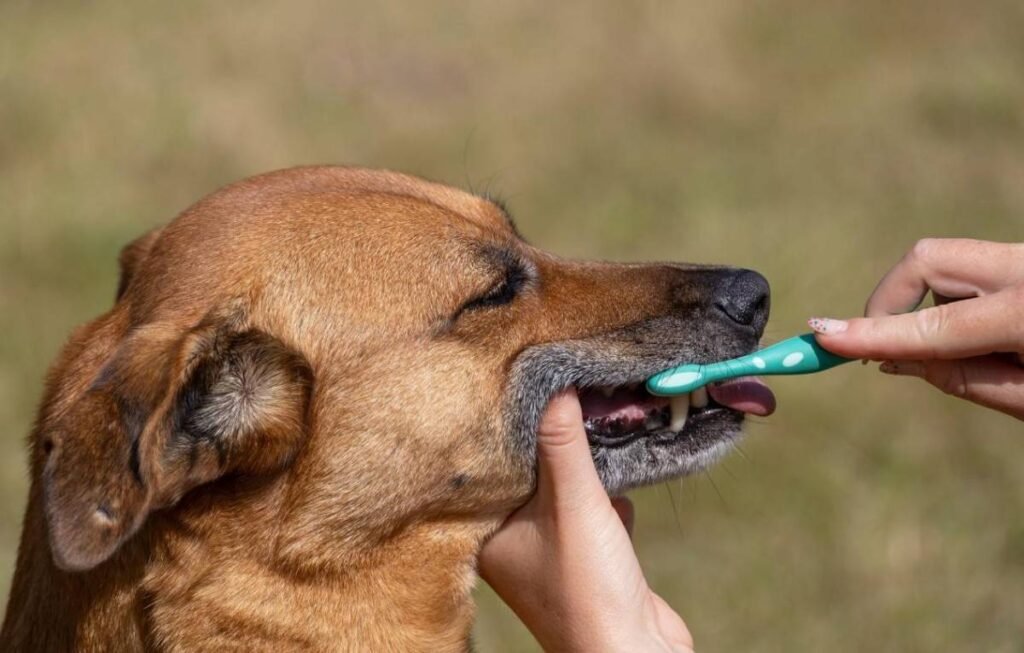
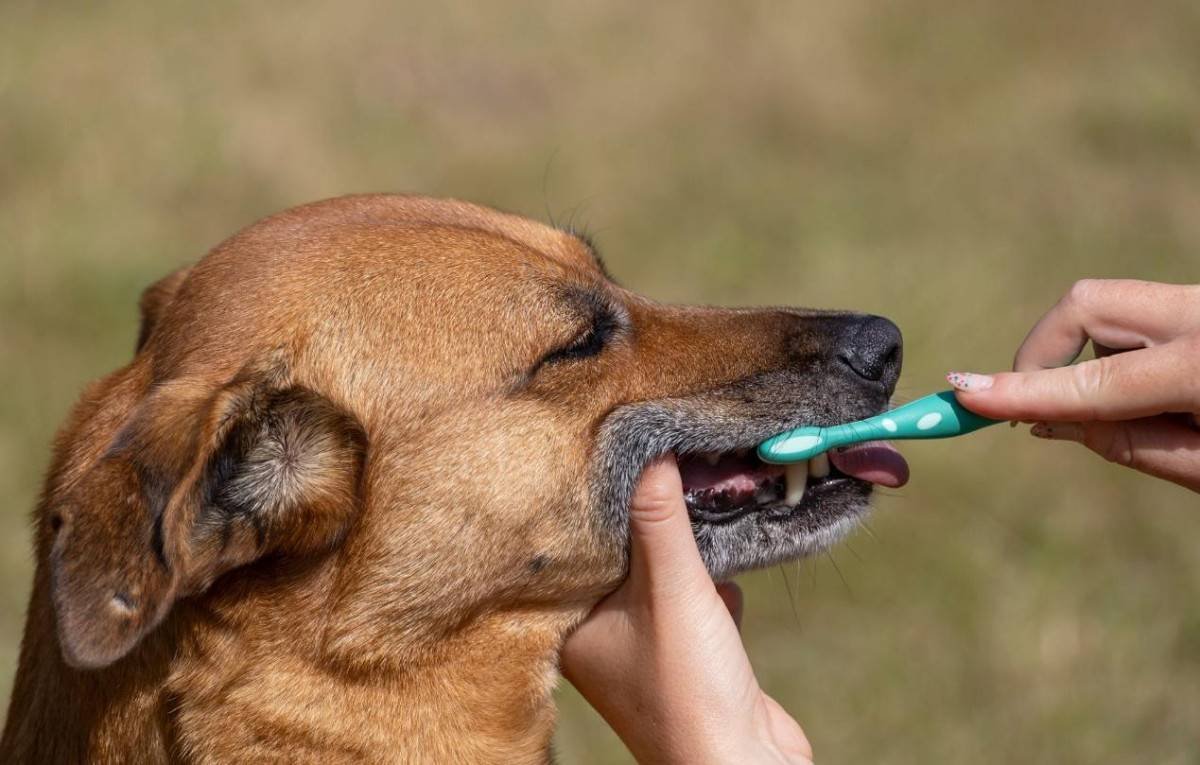
Apply a pea-sized amount of enzymatic toothpaste onto a proper dog toothbrush. Lift the upper lip and place the bristles at a 45-degree angle against the gumline. Move the brush in small, gentle circular motions, focusing on the outer surfaces of the upper teeth where plaque accumulates fastest.
Blogger Pro-Tip: You do not need to pry your dog’s mouth open to brush the inside surfaces—a dog’s rough tongue naturally cleans the inner tooth surfaces. Focus 90% of your effort on the outer cheek-side surfaces.
Step 4: Routine Building & High-Value Rewards
Gradually increase brushing time until you spend roughly 30 to 60 seconds total across both sides of the mouth. Always end every session on a joyful note with verbal praise and a high-value, non-starchy treat or play session. Consistency turns toothbrushing from a chore into a predictable, fun daily routine.
Frequency and Maintenance Routine: What Experts Recommend
According to guidelines established by the Veterinary Oral Health Council (VOHC) and VCA Animal Hospitals, the gold standard for canine oral care is daily brushing. Plaque hardens into calculus in as little as 24 to 48 hours, meaning brushing once a week is insufficient to prevent tartar accumulation.
If daily brushing is impossible with a busy schedule, aim for a minimum of 3 to 4 sessions per week. Consistency at this frequency still significantly reduces bacterial burden and slows down gingivitis progression.
Alternative & Supplemental Dental Products: Do They Work?
While manual brushing remains the single most effective method for plaque removal, supplemental products can help bolster your dog’s oral defense:
- VOHC-Approved Dental Chews: Specially textured chews create mechanical scraping action as your dog chews. Always verify that products carry the official VOHC Seal of Acceptance for plaque or tartar reduction.
- Enzymatic Water Additives: Tasteless additives mixed into drinking water help inhibit oral bacterial growth between brushing sessions.
- Dental Wipes: Textured cloth wipes wrapped around your finger offer a great intermediate option for dogs that reject traditional bristles.
FAQ
Q1: What should I do if my dog’s gums bleed while brushing?
Direct Answer: Mild, pinpoint bleeding during the first few days of brushing often indicates mild gingivitis (gum inflammation). Continue gentle brushing with soft bristles. However, if bleeding is heavy, persistent, or accompanied by foul pus or swelling, stop brushing immediately and consult your veterinarian, as this may signal advanced periodontal disease or a root infection.
Q2: Can I use coconut oil or baking soda to brush my dog’s teeth?
Direct Answer: No. Baking soda contains high levels of sodium that can disrupt your dog’s electrolyte balance and cause stomach distress if swallowed. While coconut oil is non-toxic and contains mild lauric acid, it lacks the specialized enzymatic agents found in veterinary toothpastes that actively break down plaque biofilms.
Q3: Is professional dental cleaning still necessary if I brush my dog’s teeth daily?
Direct Answer: Yes. While daily brushing dramatically reduces plaque build-up above the gumline, it cannot clean deep subgingival pockets where bacteria hide. Periodic professional veterinary cleanings under anesthesia allow vets to clean beneath the gums, take dental X-rays, and address hidden pathology before it causes permanent bone loss.
Q4: How do I clean teeth for an aggressive or highly anxious dog?
Direct Answer: Never force a toothbrush into the mouth of a fearful, reactive, or aggressive dog, as this risks bite injuries and severe distress. Instead, consult a certified professional dog trainer or veterinary behaviorist for a slow desensitization plan. In the interim, rely on VOHC-accepted dental chews, diets, or water additives.
Conclusion & Action Plan
Taking care of your dog’s teeth is one of the most impactful investments you can make in their long-term health, comfort, and longevity. By introducing enzymatic toothpaste slowly, keeping sessions positive, and aiming for consistent weekly brushing, you can protect your companion from painful dental disease and keep their breath fresh.
Remember: start small, stay patient, and celebrate every small victory along the way!