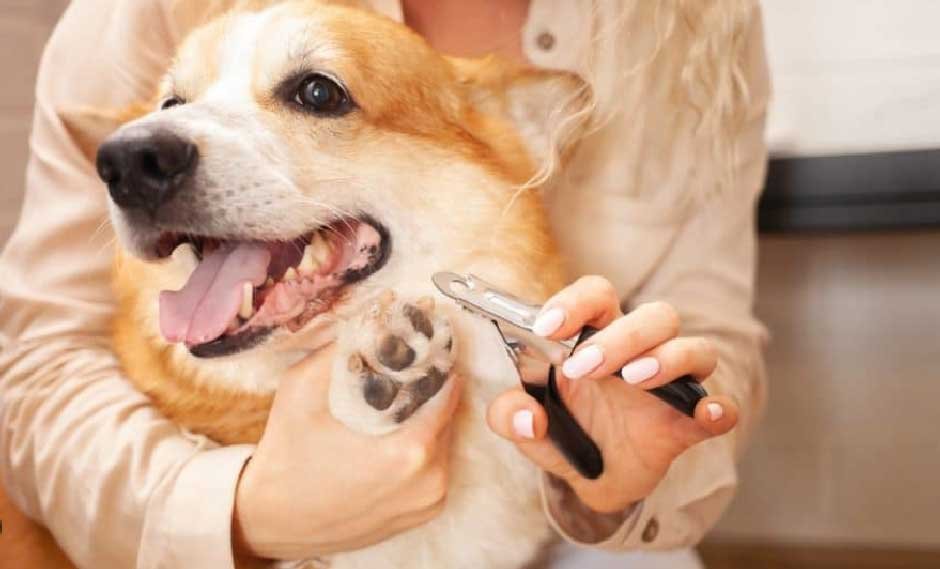
Most dogs need their nails trimmed about every 3 to 4 weeks, but the better rule is physical: the nails should not click on hard floors or touch the ground when the dog is standing squarely.
That schedule changes fast. A dog who walks daily on concrete may need only light shaping every month or two, while an indoor dog, senior dog, puppy, or small breed may need a trim every 2 weeks.
The Short Answer: Check Weekly, Trim Every 2 to 4 Weeks
A weekly nail check catches overgrowth before it becomes a problem, and most dogs do well with trimming every 2 to 4 weeks. Dogs with fast-growing nails or soft-surface lifestyles may need shorter intervals.
For a normal maintenance schedule, start with every 3 weeks. If the nails still look short and quiet on the floor at week three, stretch to 4 weeks; if you hear clicking after 10 days, move closer to every 2 weeks.
| Dog situation | Typical trimming interval | What to watch |
|---|---|---|
| Active dog walking on pavement | Every 4 to 8 weeks | Outer nails may still wear unevenly |
| Mostly indoor or yard-only dog | Every 2 to 4 weeks | Clicking on tile or wood floors |
| Small dog often carried | Every 2 to 3 weeks | Nails curling before they look dramatic |
| Senior dog or low-activity dog | Every 2 to 4 weeks | Posture changes, slipping, reduced walking |
| Dog with overgrown nails | Small trims weekly | Long quick, sensitivity, uneven nail shape |
VCA Animal Hospitals explains that long nails can change how a dog places weight through the feet, and ASPCA Pet Insurance notes that nail growth differs between dogs even within the same breed. That is why a calendar helps, but the floor test matters more.
Signs Your Dog Needs a Nail Trim Now
A dog usually needs a trim when the nails click on the floor, touch the ground while standing, curve toward the paw pad, or snag on bedding. Dewclaws need separate checks because they do not wear down naturally.
The clicking sound is the easiest household clue. On a quiet kitchen floor, you can hear it before you notice the shape, a tiny tap-tap that gets louder as the nail starts taking pressure before the paw pad does.
- Nails make steady clicking sounds on wood, laminate, or tile.
- The tips touch the floor when your dog is standing still.
- Your dog slips more often on smooth floors.
- The nail curves sideways or downward toward the paw pad.
- A dewclaw looks hooked, thick, or easy to catch on fabric.
- Your dog avoids having a paw handled, especially after a nail catches.
Honestly, I would rather trim a tiny amount too often than wait until a nail looks obviously long. Once the quick has grown forward, each trim becomes more cautious, slower, and more stressful for everyone involved.
Why One Dog Needs Weekly Trims and Another Can Wait

Nail growth depends on activity, surface, age, paw shape, and individual biology. Pavement wears nails down, while carpet, grass, soil, and being carried do very little filing.
This is where things get tricky. Two dogs can live in the same house and still need different schedules, especially if one charges down sidewalks and the other mostly patrols the couch, the yard, and the food bowl.
Surface and Activity
Concrete and asphalt act like a mild nail file during walks. Grass and carpet are easier on joints, but they barely shorten nails, so indoor dogs can grow long nails even when they seem active.
By week three, the difference can be obvious. The sidewalk dog may only need a grinder touch-up on the side nails, while the yard dog has long front nails that click before breakfast.
Age and Body Condition
Puppies often need frequent, tiny trims because their nails are sharp and they should learn paw handling early. Senior dogs may need more frequent trimming because they walk less, shift weight differently, or drag a paw slightly.
If your dog has arthritis, a history of paw injuries, or trouble standing still, ask your veterinarian or groomer for a schedule. Long nails can make footing worse, but forcing a painful position can make nail care harder next time.
Breed, Nail Type, and the Quick
Dark nails are harder because the quick is not visible from the outside. Clear nails are easier to judge, although even clear nails deserve slow trimming rather than one confident, oversized cut.
The quick is the living tissue inside the nail. If nails stay long for months, the quick can extend forward, which means the safe cutting zone becomes shorter until you gradually work the nail back.
Your Dog’s Nail-Cutting Schedule
The most reliable schedule comes from checking nails once a week for a month, then choosing the shortest interval that keeps them off the floor. Start conservative and adjust from evidence, not guesswork.
If you are asking how often cut dog nails should happen in a normal home, this tracking month gives you a cleaner answer than copying another dog’s routine.
- Week 1: Look at each nail while your dog stands on a hard floor. Note whether the tips touch the ground.
- Week 2: Listen for clicking and check dewclaws. If nails are already noisy, trim or grind a little.
- Week 3: If the nails still look tidy, wait a few more days. If they touch the floor, make week three your normal trim point.
- Week 4: If the nails are still quiet and short, a 4-week schedule may suit your dog.
- After the first month: Put the interval on your calendar, then keep the weekly visual check.
For many homes, the sweet spot is not a full nail-cutting session every week. It is a 20-second paw check every Sunday and a real trim when the nails start telling on themselves.
“I feel like I am clipping them every 3-4 weeks is that normal or excessive? Also any recs for good nail clippers?”
– r/DogAdvice, June 2025
That question is common because 3 to 4 weeks feels frequent until you realize healthy nail care is supposed to be boring. Small, regular trims prevent the dramatic sessions that make dogs hate the clippers.
If the Nails Are Already Too Long
Overgrown nails usually need small, repeated trims rather than one aggressive cut. Trim or grind a little once a week until the quick recedes and the nail no longer touches the ground.
Do not try to fix months of growth in one sitting. That is how people hit the quick, create bleeding, and accidentally teach the dog that nail tools are bad news.
A grinder can help because it removes nail gradually and leaves a smoother edge. Clippers are faster, but they require a clearer sense of where the quick is, especially on black nails.
How Much to Cut Each Time
Take off a thin sliver at a time. Stop when you see a pale oval or darker center developing inside the cut surface, because that usually means you are getting close to the quick.
If your dog gets tense after one paw, stop there. One calm paw today beats four rushed paws and a wrestling match under the dining table.
When to Use a Groomer or Veterinarian
Use a groomer or veterinarian if the nails are curling into the pads, the dog panics, there is bleeding, or you cannot tell where the quick is. Professional help is also sensible for dogs with medical pain or bite risk.
PetMD’s dog nail trimming guidance emphasizes taking small amounts and having styptic powder ready in case of bleeding. That is a small item, but it changes the whole mood when a nick happens.
Clipper or Grinder: Which Fits Your Schedule?
Clippers work best for quick maintenance cuts, while grinders suit dogs that need frequent shaping or have dark nails. Many owners use both: clip length first, then smooth sharp edges.
| Tool | Best for | Watch-outs |
|---|---|---|
| Scissor-style clippers | Small to medium dogs, routine trims | Dull blades crush instead of cutting cleanly |
| Guillotine clippers | Some small dogs with thin nails | Awkward angle on thick or curved nails |
| Rotary grinder | Dark nails, anxious owners, smoothing edges | Noise and vibration need slow introduction |
| Professional trim | Fearful dogs, overgrown nails, medical concerns | Still needs a home maintenance schedule |
If you use a grinder, introduce the sound before touching the nail. Turn it on across the room, feed a treat, turn it off, and repeat until the noise is less suspicious.
A Safe Routine for Cutting Dog Nails at Home
A safe nail session is short, well-lit, and prepared before the dog arrives. Use sharp tools, trim tiny amounts, reward often, and keep styptic powder within reach.
- Pick a calm time, not right after play or during household chaos.
- Handle each paw for a few seconds before bringing out the tool.
- Trim only the hooked tip or a small sliver from each nail.
- Pause after every nail or every paw if your dog needs it.
- Check dewclaws before you finish.
- Reward generously, even if you only trimmed one nail.
Good light matters more than people think. A shadow across the nail can make the quick harder to judge, and that is exactly when a confident cut becomes a regrettable one.
For a dog who already dislikes nail trims, split the job. Front paws one day, back paws another day, dewclaws during a separate quiet moment.
What If You Cut the Quick?
If you cut the quick, stay calm, apply styptic powder or a clean compress, and keep gentle pressure until bleeding slows. Call a veterinarian if bleeding continues or the nail looks torn.
It looks worse than it usually is. A quick nick can bleed dramatically because the nail has blood supply, but panic makes the next session harder for the dog.
Skip the rest of the nails that day unless your dog is completely relaxed. Clean the area, keep the paw from getting dirty, and restart with a much smaller trim next time.
FAQ
How often cut dog nails for most dogs?
Most dogs need nail cutting every 3 to 4 weeks, with weekly checks to catch faster growth. Some dogs need trims every 2 weeks, while pavement-active dogs may go longer.
What is the simplest answer for how often cut dog nails?
The simplest answer is every 3 to 4 weeks for many dogs, then adjust by clicking, ground contact, activity level, and dewclaw growth.
Is every 2 weeks too often to trim dog nails?
Every 2 weeks is not too often if you trim only small amounts and avoid the quick. It is often the right schedule for indoor dogs, small dogs, and dogs with fast-growing nails.
Should dog nails touch the floor?
Dog nails should generally not touch the floor when the dog is standing naturally. If the nails click or press into the floor, they are probably ready for a trim.
How often should dewclaws be cut?
Dewclaws should be checked weekly and trimmed whenever they start to curve or snag. Because they do not touch the ground, they can overgrow even when the other nails look fine.
Can walking on pavement replace nail trimming?
Walking on pavement can reduce trimming frequency, but it rarely replaces nail checks completely. Some nails wear unevenly, and dewclaws still need manual trimming.
The Rule I Would Use
Check once a week. Trim before you hear clicking. For most dogs, that lands at every 2 to 4 weeks, and it keeps nail care small enough that it never turns into a major event.
Small trims win.