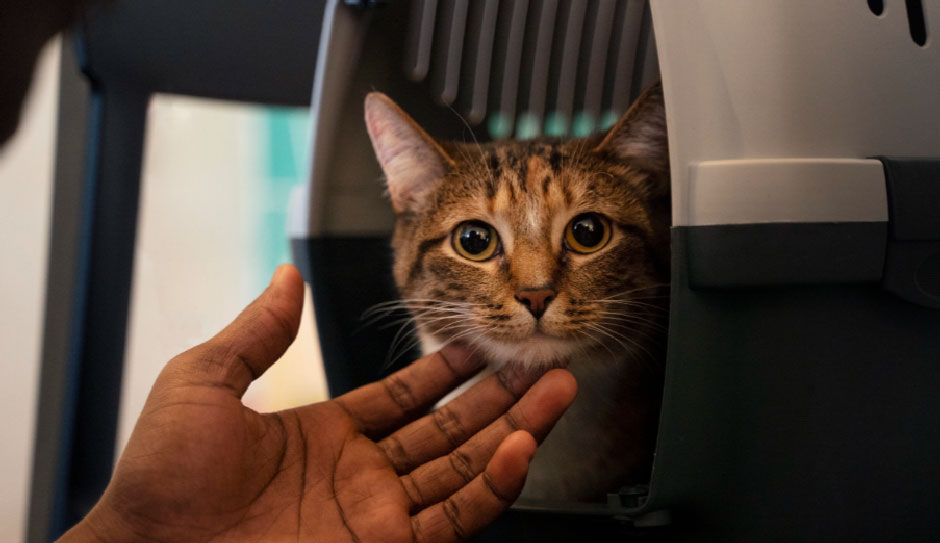
Cats are creatures of habit. They like their own territory, their own routine and their own litter box, which is exactly why a cross-country move can be so hard on them. Professional pet transporters move cats all the time, and the tips below come from what consistently works on long trips.
Start preparing weeks ahead
Bring the carrier out early and leave it open in a room your cat likes. Put a soft blanket and a few treats inside so it becomes a normal place to nap rather than a sign of a vet visit. A cat that walks into its carrier on its own is a much calmer traveler on moving day.
Visit the vet before you go
Ask your vet for an exam, a copy of vaccination records and any health certificate your new state requires. This is also a good time to talk about motion sickness or anxiety. Never give a sedative unless your vet prescribes it for travel, since some sedatives can affect breathing and balance.
Microchip and update your contact details
If your cat is not microchipped, have it done before the move. If it already is, update the registry with your new address and cell number. Add an ID tag to a breakaway collar as a second layer of protection.
Choose the right way to travel
So how do you move cats across country without a stressful flight? Driving yourself works if you can plan cat-friendly hotels and keep the cat secured in its carrier the whole time. For owners who are flying, working through the move or managing several pets, a professional cat transport service is often easier. Ground transport keeps the cat in one climate-controlled vehicle with a driver who handles feeding, water and litter breaks.
What pros do to keep cats calm on the road
- Keep the cat in a secure carrier or crate with a small litter area when space allows
- Use familiar bedding that smells like home
- Keep the vehicle quiet, with steady temperatures and minimal handling
- Offer water at every stop and small meals rather than large ones
- Never open a carrier door outside a closed vehicle or room
These habits sound simple, but they make a big difference. Most escapes happen at rest stops or hotel doors, not while the vehicle is moving.
Settling in at the new home
When you arrive, set up one quiet room with the litter box, food, water, a hiding spot and the carrier. Let the cat explore that room first before opening up the rest of the house. Keep doors and windows closed for the first few weeks, since a stressed cat may try to bolt. Find a local vet early so you are ready if anything comes up.
If you have more than one cat, keep each in its own carrier unless they are bonded and used to sharing space. Separate carriers prevent squabbles in a confined space and make it easier to spot if one cat is not eating or drinking. Label each carrier with the cat’s name, your phone number and any medical notes.
Pheromone sprays made for cats can also help some animals settle. Spray the carrier bedding about 15 minutes before your cat goes in, never directly on the cat.
The takeaway
Moving a cat across the country is mostly about reducing change. Keep the carrier familiar, the environment steady and the routine as normal as possible. With good preparation, the right transport choice and a calm first week, most cats adjust to their new home faster than their owners expect.