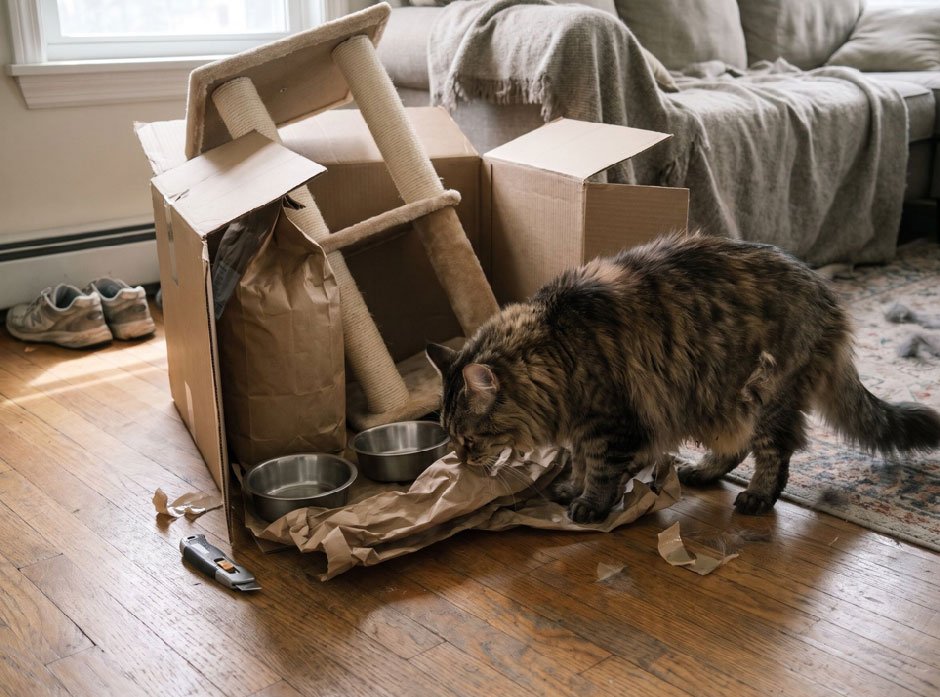
A Maine Coon inspecting a delivery of oversized cat gear, a common sight as most pet supplies are now bought online
A full-grown Maine Coon can top 15 pounds, and everything you buy for one scales up with it. The litter comes in 40-pound bags. The cat tree stands six feet tall. A “standard” litter box looks like a lunch tray under a cat that size.
Most owners end up ordering this stuff online because it’s too bulky to haul home. That works well, until a bag of kibble arrives torn or a tree shows up with a cracked base. This guide covers where your cat’s gear actually comes from, why it’s tricky to ship, and what to check the day it lands on your porch.
Where Maine Coon Supplies Really Come From
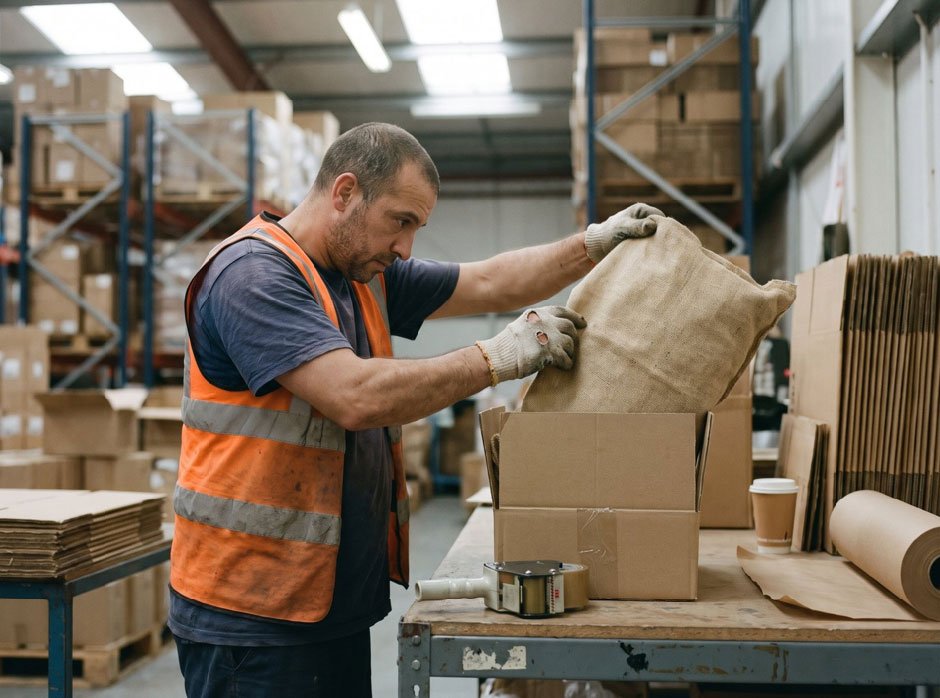
Heavy pet products like litter and kibble are picked and packed by hand in warehouses before they reach your door
Short answer: a warehouse. Behind most online cat orders is a team doing pet supplies order fulfillment: storing stock, picking your items, packing them and handing the box to a carrier. The brand name on the bag may be famous, but the person who boxes it up is often a separate operation entirely.
That matters more for a Maine Coon household than for most. You’re buying the heaviest, bulkiest versions of everything, so the packing step decides whether it arrives intact.
The shift online is bigger than many owners realize. According to NIQ data reported by GlobalPETS, roughly 62% of US pet supplies sales now happen online, while in-store sales have slipped. The American Pet Products Association reports total US pet spending of about $158 billion in its 2025 industry data, and cats are a growing share of it. The AVMA’s 2026 pet ownership data shows around 46 million US homes have at least one cat.
So there’s no shortage of sellers. The real question is which ones pack well.
Why Maine Coon Gear Is Hard to Ship
Carriers don’t bill by weight alone. They also charge by box size, called dimensional weight, and a cat tree is mostly air. Cat trees are bulky enough that they often ship braced or as freight, while litter and kibble are dense enough to split a weak bag.
For you, that shows up three ways:
- Crushed corners, split seams, wobbly tree posts.
- Oversized items sometimes ship separately from the rest of your order.
- Stale food. A bag that sat in a warehouse for months has less time left on its best-by date than you’d expect.
Good sellers double-box heavy bags and brace tall items. Cheap ones ship a 30-pound bag of litter in a thin mailer and hope. If reviews mention torn bags or “arrived damaged,” believe them.
What to Check When Your Order Arrives
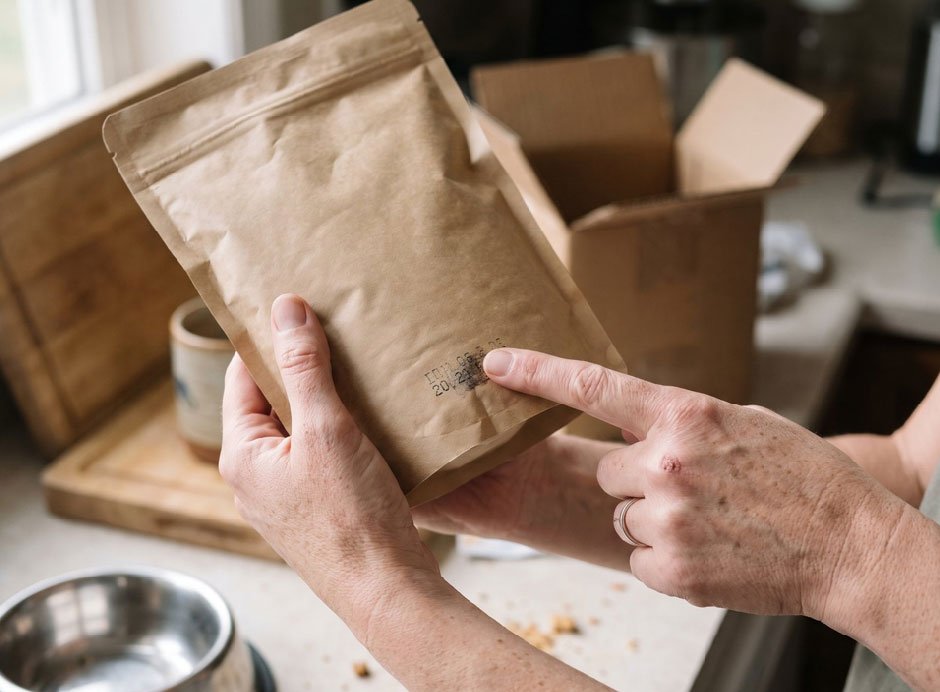
Checking the lot number and best-by date on a bag of cat food before opening it
Open the box before the cat does. Give it two minutes.
- Bag seals and tears. Check seams, especially at the bottom. A small split can let air and moisture in.
- Best-by date. Food should have months left, not weeks. Send it back if it’s close.
- Dents along the seams or swollen lids mean don’t feed it.
- Heavy dust or crushed granules suggest rough handling.
- On a cat tree, count the screws and test the base for wobble before your 15-pounder tests it for you.
Take a photo of anything off, and keep the packaging. The FDA’s advice on reporting pet food complaints is to note the lot number, best-by date, UPC and where you bought it.
That same lot information is how you match a bag against the agency’s recall and advisory list.
If you’re still choosing a formula, our breakdown of what a Maine Coon eats each day is a good place to start before you place an order.
Sizing Up: Oversized Gear Worth Ordering
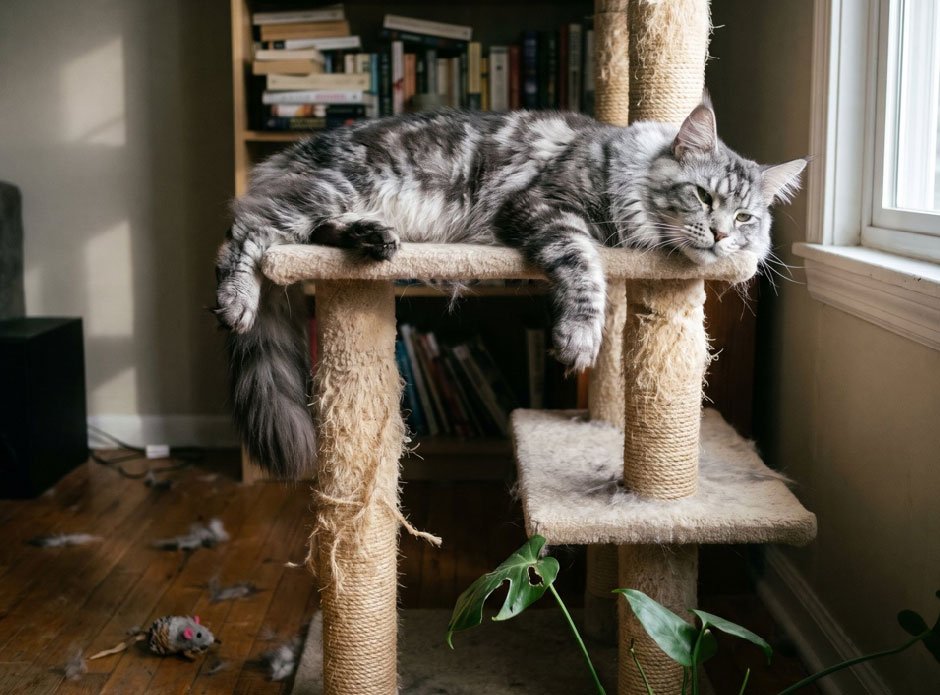
Maine Coons need wide platforms and a heavy base, so tree dimensions matter more than photos
Here’s my firm position: buy from the spec sheet, never the product photo. Listing photos make everything look big enough. Measurements tell the truth.
- Litter box: Go extra-large, with high sides if your cat sprays or digs. A box at least 1.5 times your cat’s body length is a fair target.
- Cat tree: Look for a tree of five to six feet with platforms around 12 by 12 inches and a heavy, wide base. Light trees tip.
- Bowls: Stainless steel or ceramic, wide and shallow. Deep plastic bowls press on whiskers and can irritate chins.
- Scratchers: Tall and sturdy enough that a stretched-out cat doesn’t topple them.
- Grooming: A steel comb handles that dense coat better than a soft brush.
The tradeoff is space and price. Big gear costs more and takes over a room, and you can’t always return a bulky tree cheaply. Check the return policy before you click buy. For the rest of the shopping list, see the basics every new cat needs.
Ordering Smart and Keeping Costs Down
Subscriptions are tempting for litter and food, and they’re fine if you control the quantity. Stockpiling isn’t. A bag of kibble is only a bargain if your cat finishes it before the best-by date. Buy about a month at a time.
Work out portions first. A cat calorie and feeding calculator tells you how fast a bag should disappear, which keeps you from overbuying.
Compare cost per pound, not per bag. Small bags of premium food usually cost noticeably more per pound than large ones, so the bigger bag wins only when freshness allows. For budgeting, owners typically spend about $60 to $100 a month on premium food and $30 to $50 on litter and supplies, based on cost figures in our Maine Coon ownership guide.
The Takeaway
The best Maine Coon gear only helps if it arrives intact and fresh. Order oversized, trust measurements over photos, and give every delivery a quick inspection before you open it. Buy food in amounts your cat will finish well before the date on the bag.
Do that, and the logistics fade into the background, which is exactly where you want them.