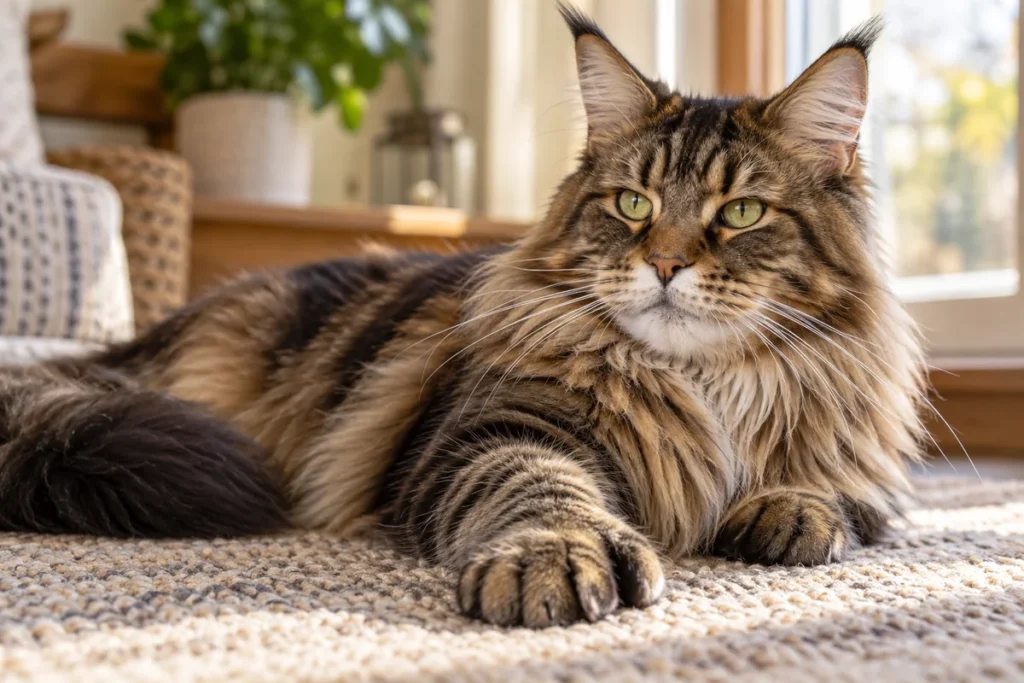
A polydactyl Maine Coon is born with more toes than the five on each front paw and four on each back paw that the Cat Fanciers’ Association breed standard describes. The trait is inherited and, according to veterinary sources quoted by Pawpeds, clinically harmless, but the CFA lists an incorrect number of toes among its disqualifications.
A 2020 gene study found that extra toes in Maine Coons have more than one genetic cause.
What does polydactyl mean in a Maine Coon?
A polydactyl Maine Coon has extra toes on one or more paws. The standard count is 18 toes in total, five on each front paw and four on each back paw, so a cat above that count is polydactyl.
The number of extra toes varies. One r/polydactyl poster described a kitten at the far end of that range:
“…his front paws have almost another paw on it, like where a human would have a thumb he has this 3 toed paw🤣 and his feet are little paddles with 8-9 toe beans.”
– r/polydactyl (7,280 upvotes)
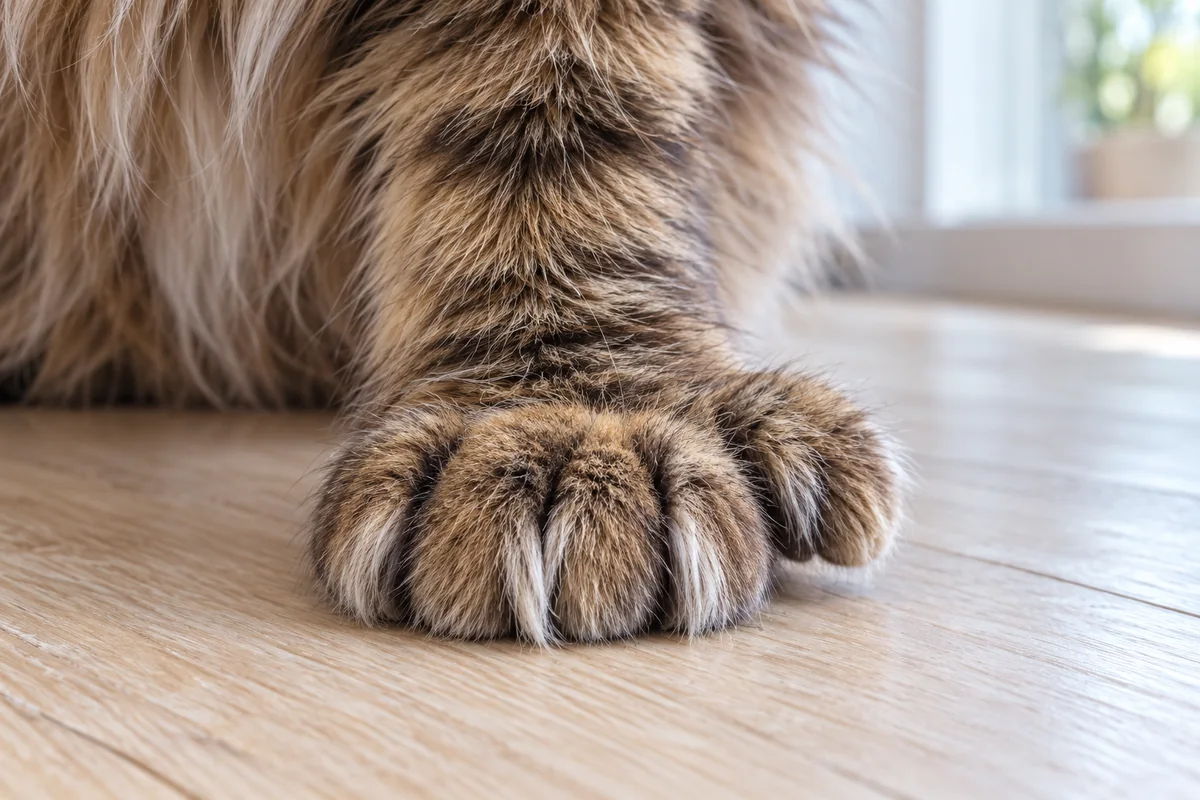
Pawpeds names two paw shapes, mitten paws and patty feet, the second also called snowshoe. It also describes a thumb-like extra digit with three bones instead of the usual two, called a triphalangeal pollex.
Danforth’s work, as summarised by Pawpeds, recorded 25 different toe patterns across 97 polydactyl cats. The commonest, in 28% of them, was six toes on each front paw and five on each back paw.
How do Maine Coons inherit extra toes?
Polydactyly in Maine Coons is inherited as an autosomal dominant trait with incomplete penetrance and variable expressivity, according to a 2020 study in the Journal of Feline Medicine and Surgery. Dominant means one copy of the gene is enough, while incomplete penetrance and variable expressivity mean that carriers do not all show the trait to the same degree.
Hamelin and colleagues genotyped 75 polydactyl and non-polydactyl Maine Coons from Europe, Canada and the USA. The Hw variant of a regulatory sequence called ZRS turned up only in a subset of the polydactyl cats, and the polydactyl cats without it were genetically distinct from those with it. The authors advise breeders to be aware of that heterogeneity.
| Source | How it describes the inheritance |
|---|---|
| Sis and Getty, quoted by Pawpeds | “Inherited as an autosomal single dominant trait” |
| Danforth and Chapman, quoted by Pawpeds | “A simple incomplete dominant gene with variable expression” |
| Hamelin et al., 2020, 75 Maine Coons | Autosomal dominant with incomplete penetrance and variable expressivity, with more than one genetic cause |
The older descriptions treat the trait as one gene. The 2020 study is the one that tested Maine Coon DNA, and it found that a single variant does not explain every polydactyl cat. Pawpeds itself says it located only three scientific studies specific to feline polydactyly.
Is polydactyly harmful to a Maine Coon?
Veterinary sources quoted by Pawpeds treat polydactyly as harmless. Jezyk finds no apparent clinical significance. Towle and Breur write that “Polydactyly is of no clinical importance.”
Pawpeds adds that frequent nail trimming is broadly recommended. None of the sources read measures how extra toes affect walking or joints, so the harmless verdict rests on those quoted statements and not on a measured comparison.
Pawpeds states that the paws it describes possessed normal functionability and sensory reactions. It also cites a higher chance of injury to extra digits that are only partly formed.
Can extra toes signal a health problem?
Pawpeds says the form linked to the Pd gene is harmless, while polydactyly is also a feature of several more serious syndromes that it describes as not associated with that gene.
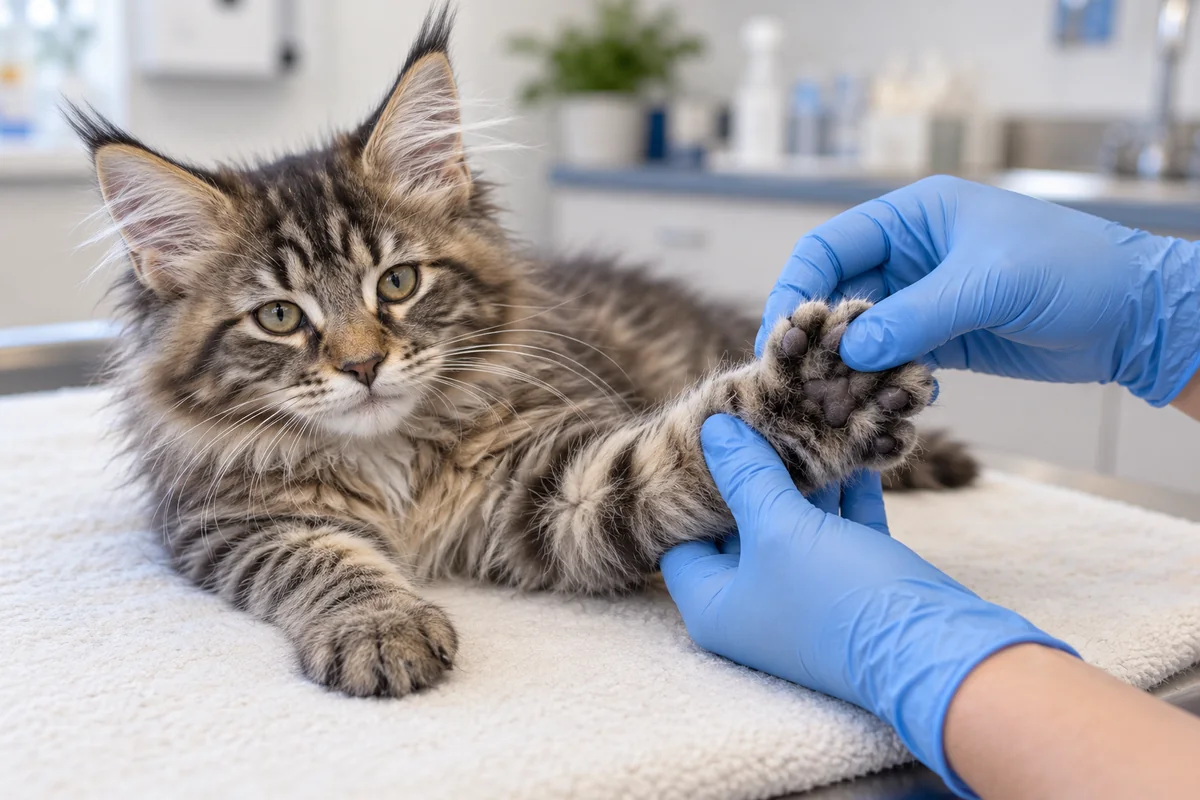
For breeders, the article suggests X-rays of polydactyl cats with no known history and advises against using cats with the triphalangeal thumb as foundation cats. A buyer can ask the same questions in plainer terms: whether the kitten’s feet were checked by a vet, and what the parents’ pedigree shows.
Where does the polydactyl Maine Coon come from?
Accounts of polydactyly in the Maine Coon are documented as far back as 1876, according to Pawpeds, which ties that date to a painting depicting the trait.
Reports claim the trait once accounted for 40% of the breed. Pawpeds says there is no specific data to substantiate those figures, so the number is a claim, not a count.
Can a polydactyl Maine Coon be shown?
Not under the CFA standard. It describes the Maine Coon’s feet as “Five toes in front; four in back” and lists “Incorrect number of toes” as a disqualification, so a cat with extra toes cannot win in a CFA show ring. Pawpeds adds that removing extra digits for show is cosmetic surgery, which the American Veterinary Medical Association deems unethical.
Other registries may treat the trait differently. The TICA breed page could not be read when the sources were checked on 31 October 2026, so its rule is not stated here.
Does a polydactyl Maine Coon cost more?
One Pennsylvania cattery, Mount Haven, lists $3,500 for every polydactyl kitten and for any kitten with blue eyes, read on 31 October 2026.
That is a single price list, not a market average. A cattery can change its prices at any time. Oregon Maine Coon lists a regular colour at $3,000 (read 1 and 14 October 2026), and the other lists, with tax, delivery and rescue fees, are in the Maine Coon price guide. Because the CFA disqualifies the toe count, ask the cattery in writing which registry the kitten is registered with.
Do extra toes prove a cat is a Maine Coon?
No. The Pawpeds article covers polydactyly in cats generally, and it notes the trait occurs in several species and that the Pixie-Bob breed was founded on a polydactyl cat, so extra toes do not identify the breed on their own.
The Maine Coon traits checklist scores the features that do, and the guide to telling if a cat is a Maine Coon mix explains why a checklist can only suggest a breed.
FAQ
Is a polydactyl Maine Coon a separate breed?
No source read describes it as a separate breed. The 2020 study treats polydactyly as a trait inside the Maine Coon breed, and the CFA Maine Coon standard counts the toe number as a disqualification.
Do extra toes make a Maine Coon stumble?
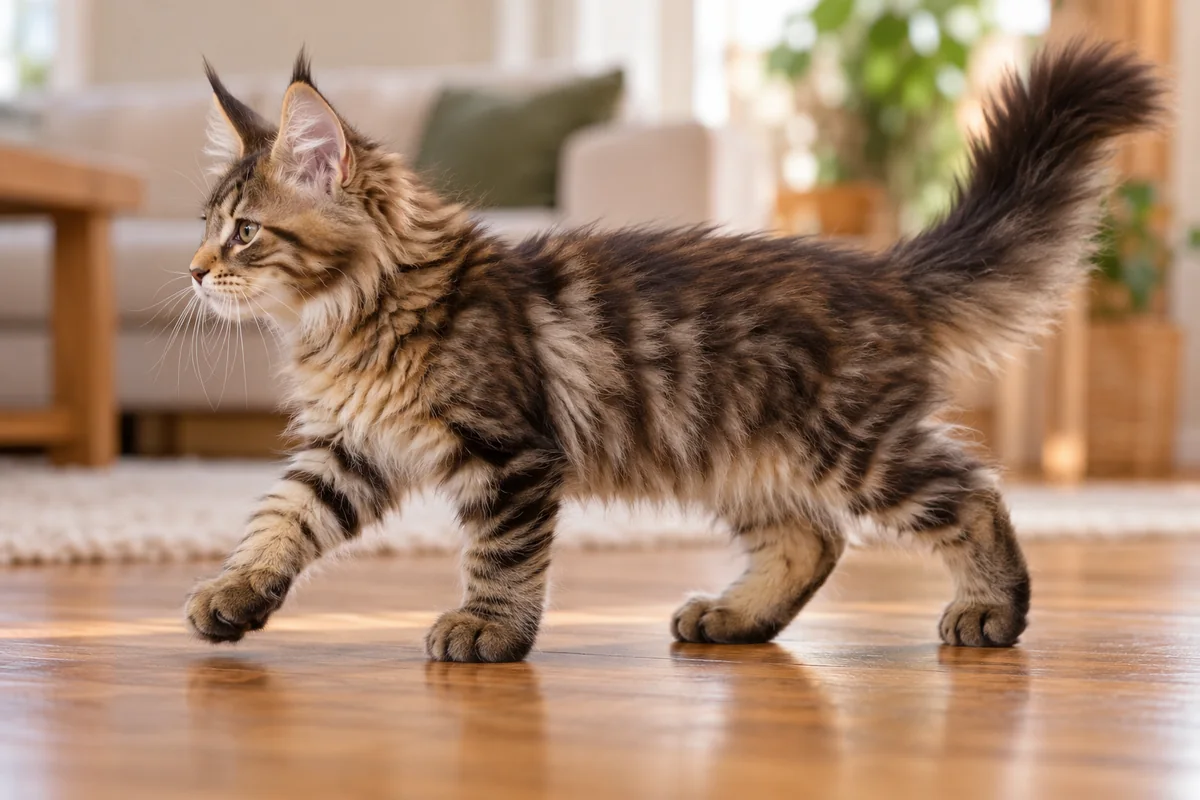
No source read measures it. One r/polydactyl commenter asked the question about the kitten above:
“Does it make em stumble when it walks?”
– r/polydactyl (32 upvotes)
The nearest thing to an answer is the Pawpeds statement that the paws it describes had normal functionability, alongside the veterinary quotes that call the trait of no clinical importance.
Will a polydactyl cat’s kittens have extra toes?
No source read gives odds for a kitten. Incomplete penetrance and variable expressivity, the terms used in the 2020 study, mean that the trait does not appear in the same way in every cat that carries it.
Are polydactyl Maine Coons rare?
No source read counts how many Maine Coons are polydactyl. The 40% figure that circulates for the breed’s past has no supporting data, according to Pawpeds.