The safest way to keep a cat calm in a car is to make the carrier feel predictable before the trip, secure it during the drive, and reduce noise, motion, and visual overload.
Most cats are not being dramatic in the car. They are confined, moving, smelling fuel and road dust, hearing engine vibration, and watching the world slide sideways through glass. That is a lot for an animal that likes control.
Quick Answer: What Actually Calms Most Cats in the Car?
Most cats calm down when they stay in a secure carrier, have familiar bedding, cannot see constant motion, and have practiced short car sessions before the real drive.
If you need the short version, do this: leave the carrier out days ahead, feed treats inside it, line it with a familiar towel, spray a cat pheromone product if your veterinarian approves, cover part of the carrier, and keep the car quiet and cool.
The American Veterinary Medical Association advises giving pets time to get used to car travel and placing a familiar toy or blanket in the carrier. That sounds basic, but it is the difference between a strange box that predicts panic and a small room that smells like home.
The hard truth is that some cats will still complain. Calm does not always mean silence. A cat can meow and still be safely managed.
Why Cats Panic in Cars
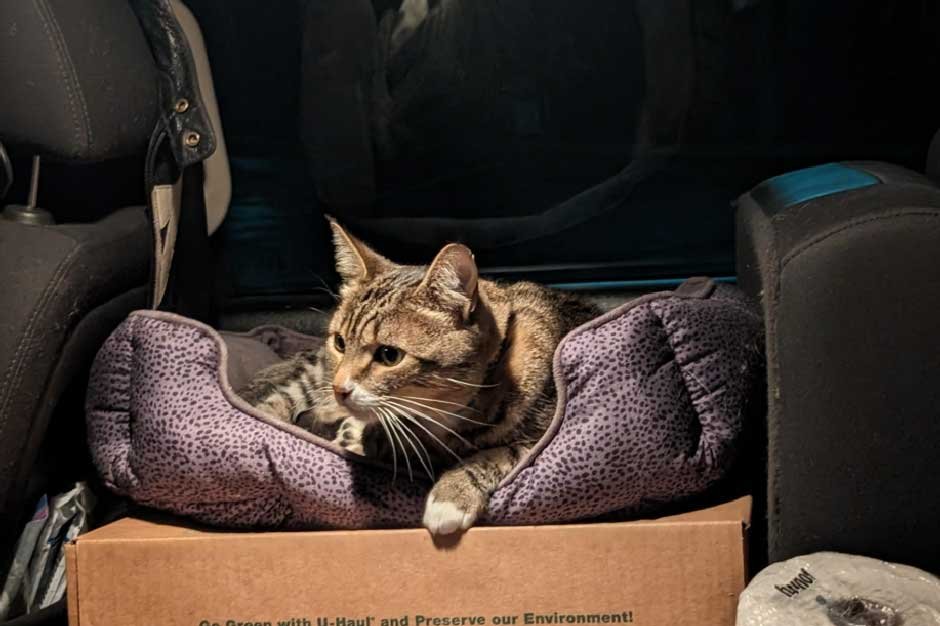
Cats often panic in cars because the ride combines loss of control, unfamiliar motion, engine noise, strange smells, and past memories of vet visits or other stressful handling.
A cat that naps happily on the couch may freeze the second the carrier appears because the carrier has become a warning signal. For many cats, carrier means car, car means clinic, and clinic means being touched by strangers.
Motion adds another layer. The floor vibrates. The carrier shifts slightly. Light flickers through windows. Even a smooth road can feel unstable inside a plastic box.
That is why the answer to how to keep a cat calm in a car starts before the engine turns on. You are not trying to win an argument during the drive. You are changing the meaning of the whole routine.
Start With the Carrier, Not the Car
The carrier should become normal household furniture before travel day, because cats usually resist sudden confinement more than they resist the carrier itself when introduced slowly.
Put the carrier in a quiet room with the door open. Add a soft towel that already smells like your home. Drop treats just inside the entrance, then farther back, and let your cat choose when to walk in.
For a nervous cat, the first win may be sniffing the edge. Fine. The carrier can sit there for a week looking like a weird little side table.
Cat Friendly Homes, an American Association of Feline Practitioners educational project, recommends keeping one cat per carrier and handling the carrier steadily with both arms when moving it. That stable, supported carry matters because a swinging carrier can make a cat feel trapped and off balance.
Choose a Carrier That Fits Like a Den
A good carrier lets your cat stand, turn around, and lie down, but it should not be so roomy that your cat slides during turns.
This is especially relevant for Maine Coons and other large cats. A big cat needs shoulder room and ventilation, yet a giant soft crate can feel less secure if the floor sags or the cat skids when the car stops.
| Carrier Feature | Why It Helps Calm | What to Avoid |
|---|---|---|
| Hard sides or sturdy frame | Reduces wobble and gives the cat a protected den feeling. | Flimsy bags that collapse inward. |
| Top and front openings | Makes loading easier without pushing the cat through one small door. | Single-door carriers that require wrestling. |
| Non-slip bedding | Keeps paws from sliding on plastic during braking. | Loose blankets that bunch under the cat. |
| Good ventilation | Prevents heat buildup while still allowing partial cover. | Fully covered carriers with poor airflow. |
Use a Short Training Plan Before the Real Trip
The best training plan moves in tiny steps: carrier comfort, closed-door practice, stationary car time, short drives, then longer rides with rewards after each calm return.
Start with five quiet minutes near the carrier. Then close the carrier door for a few seconds, give a treat, and open it again. Later, carry the carrier to the car, sit without driving, and go back inside.
Next comes the ridiculous little loop around the block. It may feel too small to matter. It matters.
- Leave the carrier out every day for at least several days.
- Feed treats or part of a meal near the carrier entrance.
- Practice closing the door for short, calm intervals.
- Carry the cat to the parked car and sit for two to five minutes.
- Drive around the block, then return home before your cat is fully overwhelmed.
- Build up to ten, twenty, and thirty minute drives if a longer trip is coming.
Do not save every car ride for the vet. A cat that only travels for needles and thermometers has no reason to believe the car is neutral.
Set Up the Car Like a Low-Stimulation Room
On travel day, lower the sensory load by cooling the car first, keeping music soft, blocking some window motion, and avoiding sharp scents or sudden handling.
Pre-cool or pre-warm the car before bringing your cat outside. Place the carrier on a stable surface, then secure it so it cannot slide. ASPCA guidance on pet travel safety favors a sturdy, well-ventilated carrier secured in the vehicle.
Covering the carrier with a light towel can help many cats because it cuts the rush of visual motion. Leave enough ventilation open, and check that the towel does not trap heat.
Skip perfume, air fresheners, loud podcasts, and sudden stops when possible. The cabin should feel boring. Boring is good.
Where to Put the Carrier in the Car
The carrier should sit where it is stable, shaded, and restrained, because sliding and tipping can turn mild anxiety into panic.
Some vehicles fit a small carrier on the floor behind the front seat. Others work better with the carrier belted on the back seat. The point is not the exact location, but that the carrier cannot launch forward or rotate during a hard brake.
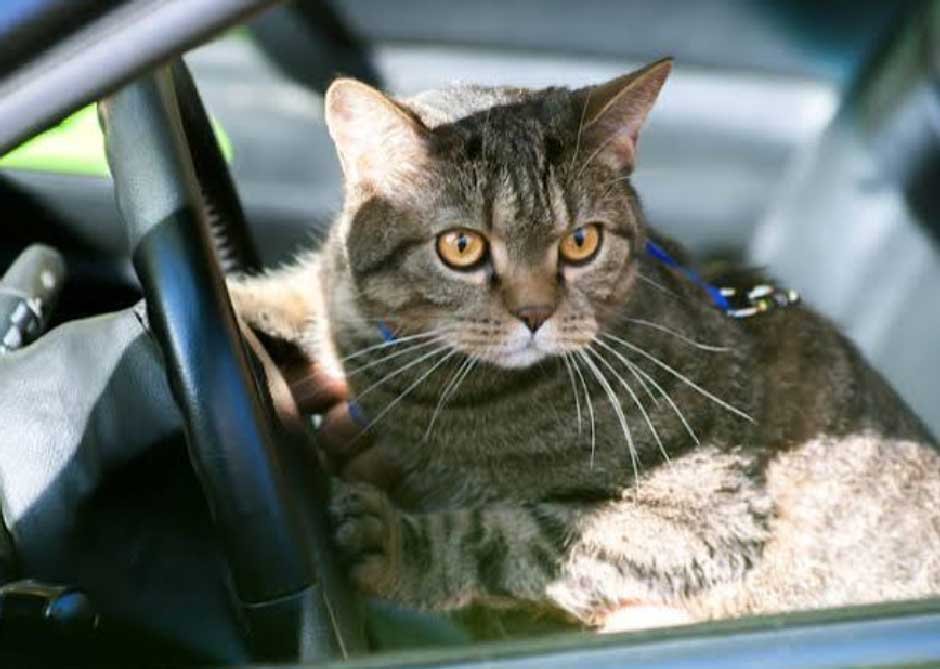
Never let a loose cat ride in the driver area. Even a sweet cat can dive under pedals when scared.
What to Do During the Drive
During the drive, keep your cat contained, speak calmly if it helps, avoid opening the carrier, and watch for distress signs that need a stop or veterinary advice.
Some cats settle after ten or fifteen minutes. Others vocalize in waves. A steady voice may help, but constant fussing can also teach the cat that panic makes the whole car react.
“You cannot. Your cat is signaling that he is uncomfortable and stressed and wants out.”
– r/CatAdvice, September 2025
That blunt comment gets something right: meowing is information, not misbehavior. Answer the information by making the ride safer and less intense, not by letting the cat loose.
Watch for open-mouth breathing, repeated vomiting, collapse, extreme drooling, frantic escape attempts, or a cat that seems weak rather than merely upset. Those signs deserve a call to a veterinarian.
Calming Aids: What Helps, What Needs a Vet
Calming aids can help some cats, but medication, sedatives, supplements, and strong herbal products should be discussed with a veterinarian before the trip begins at home.
Pheromone sprays are popular because they are low effort and may make the carrier smell more familiar. Use them according to label directions, usually before the cat enters the carrier, not sprayed directly on the cat.
For severe travel anxiety, ask your veterinarian about prescription options and trial doses before the real trip. UC Davis Veterinary Medicine travel guidance notes that some cats may travel better with sedation or anti-anxiety medication, but it should be considered carefully and under veterinary direction.
Do not experiment with human sedatives, essential oils, cannabis products, or random calming chews on the morning of a long drive. Cats metabolize substances differently from people, and a sleepy cat is not automatically a safe cat.
| Option | Best Use | Risk Boundary |
|---|---|---|
| Carrier training | Routine trips, vet visits, moves planned ahead. | Needs time, so it is weaker as a same-day fix. |
| Familiar bedding | Most cats, especially scent-sensitive cats. | Use a thin layer so the cat does not overheat. |
| Partial towel cover | Cats startled by passing cars and changing scenery. | Keep airflow open and monitor temperature. |
| Pheromone spray | Mild to moderate travel stress. | Follow label timing and avoid spraying the cat directly. |
| Prescription medication | Severe anxiety, long moves, cats with medical stress risk. | Use only with veterinary guidance and a trial plan. |
Food, Water, and Litter Timing
For most car trips, a lighter pre-trip meal, planned water breaks, and a familiar litter setup reduce nausea, accidents, and stress during travel time in motion.
Ask your veterinarian about fasting if your cat gets carsick or has a medical condition. For ordinary short drives, many owners simply avoid feeding a heavy meal right before leaving.
For long drives, pack water from home, a collapsible bowl, waste bags, paper towels, unscented wipes, and a small litter tray for secure stops or hotel rooms. Keep the carrier closed until the car doors are shut and the cat is in a controlled space.
There is always one odd moment on a road trip where the litter scoop is somehow under the overnight bag. Put the cleanup kit where you can reach it. Future you will be grateful.
Short Vet Visit vs Long Road Trip
A short vet visit needs carrier confidence and a calm handoff, while a long road trip needs rehearsal, supplies, lodging control, and a medication discussion if anxiety is severe.
For a ten-minute vet ride, the goal is clean and quiet: carrier out early, cat loaded without chasing, car cooled, towel cover, direct drive. For a multi-hour move, the plan becomes more like travel logistics.
| Trip Type | Priority | Extra Step |
|---|---|---|
| Vet appointment | Low drama loading and stable carrier handling. | Ask the clinic if you can wait in the car until the room is ready. |
| One-hour errand or visit | Prevent overheating and avoid unnecessary stops. | Practice one or two short drives in the same week. |
| Half-day drive | Motion control, water plan, and stress monitoring. | Pack cleanup supplies and keep the cabin quiet. |
| Cross-country move | Veterinary plan, hotel safety, secure rest-stop routine. | Test the medication or calming plan before departure. |
Mistakes That Make Car Anxiety Worse
The biggest mistakes are chasing the cat into the carrier, letting the cat roam loose, using the car only for vet visits, and trying new sedatives without a vet.
Chasing turns the carrier into a trap. Pulling a cat from under a bed, stuffing them through a narrow door, and then starting the engine is a perfect recipe for a louder next trip.
Letting the cat out may feel kind in the moment. It is risky. A frightened cat can hide under a seat, bolt through an open door, scratch the driver, or wedge near the pedals.
Another mistake is overpacking the carrier with plush bedding. Soft is nice, but the surface still needs grip. A towel that slides on plastic becomes a tiny rug on a polished floor.
Special Notes for Maine Coons and Large Cats
Maine Coons often need larger, sturdier carriers, but they still benefit from enclosed space, non-slip bedding, careful restraint, and a firm floor underneath their body.
A Maine Coon may be too long for a standard budget carrier, especially if the cat cannot turn without curling awkwardly. Measure your cat from nose to base of tail and check shoulder height before buying.
Look for a carrier with a firm floor, wide openings, strong latches, and enough ventilation on multiple sides. If the carrier flexes when you lift it, your cat will feel that instability with every step to the car.
For how to keep a cat calm in a car when the cat is large, stability beats luxury. A roomy carrier that tips and sways is worse than a slightly snug den that stays level.
When to Ask Your Veterinarian Before Driving
Call your veterinarian before travel if your cat has severe anxiety, breathing trouble, heart disease, repeated vomiting, previous medication reactions, or a long move ahead.
Veterinary help is not a last resort for a cat that screams for hours. It can be part of a humane travel plan, especially when the trip is unavoidable.
Ask about motion sickness, anxiety medication, dosing timing, trial runs, and whether your cat’s age or health changes the plan. If medication is prescribed, test it on a quiet day before the trip so you know whether your cat becomes calm, wobbly, agitated, or nauseated.
Not glamorous. Very useful.
A Simple Step-by-Step Plan
A calm car ride comes from a repeatable routine that starts at home and removes surprises before your cat is already stressed inside the carrier.
- Put the carrier out several days before travel.
- Add familiar bedding and occasional treats inside.
- Practice closing the carrier door for short periods.
- Take one or two short practice drives if time allows.
- Prepare the car temperature before loading your cat.
- Secure the carrier so it cannot slide or tip.
- Use a light towel cover if motion outside the windows triggers stress.
- Drive smoothly, keep sound low, and avoid opening the carrier.
- For long trips, stop only in secure areas and keep doors closed before opening the carrier.
- After arrival, give your cat a small quiet room before exploring.
FAQ About Keeping a Cat Calm in a Car
These answers cover the car-ride problems that come up most often: meowing, carrier fear, medication, long drives, and whether a cat should ever ride loose.
What can I give my cat to keep them calm in the car?
You can use familiar bedding, carrier training, a partial towel cover, and possibly pheromone spray, but prescription calming medication should come from your veterinarian.
Never give human medication or random sedatives without veterinary advice. The safer question is not just what will make your cat quiet, but what will keep your cat safe and breathing normally.
Should I cover my cat’s carrier in the car?
Covering part of the carrier can help cats who panic at moving scenery, as long as ventilation stays open and the car temperature is comfortable.
Use a light towel or blanket, not a heavy cover. Check your cat at stops for panting, heavy drooling, or overheating.
Why does my cat meow the whole car ride?
Your cat is usually meowing from stress, motion discomfort, boredom, or wanting out of the carrier, not from stubbornness.
If the meowing is intense every time, build practice rides gradually and ask your veterinarian about anxiety or nausea. Some cats are loud but coping; others are truly distressed.
Can my cat ride loose if the carrier makes them upset?
A cat should not ride loose in the car because fear can make them hide under pedals, distract the driver, or escape through an open door.
If the carrier is the main trigger, train the carrier between trips or ask your veterinarian about safer travel options. Replacing carrier stress with crash and escape risk is not a fair trade.
How long before a trip should I start training?
Start at least one to two weeks before a planned drive if possible, though even a few short carrier sessions can help.
For a major move, start earlier. The longer the trip, the more you want the carrier, car, bedding, and routine to feel ordinary.
What size carrier does a Maine Coon need for car travel?
A Maine Coon needs a sturdy carrier large enough to stand, turn, and lie down, with a firm floor that does not sag under their weight.
Do not buy only by breed label. Measure your cat, check the carrier’s weight rating, and choose stability over extra empty space.
The Final Judgment
How to keep a cat calm in a car comes down to predictability: a familiar carrier, a stable ride, fewer sights and sounds, and veterinary help when anxiety is bigger than training can handle.
You may not get a silent passenger. You can still get a safer, less frightening ride, and for most cats that is the real win.