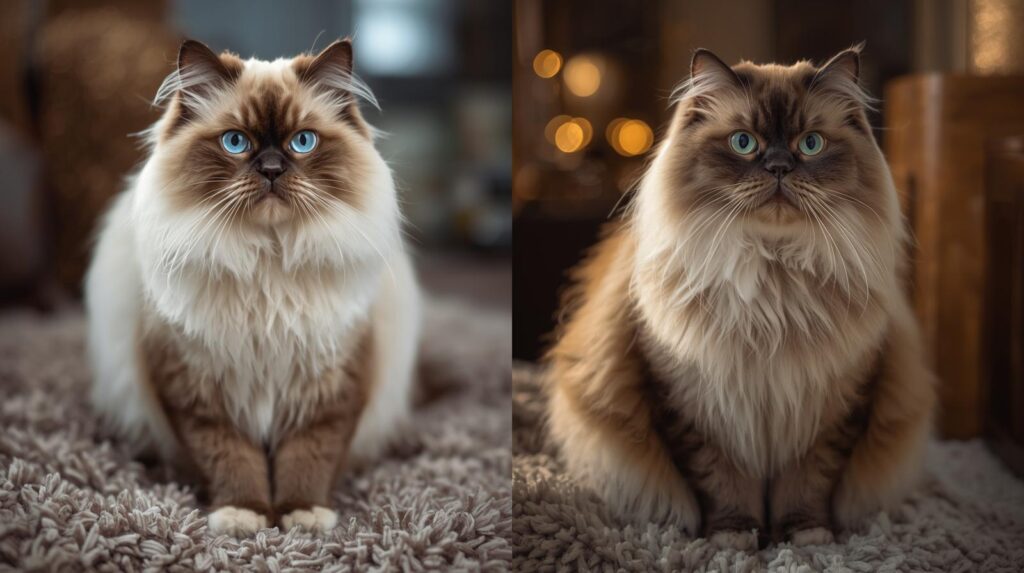
When I first started researching fluffy cat breeds for my family, I faced the same dilemma countless cat lovers encounter: should I choose a Ragdoll or a Siberian cat? Both breeds captivate hearts with their luxurious coats and gentle dispositions, but the decision isn’t as simple as picking the prettier face. After living with both breeds over the years, I’ve discovered that the ragdoll vs siberian cat debate comes down to lifestyle compatibility rather than superiority.
According to the Cat Fanciers Association, Ragdolls claimed the title of most popular cat breed in 2023, with 3,043 registrations in 2024. Meanwhile, Siberian cats ranked 11th with 318 registrations in the same year. These statistics reveal popularity trends, but numbers don’t tell the whole story about which breed might be your ideal companion.
Understanding the Origins and History
The Ragdoll’s California Roots
The Ragdoll cat emerged in Riverside, California during the 1960s through breeder Ann Baker’s selective breeding program. Baker developed this breed from a white domestic longhair named Josephine, carefully selecting offspring with docile temperaments and distinctive colorpoint patterns. The breed achieved Championship status with the Cat Fanciers’ Association in 2000, solidifying its position in the purebred cat world.
The name “Ragdoll” perfectly describes these cats’ tendency to go completely limp when picked up, similar to a child’s toy doll. This relaxed response became a signature characteristic that distinguishes them from other breeds.
The Siberian’s Ancient Heritage
Siberian cats represent Russia’s national treasure, with documented history dating back to 1000 AD. These forest cats developed naturally in Siberia’s harsh climate, evolving their distinctive triple-layered coat as protection against brutal winters. Unlike the deliberately bred Ragdoll, Siberians are a landrace breed shaped by natural selection rather than human intervention.
The breed remained largely unknown outside Russia until 1990, when the first breeding Siberians arrived in the United States. The Cat Fanciers’ Association granted Championship status to Siberians in 2007.
Physical Characteristics: Size and Appearance Comparison
| Feature | Ragdoll Cat | Siberian Cat |
|---|---|---|
| Weight (Male) | 12–20 pounds | 15–20 pounds |
| Weight (Female) | 8–15 pounds | 8–15 pounds |
| Body Type | Long, muscular | Stocky, barrel-shaped |
| Coat Type | Semi-long, silky (no undercoat) | Triple-layer with dense undercoat |
| Eye Color | Blue only | Green, gold, blue, or odd-eyed |
| Maturity Age | 4 years | 5 years |
| Shedding Level | Moderate | Heavy (seasonal) |
When comparing ragdoll vs siberian cat size, both qualify as large breeds. A 2023 study published in Companion Animal Health and Genetics reported median adult Ragdoll bodyweight at 4.46 kg (9.8 pounds), though males frequently exceed this average. Siberians typically weigh between 15-20 pounds for males, according to veterinary health sources.
The ragdoll vs siberian cat appearance differences extend beyond size. Ragdolls feature stunning blue eyes paired with colorpoint, mitted, or bicolor patterns. Their semi-long coat feels silky without the thick undercoat found in Siberians. In contrast, Siberian cats display varied eye colors and sport a weather-resistant triple coat that expands dramatically during winter months.
For detailed comparisons with other large breeds, check out this comprehensive Maine coon Guides resource.
Temperament and Personality: The Critical Difference
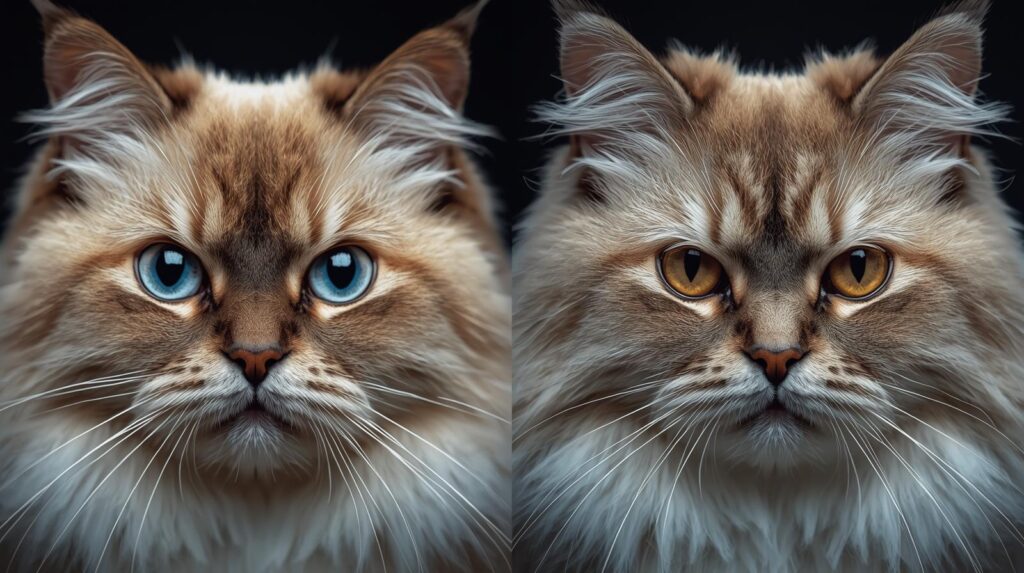
Ragdoll Temperament: The Gentle Giant
Ragdolls earned their “puppy-cat” nickname through distinctly dog-like behaviors. These cats follow owners from room to room, seeking constant companionship without demanding attention aggressively. My Ragdoll, Luna, would wait patiently beside my desk for hours, content just being near me.
Research indicates Ragdolls exhibit remarkable patience with children and other pets. They rarely show aggression and prefer peaceful coexistence over territorial disputes. This gentle nature makes ragdoll vs siberian cat comparisons favor Ragdolls for families seeking ultra-calm companions or those looking for an emotional support cat.
However, this devotion comes with a caveat: Ragdolls struggle with extended isolation. Leaving them alone for more than eight hours regularly can trigger depression and anxiety behaviors. They require owners who can provide consistent companionship or consider adopting a second cat.
Siberian Temperament: The Playful Explorer
Siberians bring considerably more energy to the ragdoll vs siberian cat personality debate. These intelligent cats maintain kitten-like playfulness well into adulthood, often engaging in acrobatic displays and problem-solving activities. They’re natural climbers who thrive on interactive play sessions.
While affectionate, Siberians demonstrate greater independence than Ragdolls. They enjoy human company on their terms rather than becoming constant shadows. This self-sufficiency makes them better suited for working professionals who can’t provide all-day attention.
The Cat Fanciers‘ Association describes Siberians as “90% placid and 10% mischief,” perfectly capturing their balanced temperament. They integrate well into busy households where their adaptability shines through changing schedules and multiple family members’ routines.
Grooming Requirements and Maintenance
The ragdoll vs siberian cat grooming comparison reveals significant differences despite both being long-haired breeds.
Ragdoll Grooming Needs
Ragdolls require minimal grooming relative to their coat length. Without an undercoat, their silky fur resists matting when maintained with weekly brushing sessions. During seasonal changes, increase brushing frequency to twice weekly.
Most Ragdoll owners report bathing their cats every 4-6 weeks, though some only bathe when absolutely necessary. Their meticulous self-grooming habits reduce the need for frequent baths compared to other long-haired breeds.
Siberian Grooming Demands
Siberians present notably higher grooming demands in the ragdoll vs siberian cat maintenance comparison. Their triple-layer coat requires at least twice-weekly brushing year-round, increasing to daily sessions during spring and fall shedding seasons.
One breeder noted, “During shedding season, you really cannot overgroom them.” Siberian coats shed heavily as they transition between winter and summer variations, creating considerable fur accumulation without proper maintenance. Their thick undercoat easily develops mats if neglected.
Health Considerations and Lifespan
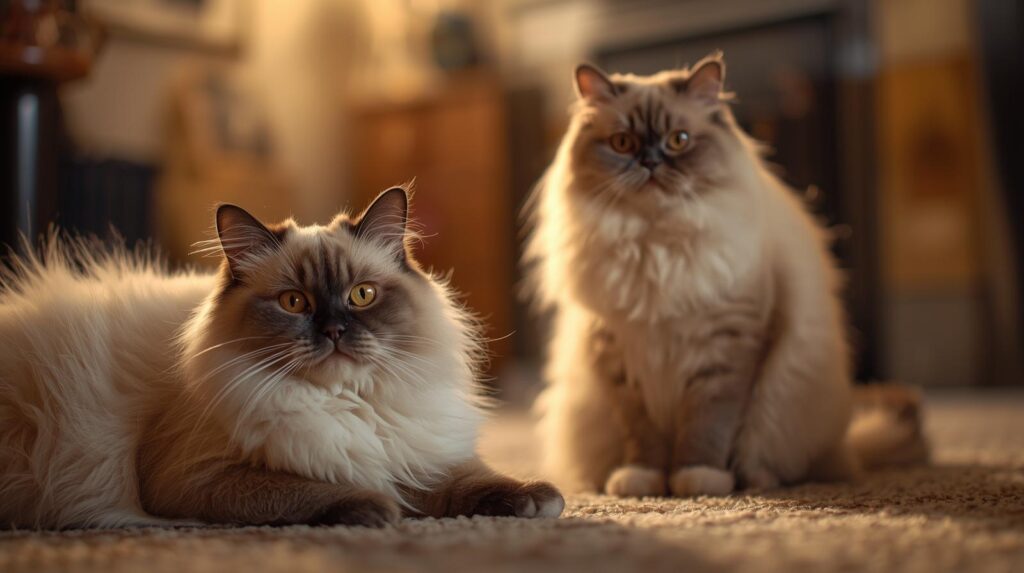
Ragdoll Health Profile
Ragdolls generally enjoy good health with lifespans ranging from 12-18 years, though many reach 20+ years with proper care. A 2025 UK veterinary study reported median life expectancy at 12.85 years for Ragdolls.
The breed shows predisposition to hypertrophic cardiomyopathy (HCM), the most common feline heart disease. Reputable breeders now routinely screen breeding stock for this condition. Additional health concerns include:
- Polycystic kidney disease (PKD)
- Bladder stones
- Obesity (due to low activity levels)
- Periodontal disease (8.84% prevalence)
Siberian Health Profile
Siberians typically live 10-18 years with generally robust health. Their natural breed development contributes to genetic diversity that reduces hereditary conditions.
Primary health concerns for Siberians include:
- Hypertrophic cardiomyopathy (HCM)
- Higher injury risk due to adventurous nature
- Obesity if overfed
- Dental disease
A Swedish study identified Siberians as more injury-prone than other purebred cats, attributed to their bold climbing behaviors and love of heights.
Hypoallergenic Properties: Fact vs Fiction
The ragdoll vs siberian cat hypoallergenic comparison generates considerable interest among allergy sufferers.
Siberian cats produce lower levels of Fel d 1 protein the primary allergen in cat saliva and dander. Research on native Siberian populations confirmed reduced Fel d 1 production compared to other breeds. However, individual cats vary significantly, with salivary levels ranging from 0.08 to 27 μg per mL.
Ragdolls produce normal Fel d 1 levels, making them unsuitable for most allergy sufferers. No cat breed is truly hypoallergenic, but Siberians offer better prospects for sensitive individuals.
Always spend time with individual cats before adoption to test personal sensitivity levels, regardless of breed claims.
Living Space and Exercise Requirements
Ragdoll Space Needs
Ragdolls adapt beautifully to apartment living in the ragdoll vs siberian cat housing comparison. These “floor kitties” prefer low-elevation resting spots over vertical territory. They require:
- Comfortable floor-level lounging areas
- Observation points near family activity
- Temperature-controlled indoor environments
- 20-30 minutes daily interactive play
Their relaxed nature means Ragdolls don’t demand extensive vertical space or outdoor access. A modest cat tree (2-3 feet high) satisfies their limited climbing instincts.
Siberian Environmental Requirements
Siberians need considerably more space and stimulation. These active cats thrive with:
- Tall cat trees and climbing structures
- Safe outdoor access or catios
- Interactive puzzle toys
- 30-45 minutes daily vigorous play
- Cool areas during warm weather
Their natural climbing instincts and adventurous spirits require owners who can provide enriched environments. Siberians often learn to walk on leashes, offering outdoor exploration opportunities.
Cost Analysis: Initial Purchase and Ongoing Expenses
Purchase Prices (2024 Data)
The ragdoll vs siberian cat cost comparison shows notable differences:
Ragdoll Kittens:
- Pet-quality: $1,500-$3,500
- Show-quality: $3,500-$6,000
- Breeding-quality: $4,000+
Siberian Kittens:
- Pet-quality: $1,200-$4,000
- Premium bloodlines: $2,000+
- Urban areas: Up to $4,000
Siberian cats typically command higher prices due to breed rarity in the United States. Most breeding programs remain concentrated in Russia, limiting North American availability.
Ongoing Monthly Costs
Both breeds require similar ongoing investments:
- Quality cat food: $50-$80
- Litter supplies: $20-$40
- Grooming supplies: $15-$30
- Veterinary care (annual): $300-$600
- Pet insurance: $30-$50
Expect several hundred dollars monthly throughout your cat’s lifetime when budgeting for either breed.
Training and Intelligence
The ragdoll vs siberian cat trainability comparison reveals interesting contrasts. Siberians demonstrate superior problem-solving abilities and respond enthusiastically to training challenges. They often learn tricks, can open doors, and excel at puzzle toys. However, their independent nature means compliance occurs on their schedule.
Ragdolls show greater eagerness to please in training scenarios. Their laid-back temperament makes them consistently responsive to positive reinforcement, though they lack the Siberian’s motivation for complex tasks. Ragdolls readily learn basic commands and enjoy fetch games, embracing their “puppy-cat” reputation.
Both breeds benefit from early socialization and positive training methods. Neither responds well to punishment-based approaches.
Family Compatibility and Lifestyle Matching
Best Homes for Ragdolls
Ragdolls flourish in households offering:
- Consistent daily companionship
- Calm, predictable environments
- Families with gentle children
- Stay-at-home workers or retirees
- Multi-pet households (with proper introductions)
Their separation anxiety makes Ragdolls unsuitable for frequently traveling professionals or extremely busy families unable to provide adequate attention.
Best Homes for Siberians
Siberians thrive with:
- Active families who enjoy interactive play
- Homes offering vertical space and enrichment
- Owners comfortable with higher grooming demands
- Households tolerating heavier shedding
- Allergy sufferers (with individual testing)
Their independence makes Siberians better suited for working professionals, though they still require quality daily interaction.
Making Your Decision: Which Breed Wins?
After exploring every aspect of the ragdoll vs siberian cat comparison, the “winner” depends entirely on your lifestyle and preferences.
Choose a Ragdoll if you want:
- Ultra-gentle, extremely affectionate companion
- Lower grooming maintenance
- Calm, laid-back energy levels
- Constant companionship and lap time
- Indoor-only apartment living
Choose a Siberian if you prefer:
- More independent, adventurous personality
- Playful, energetic cat well into adulthood
- Natural, ancient breed heritage
- Better option for allergy sufferers
- Cat who enjoys climbing and exploration
Both breeds make exceptional companions when matched with appropriate owners. The ragdoll vs siberian cat debate doesn’t have a universally correct answer only the right choice for your specific circumstances.
Frequently Asked Questions
Do Ragdoll and Siberian cats get along with dogs?
Yes, both breeds typically coexist peacefully with dogs. Ragdolls’ calm nature and Siberians’ confident temperament help them integrate successfully with canine companions when properly introduced.
Which breed sheds more in the Ragdoll vs Siberian cat comparison?
Siberians shed significantly more due to their dense triple-layer coat. They experience heavy seasonal shedding during spring and fall transitions, while Ragdolls shed moderately year-round.
Can Ragdoll or Siberian cats live outdoors?
Siberians adapt better to outdoor environments due to their weather-resistant coat and natural forest cat heritage. Ragdolls lack undercoats and should remain indoor-only pets for safety and comfort.
Are Siberian cats truly hypoallergenic compared to Ragdolls?
Siberians produce lower Fel d 1 allergen levels than Ragdolls, but no cat is completely hypoallergenic. Individual variation exists, so allergy sufferers should test reactions with specific cats before adoption.
Which breed costs more to maintain long-term?
Both breeds have similar ongoing costs for food, veterinary care, and supplies. Siberians may incur higher grooming expenses if using professional services due to their demanding coat maintenance requirements.
After weighing all factors in the ragdoll vs siberian cat decision, which fluffy companion best matches your lifestyle and home environment?