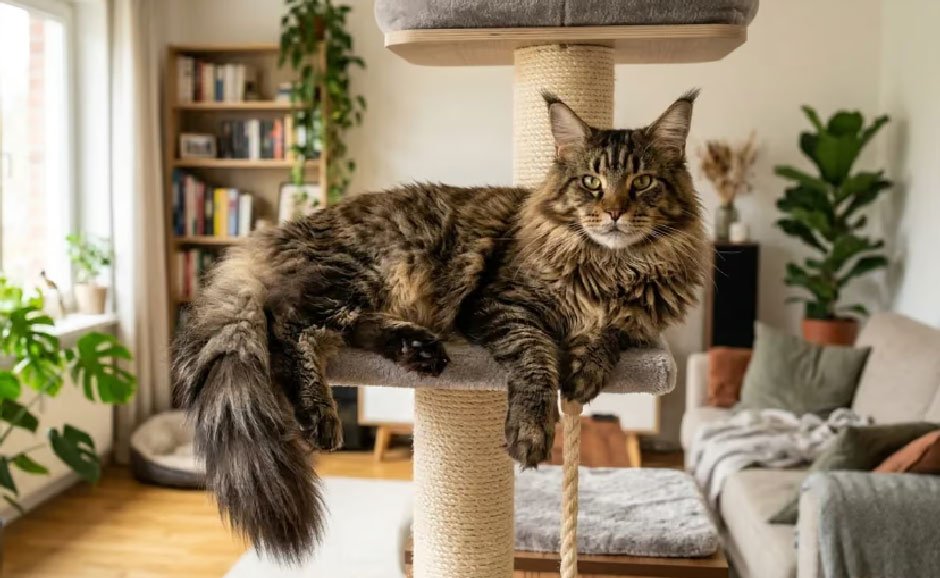
A guide to finding an apartment that keeps both your landlord and your Maine Coon happy.
If you’ve ever watched a Maine Coon stretch out to their full, magnificent length across a couch — and then some — you already know these cats live large. They’re social, active, curious, and, let’s be honest, not exactly small. So when it comes to apartment hunting with a Maine Coon in tow, the standard “pets allowed” checkbox on a listing site only scratches the surface.
Finding the right rental takes a bit more thought, a bit more preparation, and a healthy dose of advocacy for your feline companion. But the good news? It’s absolutely doable. Let’s walk through how to find a cat-friendly apartment that genuinely works for both of you.
Start With an Honest Assessment of Your Cat’s Needs
Before you even open a rental website, take a step back and think about what your Maine Coon actually needs to thrive indoors. These aren’t cats who curl up in a corner and sleep for 20 hours. Maine Coons are playful well into adulthood, they love vertical space, and they tend to follow their humans from room to room like oversized, furry shadows.
Here’s a quick checklist of environmental must-haves:
- Square footage
A studio might work for a laid-back domestic shorthair, but your Maine Coon will appreciate a one-bedroom at minimum. They need room to roam, play, and retreat.
- Vertical space
Tall ceilings, shelving opportunities, or even a loft-style layout can make a smaller apartment feel much bigger to a climbing-loving Maine Coon.
- Window access
Never underestimate the power of a good window. Maine Coons are endlessly entertained by birds, squirrels, and neighborhood foot traffic. A sunny windowsill is practically a streaming service for cats.
- Flooring considerations
Hardwood and tile are easier to clean than carpet, especially during shedding season, and with a Maine Coon, shedding season is roughly January through December.
Decoding “Pet-Friendly” Listings
Here’s a frustration every renter with a pet knows well: “pet-friendly” doesn’t always mean what you think it means. Some landlords welcome dogs but draw the line at cats. Others allow cats but impose weight limits that your 18-pound Maine Coon might exceed. And some listings that seem pet-friendly come with steep monthly pet fees or restrictive breed and size clauses.
When you spot a potential rental apartment, dig into the details before you fall in love with the kitchen tile. Ask these questions upfront:
- Is there a weight limit for cats? Many policies cap pets at 15 or 20 pounds. Maine Coons regularly exceed this, especially males.
- What are the pet deposits and monthly fees? These can range quite a lot so it’s important to understand the different types of pet associated fees and factor them into your budget early.
- Are there breed restrictions? While breed restrictions are more common for dogs, it’s worth confirming that no unusual rules apply.
- How many pets are allowed per unit? If you have more than one cat — or plan to in the future — this matters.
Getting clear answers early saves you time and heartbreak down the line. When you’re browsing apartments, use a rental website that allows you to easily filter for these. Modern platforms have integrated AI search systems where you can simply ask these questions during the browsing stage so you filter everything more finely from the start.
Building a Pet Resume (Yes, Really)
This might sound over the top, but in competitive rental markets, a pet resume can genuinely set you apart. Landlords worry about property damage, noise complaints, and liability. A well-prepared pet resume directly addresses those concerns.
Here’s what to include:
- A photo of your Maine Coon. Let that majestic face do some of the heavy lifting.
- Vaccination and veterinary records. Up-to-date shots and a spay/neuter certificate show responsibility.
- A brief description of temperament. Maine Coons are famously gentle and sociable — make sure your landlord knows that.
- References from previous landlords. If you’ve rented before without incident, a quick note from a former landlord goes a long way.
- Proof of renter’s insurance. Some policies include pet liability coverage, which can ease a landlord’s concerns considerably.
Think of it as your cat’s job application. And honestly, most Maine Coons have better references than half the human tenants out there.
Making a Smaller Space Work
Not everyone can afford a sprawling two-bedroom in their ideal neighborhood. If you’re working with limited square footage, the key is to think vertically and creatively.
Cat shelves and wall-mounted perches can transform a blank wall into a feline highway. Maine Coons love climbing and observing their domain from above, so a few well-placed shelves near a window can make a compact apartment feel like a palace.
A sturdy cat tree is non-negotiable. Go tall, go stable, and go wide enough to support a fully grown Maine Coon. Flimsy, bargain-bin cat trees will tip over the first time your cat launches onto them, and that’s a recipe for security deposit disasters.
Interactive toys and puzzle feeders help keep your Maine Coon mentally stimulated in a smaller space. These cats are intelligent and need engagement. A bored Maine Coon is a destructive Maine Coon, and nobody wants to explain claw marks on a rental’s door frame.
Designate a “cat zone.” Even in a small apartment, carving out a corner or nook specifically for your cat — with their bed, scratching post, and water fountain — gives them a sense of ownership and reduces stress.
The Litter Box Conversation
Let’s talk about the elephant in the room — or rather, the litter box in the bathroom. Maine Coons are large cats, and they need large litter boxes. Standard-sized boxes are often too cramped, leading to missed targets and unhappy cats.
In an apartment setting, placement matters. Ideally, the litter box goes in a low-traffic, ventilated area. Bathrooms, laundry closets, or a quiet corner of a hallway work well. Invest in a high-quality, low-tracking litter and clean the box daily. Your neighbors — and your nose — will thank you.
If space is really tight, consider a top-entry or furniture-style litter box enclosure. These contain mess and odor more effectively and blend into your apartment’s decor far better than an open tray.
Know Your Rights as a Renter With Pets
Rental laws regarding pets vary significantly depending on where you live. Some jurisdictions limit how much a landlord can charge as a pet deposit. Others prohibit blanket no-pet policies in certain types of housing. It’s worth researching your local tenant rights so you know what’s negotiable and what’s not.
If you have documentation supporting an emotional support animal designation, additional protections may apply under fair housing laws. Consult local regulations or a tenant advocacy group if you’re unsure where you stand.
The Bottom Line
Renting with a Maine Coon generally takes more planning. The key is knowing what your cat needs, being upfront with landlords, and making smart use of whatever space you have.
Your Maine Coon simply needs a safe, stimulating environment with plenty of vertical space, a clean litter box, a sunny window, and — most importantly — you. Find an apartment that checks those boxes, and you’ll both settle in just fine.