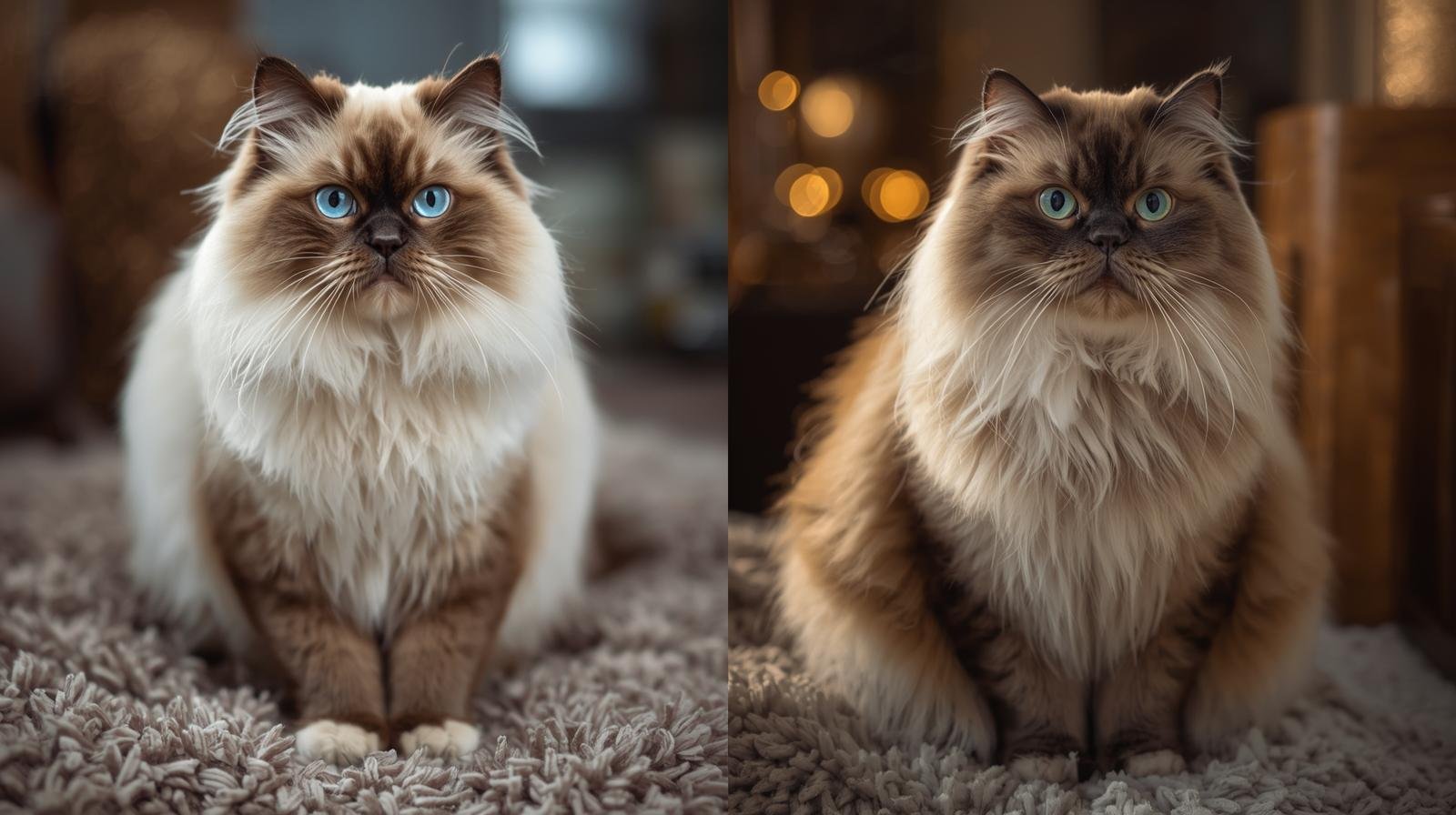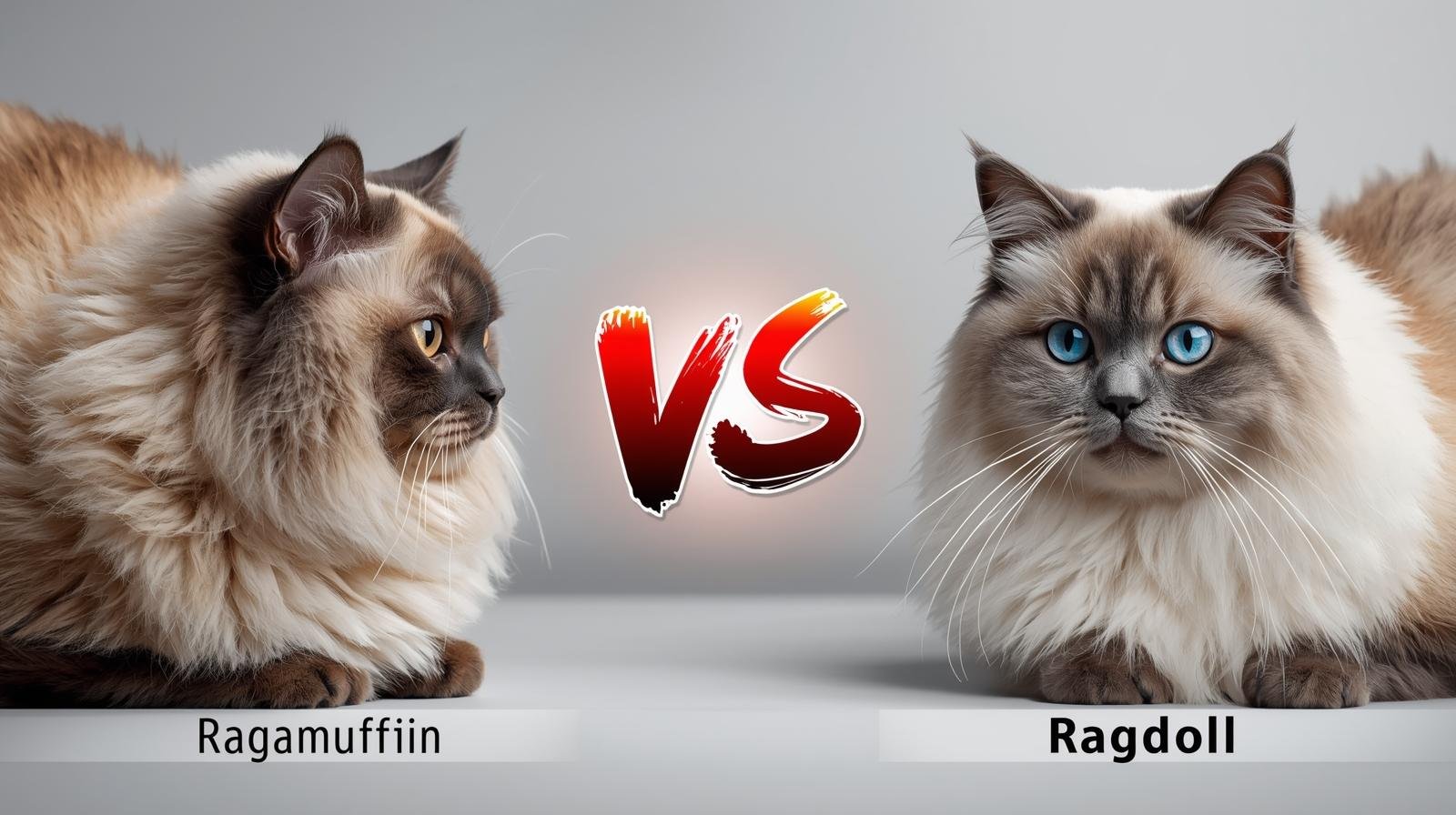
Birman Cat vs Ragdoll: Which Fluffy Feline Fits You?

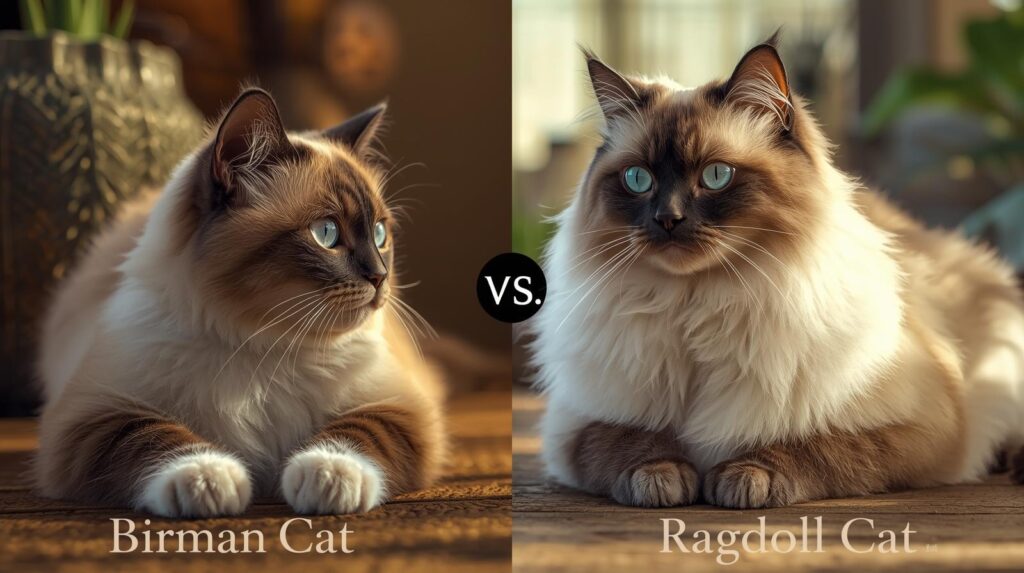
Looking at a Birman cat vs Ragdoll sitting side by side, you’d be forgiven for doing a double-take. These stunning blue-eyed beauties have captured the hearts of cat lovers worldwide, but choosing between them can feel like an impossible decision.
I remember the first time I encountered both breeds at a cat show three years ago. The Birman kitten tucked itself into my lap with quiet confidence, while the Ragdoll literally went limp in my arms living up to its name perfectly. That moment sparked my deep dive into understanding what truly sets these magnificent cats apart.
The Ragdoll holds the title as the most popular cat breed as of 2024, maintaining this position for several consecutive years. But don’t let popularity be your only guide. The debate between Birman cat vs Ragdoll goes far deeper than rankings, touching on everything from their mysterious origins to their distinct personalities and care requirements.
Ancient Legends Meet Modern Breeding: Origins Story
The Sacred Birman Cat Heritage
The Birmans, known as the ‘Sacred Cats of Burma,’ have a legendary origin where temple cats gained their blue eyes from a worshipped goddess and white paws as symbols of purity. While legends speak of Burmese temples, documented Birman history traces back to their arrival in France in 1925, where they became officially recognized by France’s cat association.
The breed faced near extinction during World War II, surviving through just two cats. The breed was recreated with the addition of Persian and Siamese blood and recognized in 1949 by the Fifé, later reaching the United States in 1967.
The Ragdoll’s California Beginning
The Ragdoll originated in the 1960s in the United States, with Ann Baker of Riverside, California credited for originally breeding the Ragdoll. The breed was created from a cat called Josephine, a white cat of Persian type, and interestingly, Birman blood was used in developing the Ragdoll breed which explains their striking similarities.
It wasn’t until 1993 that the Cat Fanciers’ Association recognized the Ragdoll under the miscellaneous class, though the breed gained widespread popularity much faster than its ancient cousin.
Birman Cat vs Ragdoll Physical Differences
When comparing Birman cat vs Ragdoll appearances, several distinct features emerge despite their similar colorpoint patterns.
Size and Build Comparison
| Feature | Birman Cat | Ragdoll Cat |
|---|---|---|
| Male Weight | 8–12 pounds | 15–20 pounds |
| Female Weight | 6–10 pounds | 10–15 pounds |
| Height | 8–10 inches | 9–11 inches |
| Build | Medium, stocky | Large, muscular |
| Maturity Age | 2–3 years | 3–4 years |
The Ragdoll is a large and slow-to-mature cat with males weighing 6 to 9 kg and females weighing around 4 to 6kg, while the Birman is a medium-sized cat weighing around 3 to 6 kg for males.
Facial Features: The Devil’s in the Details
The most reliable way to distinguish between Birman cat vs Ragdoll faces involves close observation:
- Nose Shape: The Ragdoll nose has a gentle curve, while the Birman nose has a slight indentation and is roman in shape
- Face Shape: Ragdolls have a wedge-shaped head, while Birmans have a rounded head
- Ear Size: Ragdolls have ears that are wide-set and of medium size, while Birmans have smaller ears
- Eye Shape: Birmans feature rounder, smaller eyes compared to Ragdolls’ larger, oval-shaped eyes
Coat Characteristics: Beyond Color Points
Both breeds showcase stunning semi-long fur with colorpoint patterns, but texture matters. The ragdoll cat has a minimal undercoat, while the Birman does not have an undercoat. This seemingly small difference impacts grooming requirements significantly.
The signature feature that distinguishes every Birman: Birman cats come in all pointed colors and have distinctive white feet, while ragdolls come in all pointed colors but white feet are not required under breed standards. Those pristine white “gloves” are the Birman’s calling card.
Personality Showdown: Birman Cat vs Ragdoll Temperament
The Gentle Birman Personality
Birman cats are described as lap cats who are both loyal and loving, laid back and friendly, and will bask in any attention offered. However, they’re not just passive cuddle buddies. Birmans are playful and social cats that thrive on interaction and are more likely to demand attention.
From my personal observations of friends’ Birmans, these cats form incredibly strong bonds with one or two favorite people. They’ll follow you from room to room, but they’re not clingy think devoted companion rather than velcro cat.
The Ragdoll’s Famous Floppiness
Ragdolls are affectionate and love to be handled and cuddled, famous for their tendency to go limp when picked up. Ragdolls are renowned for their laid-back demeanor and incredibly docile nature, making them gentle with children and other pets.
The comparison between Birman cat vs Ragdoll personalities reveals an interesting distinction: while both breeds are gentle, Ragdolls are less likely to engage in rambunctious play compared to Birmans. If you want a cat that plays actively before settling for cuddles, lean toward the Birman. For maximum relaxation mode, the Ragdoll wins.
Care Requirements: Grooming and Health
Grooming Needs for Each Breed
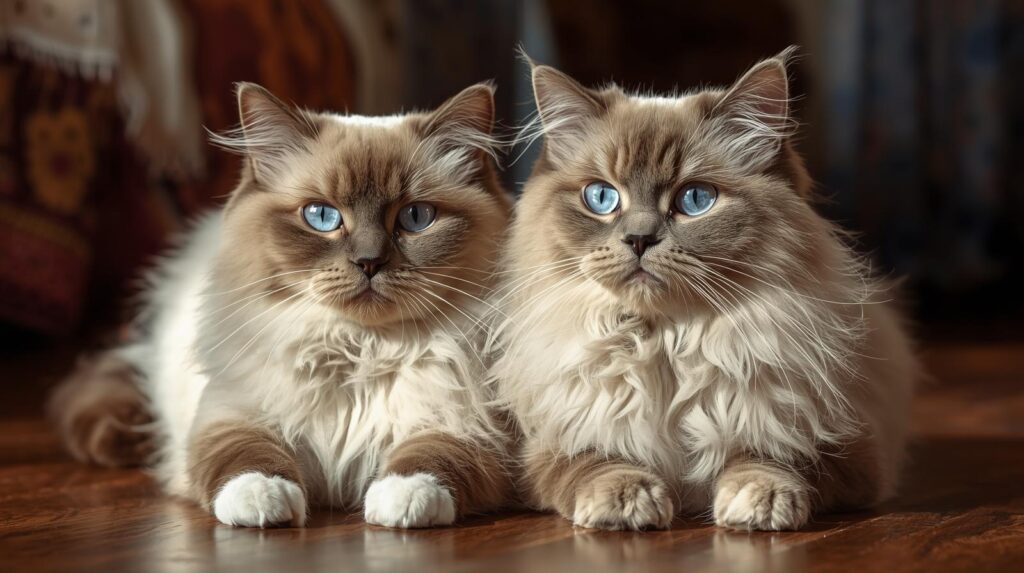
Birman cats require weekly brushing, which is typically sufficient to keep their coat healthy and free from tangles. By contrast, Ragdolls benefit from more frequent grooming of two to three times a week to prevent matting.
Both breeds shed less than you’d expect from long-haired cats, but neither is hypoallergenic. The Birman’s lack of undercoat makes brushing easier, though both breeds appreciate regular grooming sessions as bonding time.
Health Concerns Comparison
When evaluating Birman cat vs Ragdoll health profiles, both breeds face similar genetic concerns:
Birman cats are prone to genetic conditions such as hypertrophic cardiomyopathy (HCM) and hip dysplasia, while Ragdolls are also at risk for HCM and may face urinary tract issues due to their large size.
The good news? Birman cats are generally a very healthy breed, with proper care allowing healthy cats to live for nine to 15 years or more. Ragdolls share a similar lifespan of 12-16 years with proper veterinary care.
Cost Analysis: Birman Cat vs Ragdoll Prices
Initial Purchase Costs
Birman Pricing: As an estimate, Birman cat prices in 2025 range from $400 to $3,000, with prices typically between $600 and $2,000 depending on factors such as pedigree, breeder reputation, and geographical location.
Ragdoll Pricing: A safe price estimate is around $2,000 for a purebred Ragdoll kitten, with costs ranging between $800 and $3,500. However, the current average cost of a Ragdoll kitten is $3,500 to $5,000, with pricing reaching as high as $6,000 to $7,000 in some cases.
The Birman cat vs Ragdoll price comparison shows Ragdolls commanding slightly higher premiums, particularly for show-quality specimens. Both breeds’ costs reflect their popularity and the ethical breeding practices required to maintain breed health.
Monthly and Annual Expenses
Beyond purchase price, budget for:
- Food: $30-80 monthly for high-quality nutrition
- Grooming Supplies: $50-100 initially, plus monthly products
- Veterinary Care: $200-500 annually for routine check-ups
- Pet Insurance: $20-60 monthly (highly recommended for both breeds)
- Toys and Enrichment: $100-200 annually
For comprehensive Maine coon Guides and other cat breed resources, exploring various breed-specific needs helps prepare for long-term ownership costs.
Living with Your Choice: Practical Considerations
Best Home Environments
Birmans Thrive With:
- Active families who enjoy interactive play
- Owners seeking a social, attention-loving companion
- Households with predictable routines
Ragdolls Excel In:
- Calm environments with gentle children
- Apartments or homes without high-climbing spaces
- Families wanting an extremely docile lap cat
Activity Levels and Exercise Needs
The Birman cat vs Ragdoll energy comparison reveals notable differences. One difference from the Birman is that Ragdolls are not as active. Birmans maintain playful energy throughout adulthood, while Ragdolls prefer leisurely activities.
Both breeds adapt well to indoor living, though neither should roam outdoors. Ragdolls must live indoors due to their friendly personalities, as they will befriend any animal regardless of whether it’s a threat.
Making Your Decision: Which Breed Suits You?
After comparing every aspect of Birman cat vs Ragdoll ownership, consider these final points:
Choose a Birman if you want:
- A medium-sized cat with moderate activity
- Those distinctive white “gloves”
- Weekly grooming commitment
- A social butterfly who bonds with the whole family
- Slightly lower initial costs
Choose a Ragdoll if you want:
- A large, impressive-sized feline
- The ultimate lap cat experience
- That famous “going limp” trait
- A quieter, more docile companion
- Don’t mind more frequent grooming
Both breeds offer unconditional love and stunning beauty. The “better” choice depends entirely on your lifestyle, home environment, and what you value most in a feline companion.
Frequently Asked Questions
Q: Can you tell the difference between a Birman cat vs Ragdoll easily?
A: The easiest identifier is the paws Birmans always have symmetrical white “gloves” on all four feet, while Ragdolls may or may not have white markings. Additionally, Ragdolls are noticeably larger and have different facial structure with wedge-shaped heads versus Birmans’ rounder faces.
Q: Which breed is better for families with children?
A: Both excel with children, but Ragdolls edge ahead slightly due to their extremely tolerant, docile nature and tendency to relax when held. Birmans are also wonderful family cats but prefer more active interaction and play rather than just being carried around.
Q: Are Birman cats or Ragdolls more expensive to maintain long-term?
A: Maintenance costs are relatively similar, though Ragdolls require more frequent grooming (2-3 times weekly versus once weekly for Birmans). Both breeds face similar health concerns requiring routine veterinary care, making pet insurance valuable for either choice.
Q: Do Birmans and Ragdolls get along with other pets?
A: Yes, both breeds are exceptionally social and typically adapt well to multi-pet households. Their gentle, non-aggressive temperaments make them ideal companions for other cats and even cat-friendly dogs. Proper introductions remain important regardless of breed.
Q: Which breed sheds less between Birman cat vs Ragdoll?
A: Birmans generally shed slightly less due to lacking an undercoat, while Ragdolls have a minimal undercoat that contributes to moderate shedding. Neither breed is hypoallergenic, but both shed less than many long-haired breeds. Regular grooming significantly reduces loose fur for both.
Choosing between a Birman cat vs Ragdoll ultimately comes down to personal preference both breeds offer years of devoted companionship wrapped in luxurious fur and captivating blue eyes. Whether you fall for the Birman’s legendary white paws or the Ragdoll’s puppy-like devotion, you’re guaranteed a loving friend who’ll enrich your life immeasurably.
Now that you’ve explored these two magnificent breeds thoroughly, which distinctive trait the Birman’s active playfulness or the Ragdoll’s ultimate relaxation resonates most with your ideal feline companion?