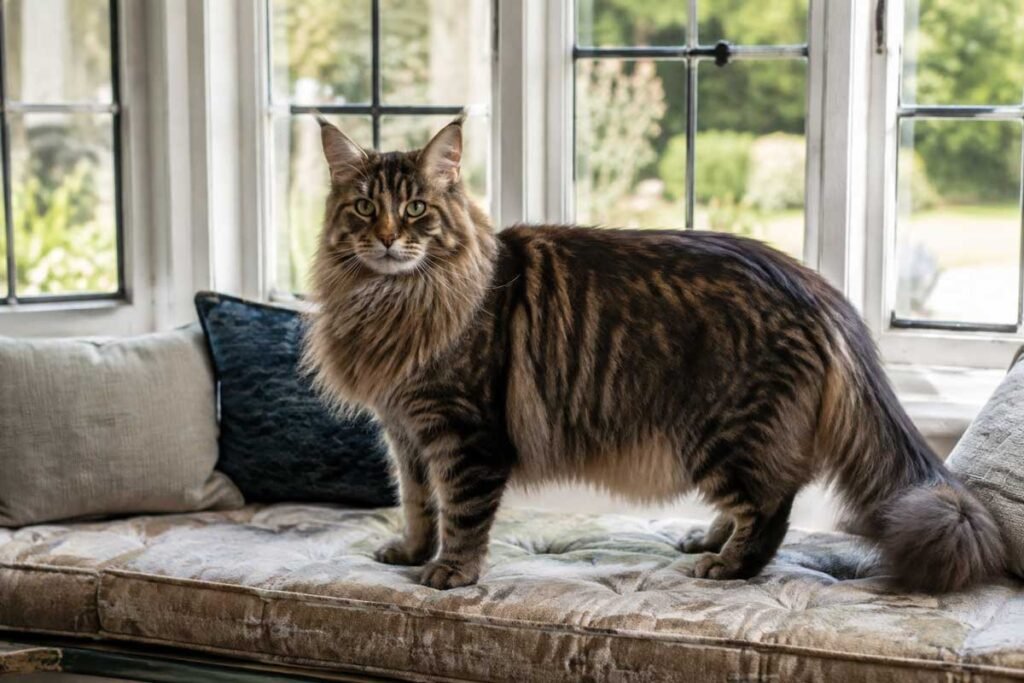
Maine Coon insurance needs to account for both the cat’s medical history and the amount of cover selected. A healthy kitten or symptom-free adult gives the owner the widest opportunity to choose cover before a concern enters the veterinary record. A cat already being investigated starts from a different position because a new policy should not be expected to pay for an existing concern.
Annual limits matter too. Specialist referral and diagnostics can use a sizeable part of a low tier before treatment begins, while an eligible long-running condition may need cover in more than one policy year. The policy also has to cope with the possibility of an unrelated claim drawing from the same annual allowance.
Maine Coons are large, slow-maturing cats. The breed is associated with hypertrophic cardiomyopathy and hip dysplasia, but neither condition is inevitable. Breed-level information cannot assess an individual cat’s health or replace veterinary advice. It gives owners a reason to check medical-history rules, benefit duration, annual limits and excesses carefully.
Compare cover before signs are recorded
A healthy kitten and a symptom-free adult give their owners the widest opportunity to arrange cover before a concern is documented. Buying insurance at that point does not mean the cat will develop a heart or joint disorder. It means a future new condition may be eligible if it begins after cover and meets the policy terms.
Pre-existing-condition exclusions are standard in pet insurance. Once symptoms have appeared, a new policy should not be expected to fund the concern already being investigated. Initial waiting periods matter as well because symptoms arising during the opening wait are treated as pre-existing under the cited terms.
For a Maine Coon already under investigation, separate the existing concern from unrelated conditions that may arise later. New cover may still have value for those future conditions, subject to all eligibility rules and exclusions.
Allow enough room for investigation and treatment
Specialist referral and diagnostics for a suspected cardiac or joint disorder are estimated at £2,000 to £4,000, with treatment charged separately. The estimate shows how quickly a low annual tier could be used. It is not a quotation, a promised insurer payment or a decision about claim eligibility.
Ongoing management is estimated at several hundred pounds in a lower-cost year and more than £1,000 in a higher-cost year. These are 2026 UK estimates, and actual charges vary with location and case complexity. An owner comparing limits should consider the investigation, treatment charged afterwards, other eligible claims in the same year and the amount they could pay above the selected ceiling.
The provider’s advertised maximum is not necessarily the cover an owner buys. Petplan states a maximum annual limit of £12,000. Waggel’s lifetime cat cover offers selectable limits from £1,000 to £15,000. ManyPets and Agria each state a maximum of £20,000, so Waggel’s £15,000 ceiling is lower than theirs. A £20,000 maximum is not automatically the right purchase any more than a low starting tier is automatically sufficient.
Check how lifetime cover works at renewal
The breed’s heart association makes benefit duration worth understanding before symptoms appear. The condition often shortened to HCM involves thickening of the heart muscle, but an association with Maine Coons does not show whether one cat has it.
A lifetime policy has one annual limit for eligible claims during each policy year. At renewal, the limit is restored, so an eligible continuing condition can remain covered while the policy is renewed without a break. Limits and exclusions still apply. Renewal does not promise that every cost will be accepted or paid.
This annual reset can matter when management continues. An eligible condition may use the remaining allowance in one year and draw from the restored allowance after renewal. The owner still needs to check whether the premium remains affordable and what excess or contribution applies in the new policy year.
Time-limited and maximum-benefit policies work differently because they cap benefits separately for each condition. The time window or condition limit can end while care is continuing. Owners need to compare that boundary with the annually restored allowance of lifetime cover.
Plan for a separate joint claim in the same year
Hip dysplasia is a joint disorder associated with Maine Coons, though it is not inevitable. Its insurance relevance is not confined to the joint itself. An owner planning for a continuing heart claim should also ask what happens if an unrelated joint problem needs treatment during the same policy year.
Eligible claims under lifetime cover share the policy’s single annual limit for that year. Two separate conditions can therefore draw from the same allowance. A limit that appears adequate for one treatment course may leave less headroom once another eligible claim is added.
Excess wording also affects the total. Some policies apply an excess to each condition in each policy year. Separate eligible heart and joint claims can each trigger an excess, and an ongoing condition can attract the excess again in the new policy year after renewal. This does not mean every provider uses the same structure.
Compare the tier and provider terms together
One example of how the details combine is Waggel’s lifetime cat cover. Along with annual limits from £1,000 to £15,000, it has a 14-day initial waiting period and applies an excess to each condition in each policy year. These are provider-specific terms rather than market-wide rules.
Compare the premium and excess that the household can manage with the annual allowance actually selected. Check whether all eligible conditions share that allowance, when the limit resets, and how often the excess is taken. The £2,000 to £4,000 diagnostic estimate provides useful context for a low tier, but it does not make one provider or limit right for every cat.
Choose according to the cat’s current position
For a symptom-free cat, compare medical-history wording, the initial wait, annual cover and renewal terms while future new conditions can still qualify. For a cat already under investigation, identify what the policy excludes and assess its value for other future illnesses or injuries.
A long-running eligible claim may test the renewal rules and annual limit. A second condition may use the same year’s allowance and bring another excess. Looking at those possibilities together gives a clearer comparison than choosing only by the cheapest quote or the largest advertised provider ceiling.