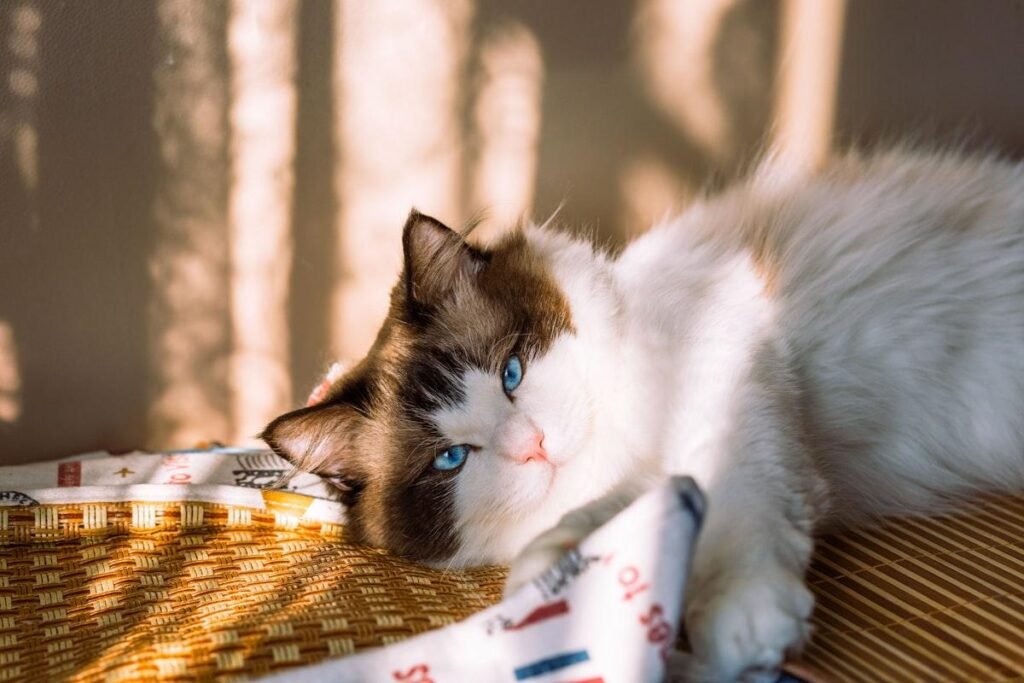
Ragdoll cat lifespan, measured as median age at death in UK veterinary records, is 12.85 years. That figure comes from a 2025 study of 2,025 Ragdoll clinical records, and it is the most specific answer available to anyone asking how long these cats live.
Two findings in the same study will be more useful to you than the headline number, because they contradict things you have probably read while researching the breed.
Where the Number Comes From
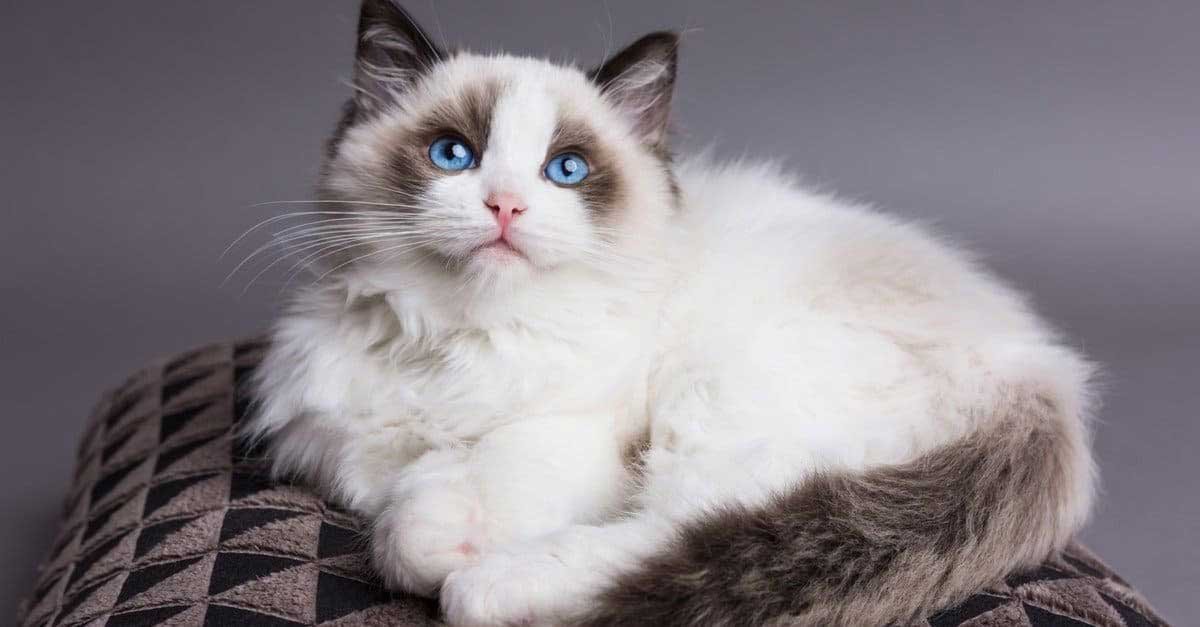
Researchers at the Royal Veterinary College published a breed-specific study in November 2025 covering demography, disorders, cause-specific mortality and life expectancy of Ragdoll cats under UK primary veterinary care during 2019. Ragdolls made up 21,358 of the 1,254,484 cats in the wider dataset, and a random sample of 2,025 had every recorded disorder reviewed.
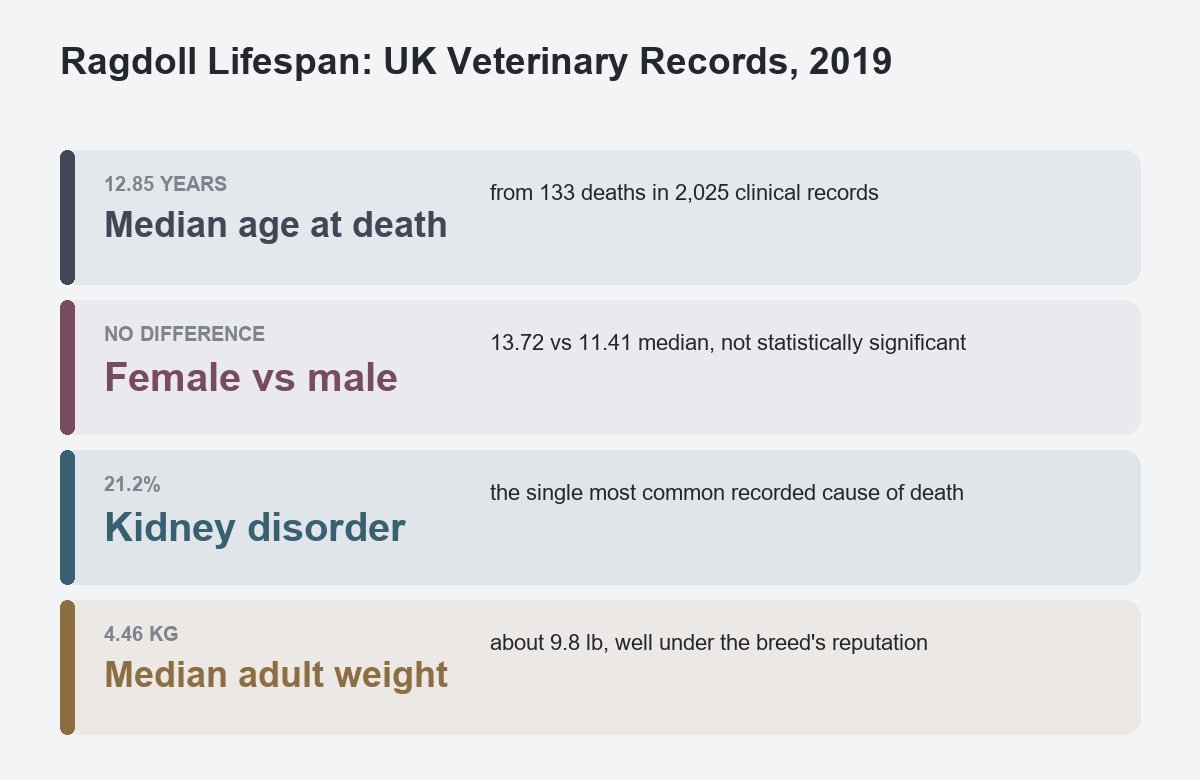
Of those, 133 died during the study period. Their median age at death was 12.85 years, with an interquartile range running from 5.71 to 16.11 years, and the full range stretched from eight weeks old to 21.51 years. That is the honest shape of the data: a wide, lumpy distribution rather than a tidy expectancy. Any single number quoted for this breed is a summary of that spread, and the spread is the part worth understanding.
Read that spread rather than the midpoint. A quarter of the cats died before six, which drags any average down, and a quarter lived past sixteen. The breed does not have a tidy expiry date, and the two ends of that range describe very different outcomes for the same kind of cat.
Male and Female Ragdolls Live About as Long
Female Ragdolls in the study reached a median of 13.72 years against 11.41 for males, and the researchers found no statistically significant difference between them.
The gap you can see did not survive the test.
This matters because it cuts against a widely repeated claim. In the general UK cat population, females do outlive males by more than a year, a pattern we cover in our Maine Coon lifespan guide. Within this breed, at this sample size, that advantage was not demonstrated.
Choose your kitten on temperament and on the parents’ health testing, because sex is not the lever here and treating it as one narrows your options for no measured benefit.
Kidney Disease, Not the Heart
Kidney disorder was the single most common recorded cause of death, accounting for 21.18% of the Ragdolls with a cause on file, with poor quality of life following at 12.94%.
Most breed content puts hypertrophic cardiomyopathy front and centre, and HCM screening genuinely does matter when you are buying a kitten. But the thing that actually kills Ragdolls in practice, at the ages they die, is renal failure. That distinction changes what you should be doing as an owner rather than as a buyer, because heart screening happens once at the cattery while kidney monitoring is something you do for years. One is a purchase decision. The other is a habit.
Watch for increased drinking and increased urination, which usually arrive together and long before anything looks wrong. Ask for a blood and urine panel from about age seven rather than waiting for symptoms, because kidney values shift before behaviour does, and a cat that has started drinking more has often been losing function quietly for months.
What Ragdolls Actually Get Treated For
The most prevalent specific disorders recorded across the whole sample were periodontal disease at 8.84%, diarrhoea at 7.11%, and obesity at 6.91%. Grouped more broadly, dental problems affected 14.52% and gut disorders 13.48%.
None of that is exotic.
Dental disease is the most common finding in the breed and the one most owners postpone, while obesity is the one most owners under-report. Both shorten a cat’s comfortable years rather than dramatically ending them, so neither appears in the cause-of-death table while both do real damage to the years a cat actually gets.
The study also recorded a median adult bodyweight of 4.46 kg, roughly 9.8 pounds, with an interquartile range of 3.79 to 5.19 kg. Against a breed marketed on its size, that is a striking figure: the typical UK Ragdoll under veterinary care is an ordinary-sized cat, and owners worrying that their Ragdoll is too small are usually looking at a perfectly normal one.
What Actually Adds Years
Buy from a breeder who screens, and read the dates on the certificates rather than the reassurance around them. Keep the cat indoors or in secured outdoor space. Keep it lean, since obesity showed up in nearly 7% of this population and compounds joint and metabolic problems that a Ragdoll lifespan of sixteen years gives plenty of time to develop.
Then move to twice-yearly veterinary visits from about age seven and ask specifically for kidney values, blood pressure, and a dental check at those appointments. Those three cover the disorders this study found most often, and none of them announce themselves early.
A Ragdoll that reaches sixteen is not a lucky outlier. A quarter of the cats in this study did.
FAQ
How long do Ragdoll cats live?
UK veterinary records put Ragdoll cat lifespan at a median age at death of 12.85 years, based on 133 deaths recorded in a 2025 Royal Veterinary College study. A quarter of those cats lived beyond 16 years.
What is the most common cause of death in Ragdoll cats?
Kidney disorder is the leading recorded cause, accounting for 21.18% of Ragdoll deaths with a documented cause. Poor quality of life ranked second at 12.94%, ahead of the heart disease that dominates most breed guides.
Do female Ragdolls live longer than males?
No statistically significant difference was found between the sexes in the 2025 study, despite median ages at death of 13.72 years for females and 11.41 for males. Treat sex as irrelevant to longevity when choosing a kitten.
How much should a Ragdoll weigh?
Median adult bodyweight in UK veterinary records is 4.46 kg, about 9.8 pounds, with most cats between 3.79 and 5.19 kg. Ragdolls are marketed as large cats, but the typical one is closer to average size than the breed’s reputation suggests.